WillyLogan.com

Technology, History, and Place

Tag: memory (Page 3 of 4)

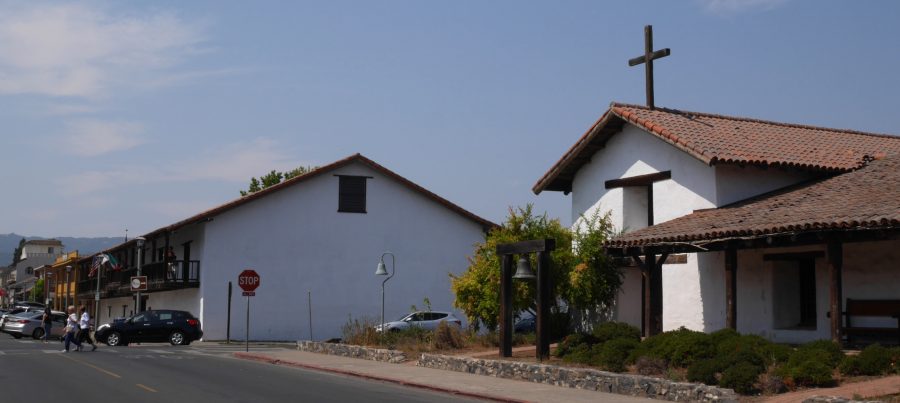
Sonoma Barracks (L) and Mission.

Remembering the Bear Flag

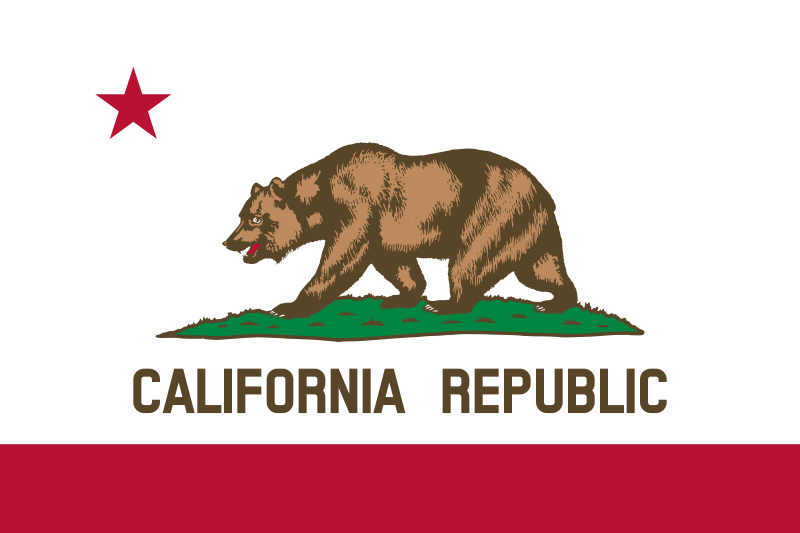
California state flag.

California state flag. (Source: http://www.library.ca.gov/california-history/state-symbols/, public domain.)

SONOMA, California, USA – The state flag of California, which flies over public buildings, schools, and some businesses and private homes—and not to mention baseball caps, t-shirts, and a huge variety of tourist kitsch—is a white banner featuring a grizzly bear on all fours, a red star, a red band, and the words “CALIFORNIA REPUBLIC.” California is a state, not an independent republic, so why does it say that?

California is indeed not an independent republic, and never really was, but in June 1846, rebellious Anglo-American settlers in Sonoma kidnapped the local Mexican official, General Vallejo, and raised the original Bear Flag in front of the barracks of this Mexican territorial outpost. The next month, the Bear Flag would be replaced by the Stars and Stripes, and the US annexation of Alta (Upper) California would be made official with the Treaty of Guadalupe Hidalgo in 1848. California became a state just two years later, and the state flag design was adopted in 1911, using elements of the original Bear Flag but arranging them much more attractively. (It was remarked at the time that the original “bear” actually looked like a pig).
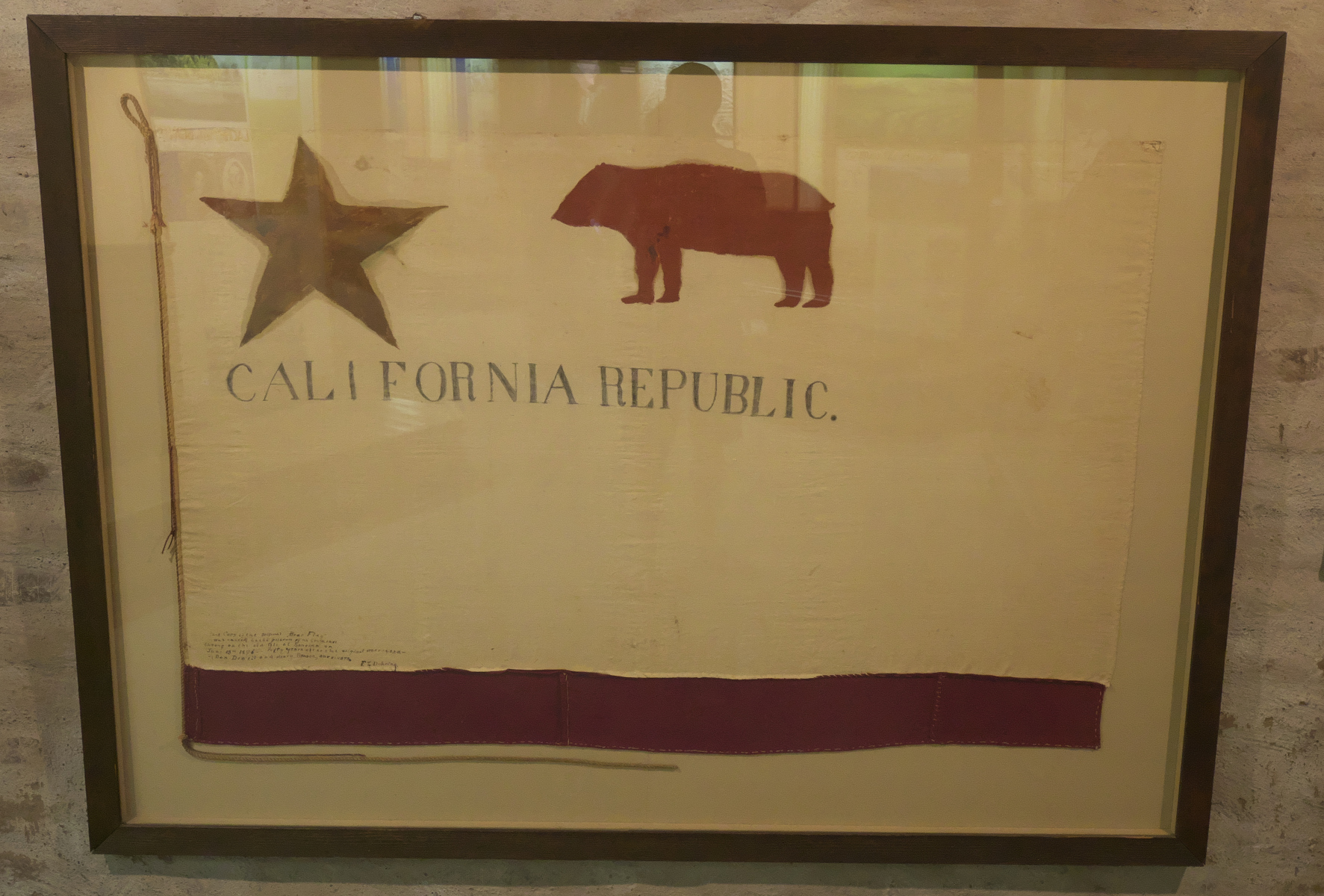
Replica of the original Bear Flag in the Sonoma Barracks. (The original flag was, like so much else, destroyed in the great San Francisco earthquake and fire of 1906.)

Replica of the original Bear Flag in the Sonoma Barracks. (The original flag was, like so much else, destroyed in the great San Francisco earthquake and fire of 1906.)

This Sunday, Sonoma held its annual Bear Flag Celebration, timed to be near the anniversary of the raising in 1846. I headed over to investigate, as I have been wondering how the Bear Flag Revolt is commemorated in twenty-first-century California. It was a land-grab by Anglo settlers who thought they deserved to control California more than any Mexicans, but looking at it this way, it would be difficult to celebrate the event in a county and state with a significant Hispanic minority (27% for Sonoma County and 39% for California as a whole). So how is the revolt remembered?

The museum at the Sonoma Barracks hasn’t been of much help in my attempt to understand memory of the Bear Flag Revolt. The barracks were restored by the state of California in 1976-1980, and the museum displays appear not to have been updated since then. The introductory panel presents “Manifest Destiny” as a fact rather than a contested idea.

Having made several visits to the historic buildings in Sonoma, without gaining any insight into memory of the revolt, I thought I might have better luck at the Bear Flag Ceremony that kicked off the day’s festivities on Sunday.
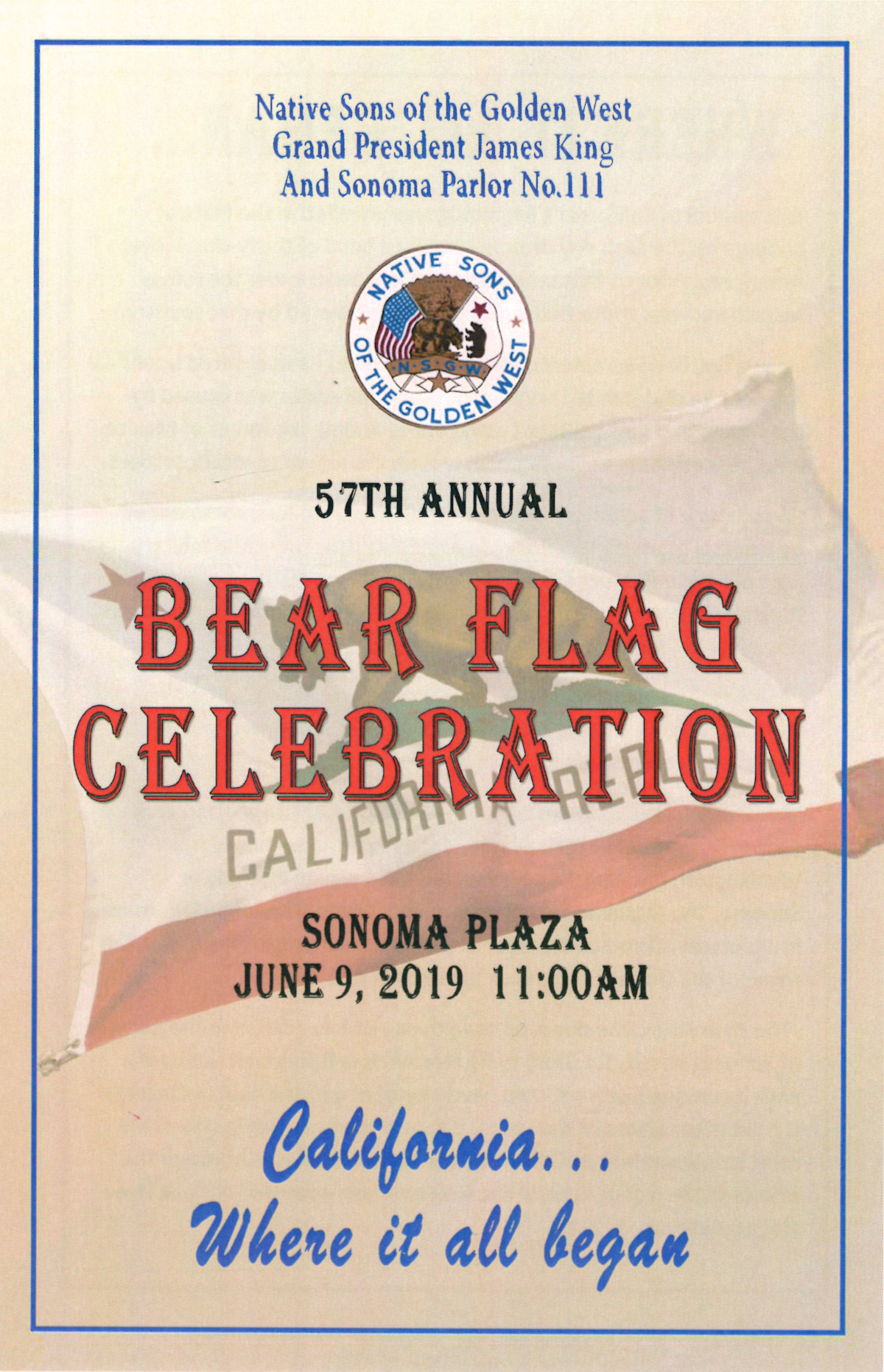
Front cover of the program for the 2019 Bear Flag Celebration.

Front cover of the program for the 2019 Bear Flag Celebration.

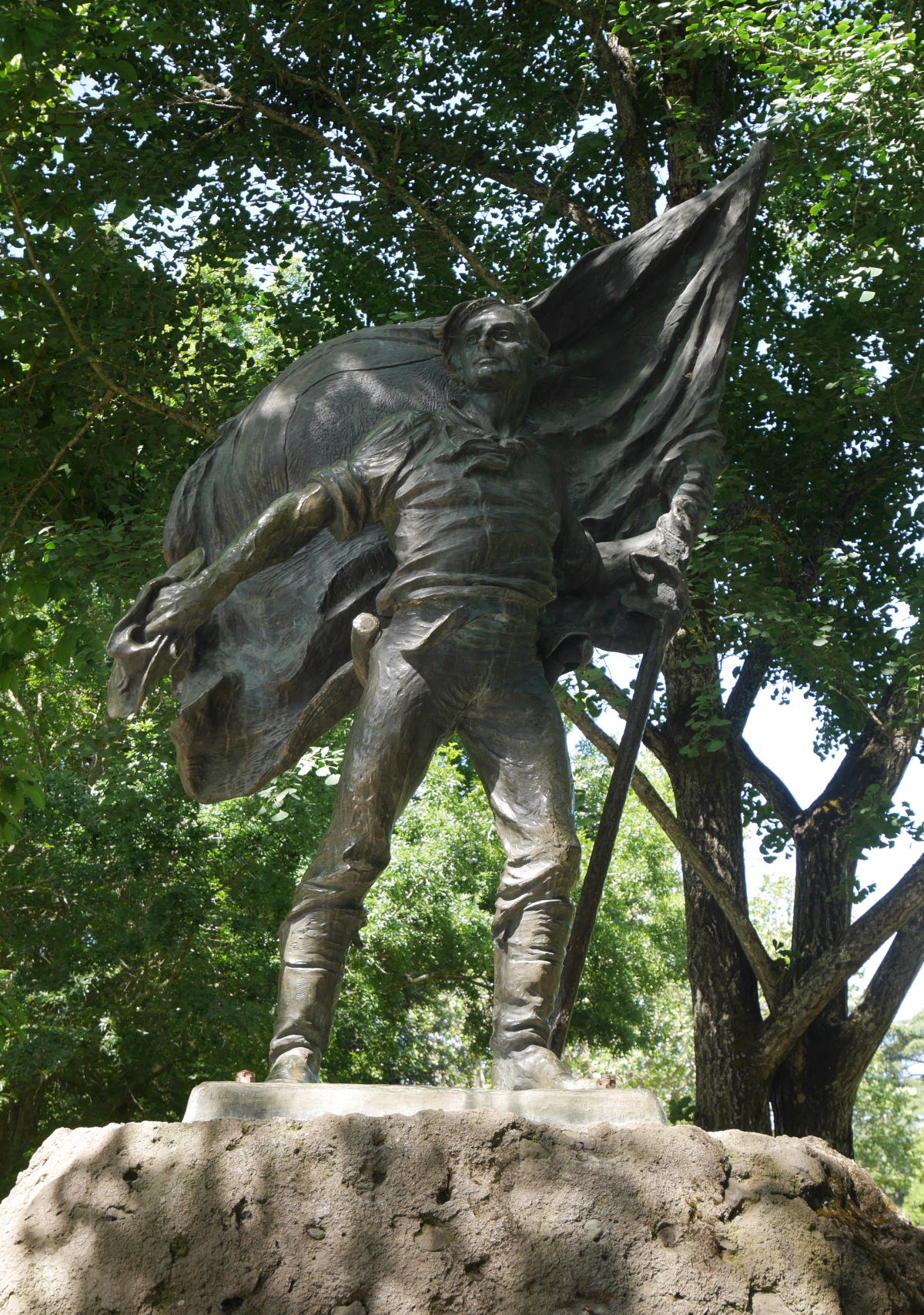
The ceremony was held in front of the vaguely socialist-realist Bear Flag Monument on the Sonoma Plaza opposite the barracks. Native Sons of the Golden West, a fraternal service organization founded in 1875, organized the event. (This is native as in “native-born,” not “Native American.” Judging from the event on Sunday, the membership of the organization seems to be largely but not exclusively Anglo.)
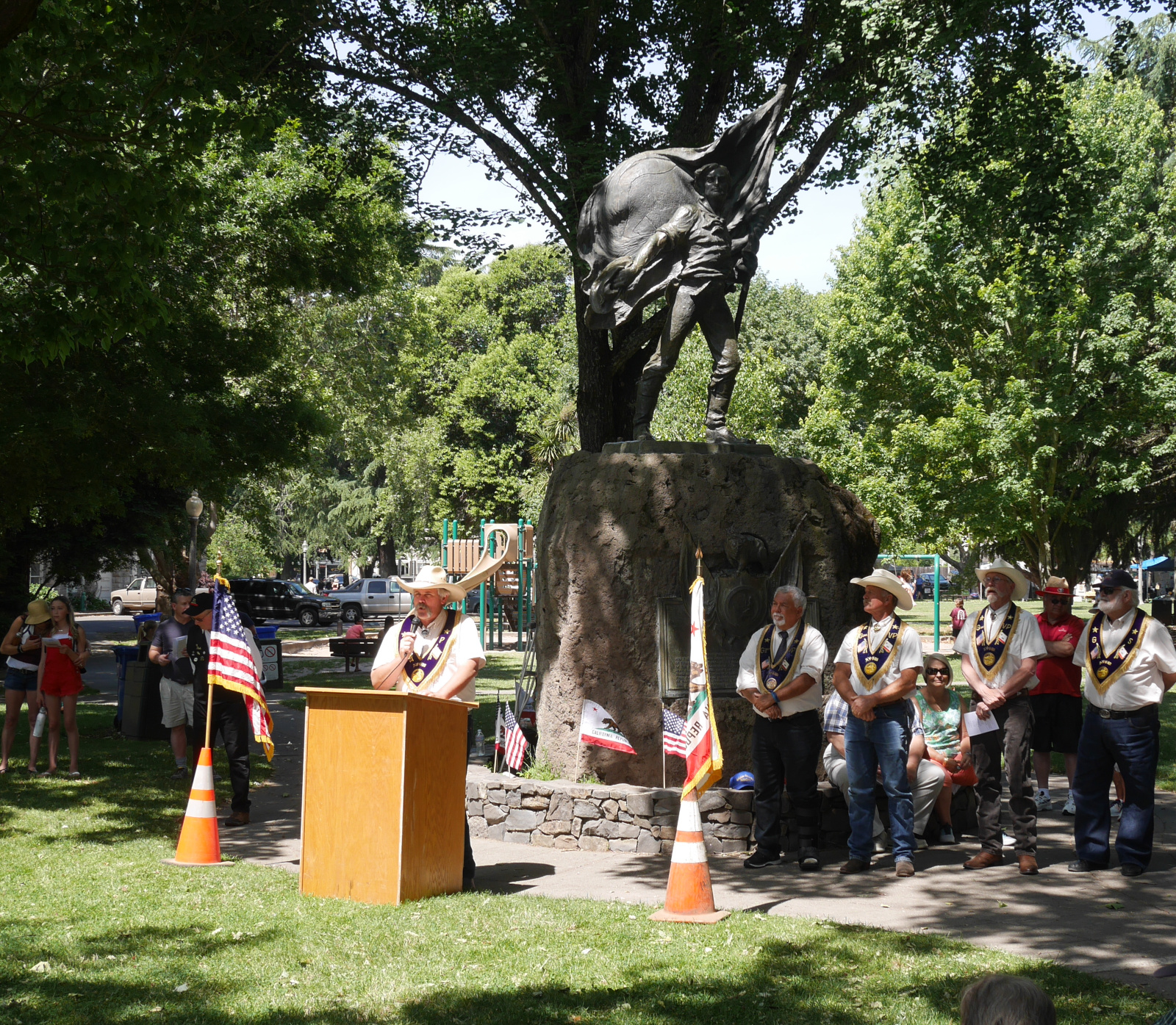
Scene from the Bear Flag Ceremony.
Scene from the Bear Flag Ceremony.

Detail of the Bear Flag Monument.

Detail of the Bear Flag Monument.

At first, the ceremony didn’t offer me much insight. There were a few reference to the “heroes” of the Bear Flag Revolt, without any explanation about what made them heroic. And there was plenty of generic patriotism (recitation of the Pledge of Allegiance and singing of the “Star-spangled Banner”).
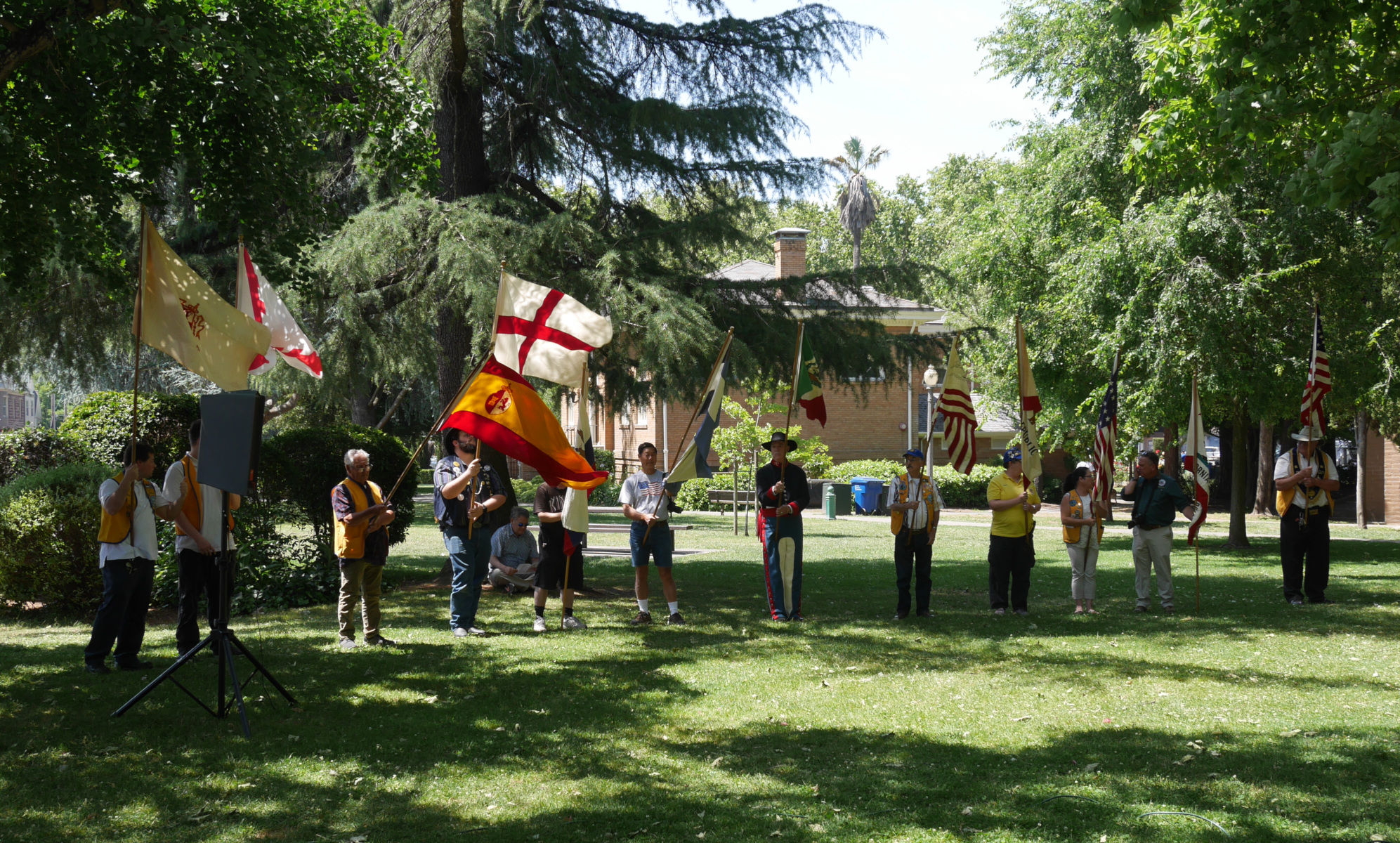
A lineup of historic flags in at the Bear Flag Ceremony. States of the United States that were once ruled by either Mexico or France really like to commemorate this fact.

A lineup of historic flags in at the Bear Flag Ceremony. States of the United States that were once ruled by either Mexico or France really like to commemorate this fact.

Things really got interesting with a speech by Dave Allen, Past Grand President of the NSGW and Chairman of the Historical Preservation Foundation. He explained how interpretations of historical facts can and often do change. “A situation that was generally accepted as fact can be reinterpreted by later historians as having an entirely different conclusion,” he said. As an example, he explained that the snow encountered by the Donner Party in 1846-47 was long presumed to be 22 feet deep, and for this reason the Pioneer Monument in Truckee has a base 22 feet high. But more recent research has shown that the snow was in fact 13 feet deep. PGP Allen spoke only about details like this, but I got the impression that he meant that broader interpretations could be changed as well—such as whether the participants in the Bear Flag Revolt were heroes or not.

Later in the program, Sonoma Mayor Amy Harrington remarked that the Bear Flag Revolt proves that a small group of people can make a big difference. (I suppose it helps if said people have the support of an imperialistic power nearby.) The NSGW gave Mayor Harrington a new state flag, which a color guard raised up a flagpole marking the approximate location where the original Bear Flag was flown. As the new flag was nearing the top of the flagpole, somebody behind me in the audience shouted, “Hip hip hooray!” and others nearby chuckled.
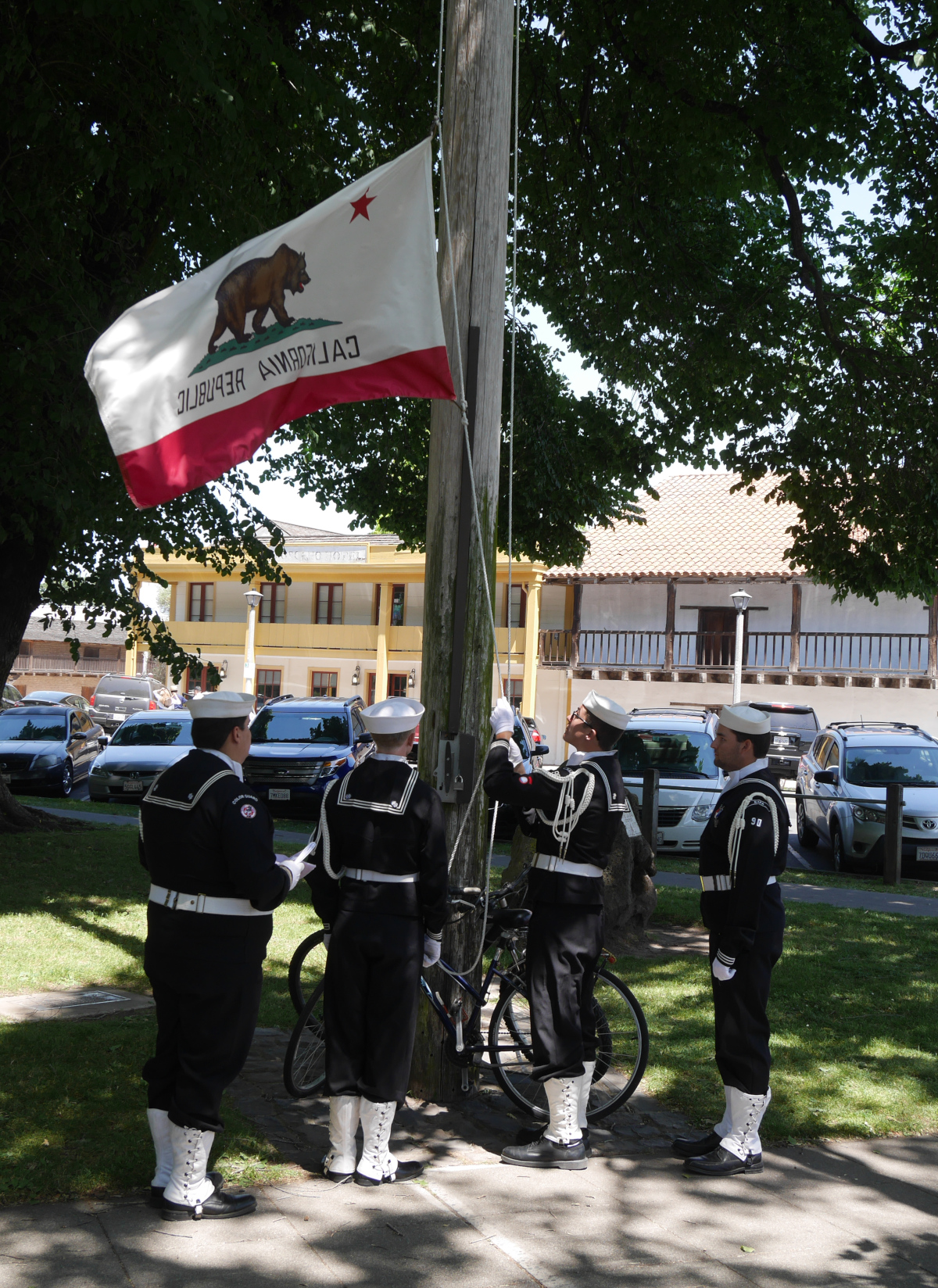
Lowering last year’s state flag on an overly-literal telephone pole that is supposed to mark the site of the original Bear Flag’s raising.

Lowering last year’s state flag on an overly-literal telephone pole that is supposed to mark the site of the original Bear Flag’s raising.

The ceremony concluded with a group singing of the state song, “I Love You California.” Although the words were printed on the back of the program, most people in the audience (your blogger included) didn’t know the tune and couldn’t sing along.

Later in the day, a planned reenactment of the Bear Flag Revolt failed to materialize, so I headed home. Although I would have liked to have seen a reenactment, I had gotten plenty of insight already. I had wondered if the interpretation and memory of the Bear Flag Revolt was constrained by the state or the Native Sons of the Golden West—as, for example, the Daughters of the Republic of Texas guards the historical interpretation of the Alamo. But it seems that this is not the case. NSGW Past Grand President Dave Allen is right: interpretation of the past can and does change. I find it heartening to know that the state of California and the Native Sons of the Golden West are open to new interpretations.
Collective memory and space movies

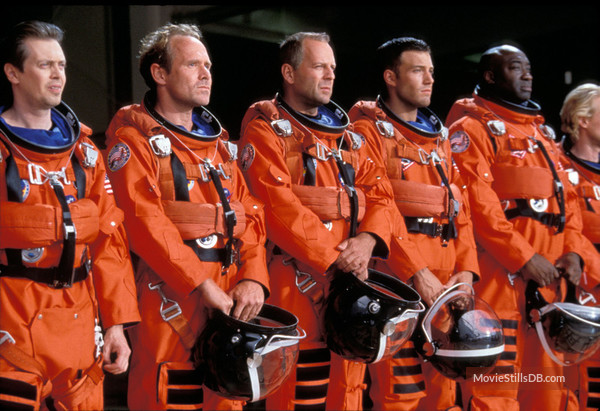
Not very many films have been made about real-life space travel. Flying a rocket into space is always dangerous, but it usually doesn’t make for good story material. Spaceflight is clinical, precise, and often boring. It offers filmmakers little in the way of conflict. Something goes wrong on every space mission, but the vast majority of them end happily. Fictional space films set in the near-future and using recognizable hardware usually over-compensate for the relative safety of space travel by killing off large numbers of astronauts in their stories. (Most recent example: Gravity [2013].)

Fictional movie astronauts all trained, suited up, and ready to die. (Touchstone Pictures)

Fictional movie astronauts all trained, suited up, and ready to die. (Touchstone Pictures)

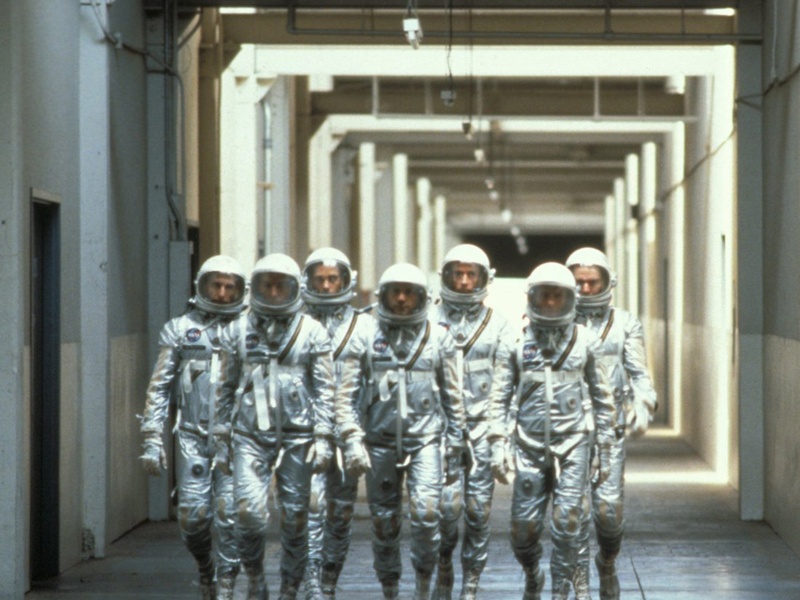
Let’s take a look about two non-fiction space films that cover a similar subject from very different angles: The Right Stuff (1983) and Hidden Figures (2016). The Right Stuff is based on Tom Wolfe’s 1979 book by the same name. It is a long, sprawling epic about flight testing and the beginning of NASA’s space program in the 1960s. Although the book has a more serious, reflective tone, the movie Right Stuff is written almost like a cartoon, with the paparazzi and Vice President Johnson being especially over-the-top. There are many factual inaccuracies in the movie, but it is also quite fun to watch for the most part. The movie was hugely influential for developing the visual language of spaceflight and heroism in a high-tech era.

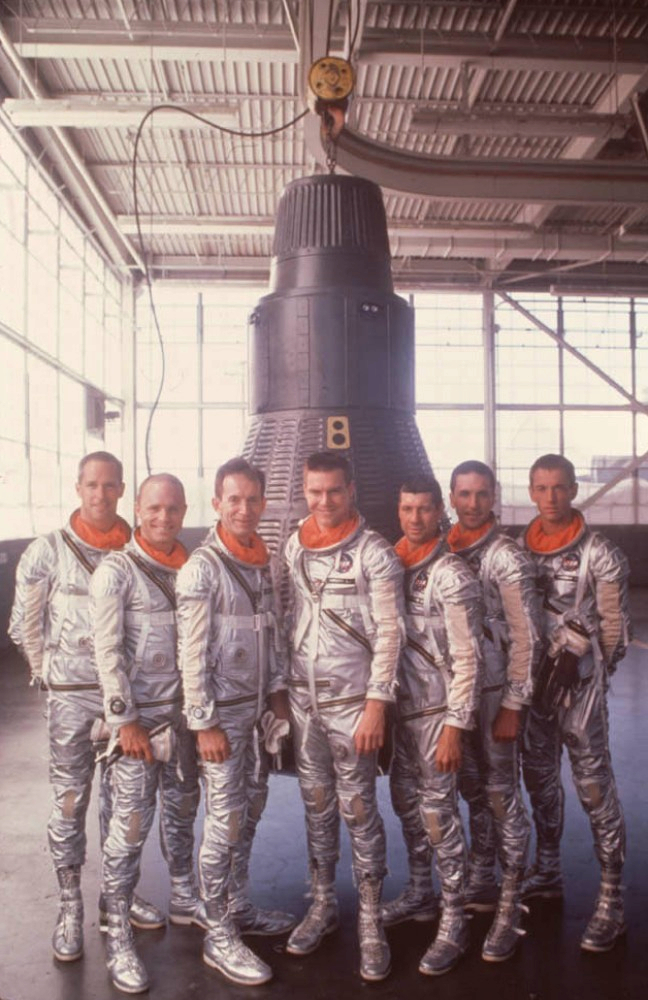
Seven of the masculine heroes of The Right Stuff. This corridor scene has been endlessly imitated and parodied. (Warner Home Video)

Seven of the masculine heroes of The Right Stuff. This corridor scene has been endlessly imitated and parodied. (Warner Home Video)

In the Right Stuff book, Tom Wolfe explored the masculine world of flight-testing and spaceflight, and tried to understand how and why the early astronauts were made into heroes. The movie is less self-aware, instead taking the astronauts’ heroism at face-value. It un-self-consciously portrays a sexist, racist time, and some parts are hard to watch now.

A completely different perspective is given by the recent Hidden Figures. While The Right Stuff wouldn’t even pass the Bechdel Test—and forget about portrayals of people of color in it—Hidden Figures is about three African-American women working at NASA Langley in Virginia in the early sixties. The characters (composites of actual women whose factual stories are explored in a book by the same name) perform the calculations that allow the first Americans to fly into space and return home safely.

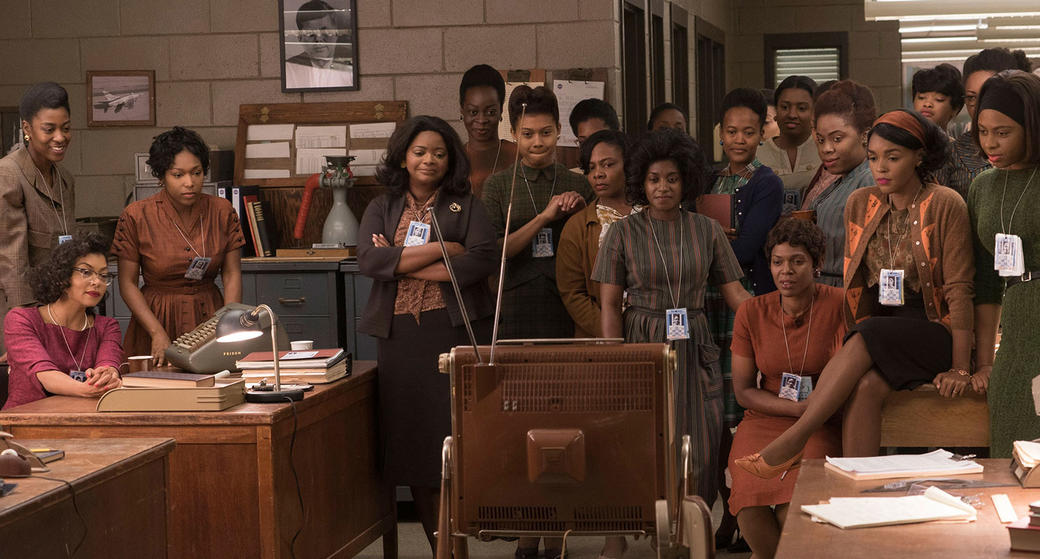
The black computers of Hidden Figures in their work room. (20th Century Fox)

The human computers of Hidden Figures watching a space mission in their work room. (20th Century Fox)

Like The Right Stuff, Hidden Figures is very much a product of its time, when Americans are being more reflective about race and gender inequalities. The story of black human computers (as the characters of Hidden Figures were called) would never have been told in a major feature film in 1983, much less in the early sixties. The film’s approach to race is a little sentimental, but overall I thought the movie was very well written and a good watch.

Apart from portraying social dynamics very differently from each other, the films also diverge in their portrayals of the technology of early space travel itself. In this respect, the otherwise cartoonish Right Stuff is much more accurate than Hidden Figures. The Right Stuff had to be visually accurate because it portrayed events that were much more in living memory in 1983 than in 2016. More than half of Americans alive in the early eighties would have remembered the early sixties, but a much smaller portion of the population would have remembered back that far by the mid-2010s.

Living memory of the early space age, combined with strategic use of stock footage to save production costs, meant that The Right Stuff faithfully portrayed the Mercury spacecraft, pressure suits, buildings, and control equipment of the era.

The cast of The Right Stuff recreate early NASA publicity photographs.

The cast of The Right Stuff recreating an early NASA publicity photograph. (Warner Home Video)

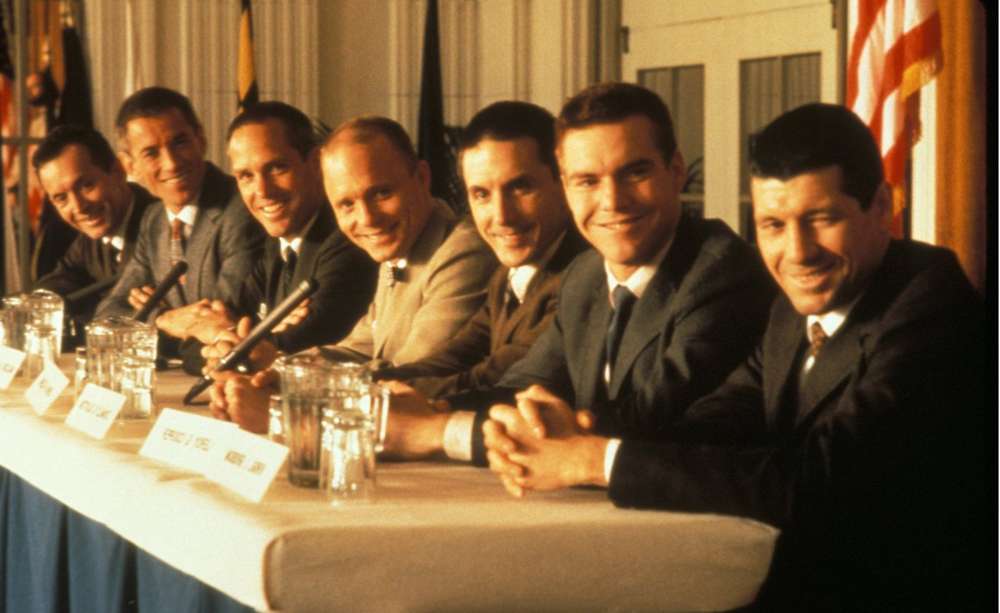
The Mercury astronauts were introduced in a famous press conference, which was recreated in The Right Stuff. (Warner Home Video)

The Mercury astronauts were introduced in a famous press conference, which was recreated in The Right Stuff. (Warner Home Video)

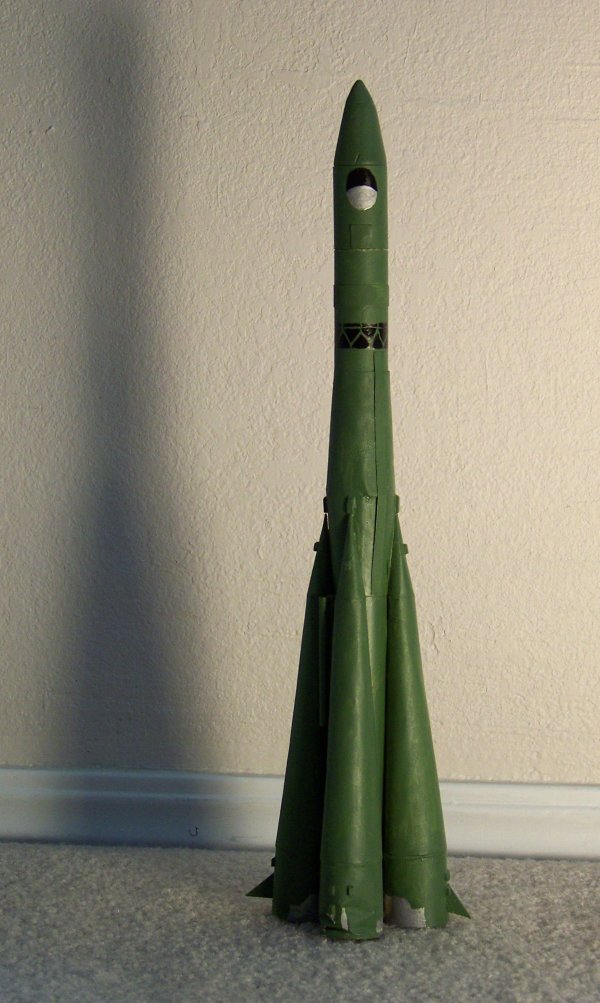
Hidden Figures didn’t need to be as faithful. Several times while watching it, I suppressed a groan in response to inaccurate set design or portrayal of some other aspect of the technology. (The launch gantry for the Mercury-Atlas rocket was especially unfaithful to the original.) The filmmakers even depended on their audience’s not knowing the technology. At the beginning of the movie, the flight of a CGI Russian rocket is intercut with NASA engineers at ground control. The audience is supposed to think that this is a NASA rocket, until at the end of the scene the rocket rolls and—surprise!—there is a big hammer-and-sickle on the other side. (The surprise was lost on me because I recognized it as a Russian rocket from the start. The filmmakers were depending on most of their viewers’ not having built model rockets of that design as kids.) In reality, the Soviet rockets of the time didn’t have such big hammer-and-sickles on them, but the filmmakers needed to add this detail so the audience would know what they were looking at.

The movie John Glenn (played by Glen Powell) neither looks nor acts like the real man. (20th Century Fox)

The movie John Glenn (played by Glen Powell) neither looks nor acts like the real man. (20th Century Fox)

The further we get from historical events, the more our collective memory of them becomes fuzzy. The Right Stuff had to be visually accurate because the events it was portraying were more in living memory. Hidden Figures didn’t need to be that accurate, and it even needed to change some details in order to tell things to the audience that The Right Stuff’s audience would simply have known.

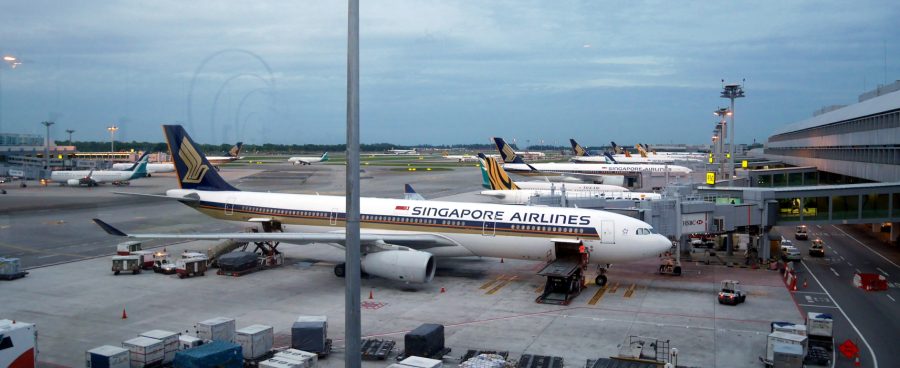
Singapore Airlines planes at Changi Airport.

A nation without monuments

Every country has its monuments, which glorify great men of the past (and less frequently, great women), commemorate battles won and lost, and represent the nation’s ideals. Even colonies have monuments, erected on behalf of the colonial power and often paid for by the subjects. When a colony declares independence, the monuments of the colonial power are often the first to be torn down. In 1776, American colonists toppled statues of King George III. After 1947, when India parted ways with the British Empire, statues of British monarchs were moved to museums or shipped off to Canada.

The now-empty pedestals in roundabouts and parks were soon occupied by statues of the new heroes of the independent nation: Mahatma Gandhi, Netaji Subhash, Pandit Nehru. Buildings and streets likewise received new identities: Kingsway in New Delhi became Rajpath, the Prince of Wales Museum in Bombay became Chhatrapati Shivaji Maharaj Vastu Sangrahalaya. For that matter, Bombay itself was rechristened, becoming Mumbai. Just about the only thing that wasn’t renamed was the Victoria Memorial in Kolkata. A larger-than-life statue of the elderly sovereign remains in place in front of the wedding-cake building, but the interior now features a museum commemorating the independence struggle.

The example of India is not unique. Around the world, political changes usually lead to a flurry of renaming of streets and dismantling and rebuilding of monuments.

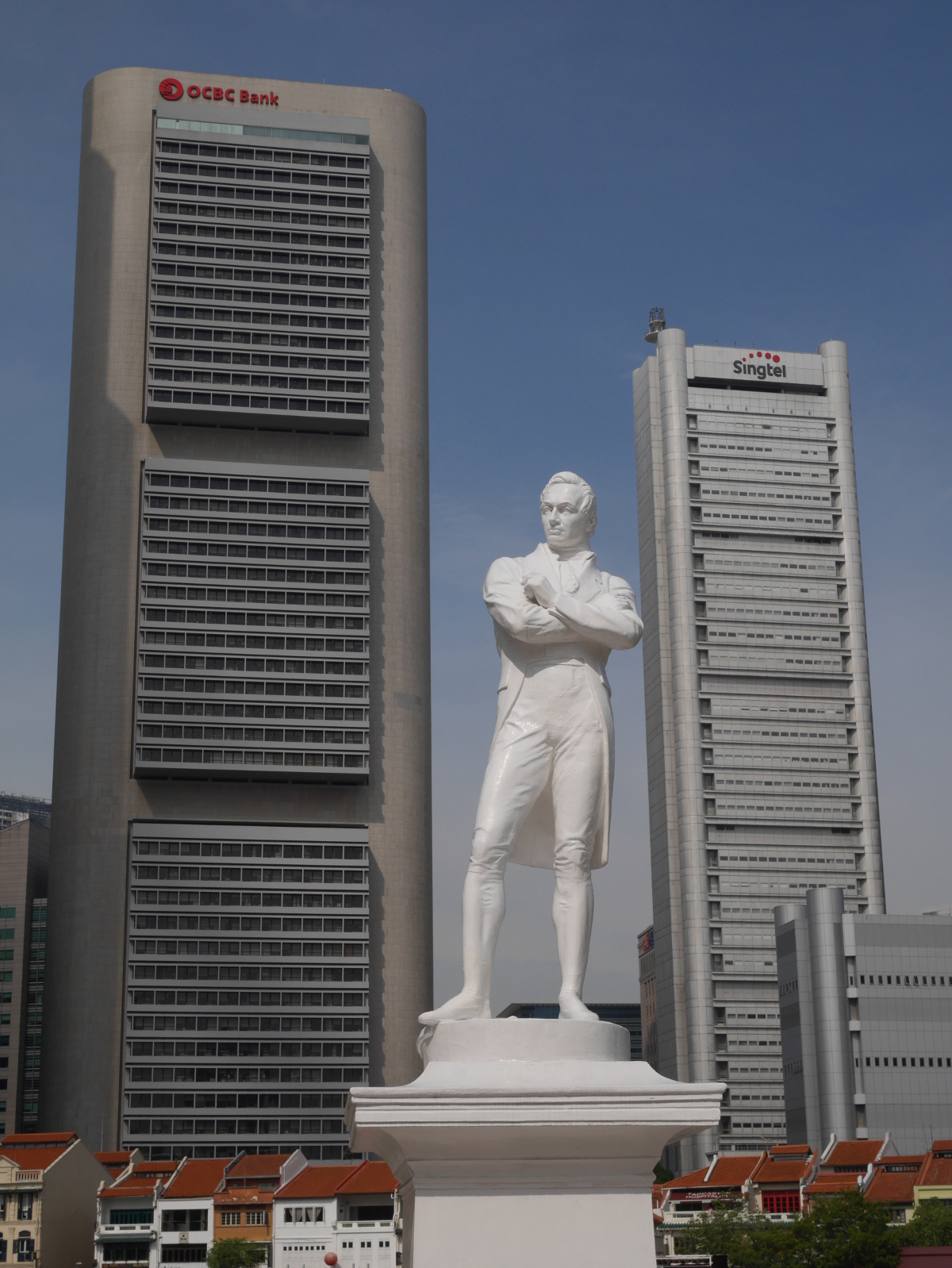
By comparison, the example of Singapore is unusual. Singapore has been an independent, sovereign nation for more than fifty years, but there has been little of the renaming and reinventing of the city-state that has happened in most other former colonies. A statue of Sir Thomas Stamford Raffles, who founded Singapore in 1819, still stands cockily over the waterfront. Most streets retain their colonial names. While there are plenty of historical markers for the colonial period and the Japanese occupation during World War II, there are no statues for Lee Kuan Yew, the country’s first prime minister—even though he served for more than thirty years and was a central figure in the modernization of the city-state.1

Statue of Sir Thomas Stamford Raffles in Singapore.

Statue of Sir Thomas Stamford Raffles in Singapore.

On first blush, it might seem that modern Singapore is lacking in a sense of identity, which other former colonies have gone to great lengths to cultivate. I certainly felt that way when I visited two years ago. But on further reflection, not having statues of modern heroes all over the place is a part of Singapore’s identity. It shows that the country is open to the world—or at least the modern, prosperous parts of it. With its gleaming high-rises and booming economy, Singapore itself is a monument to Lee Kuan Yew.

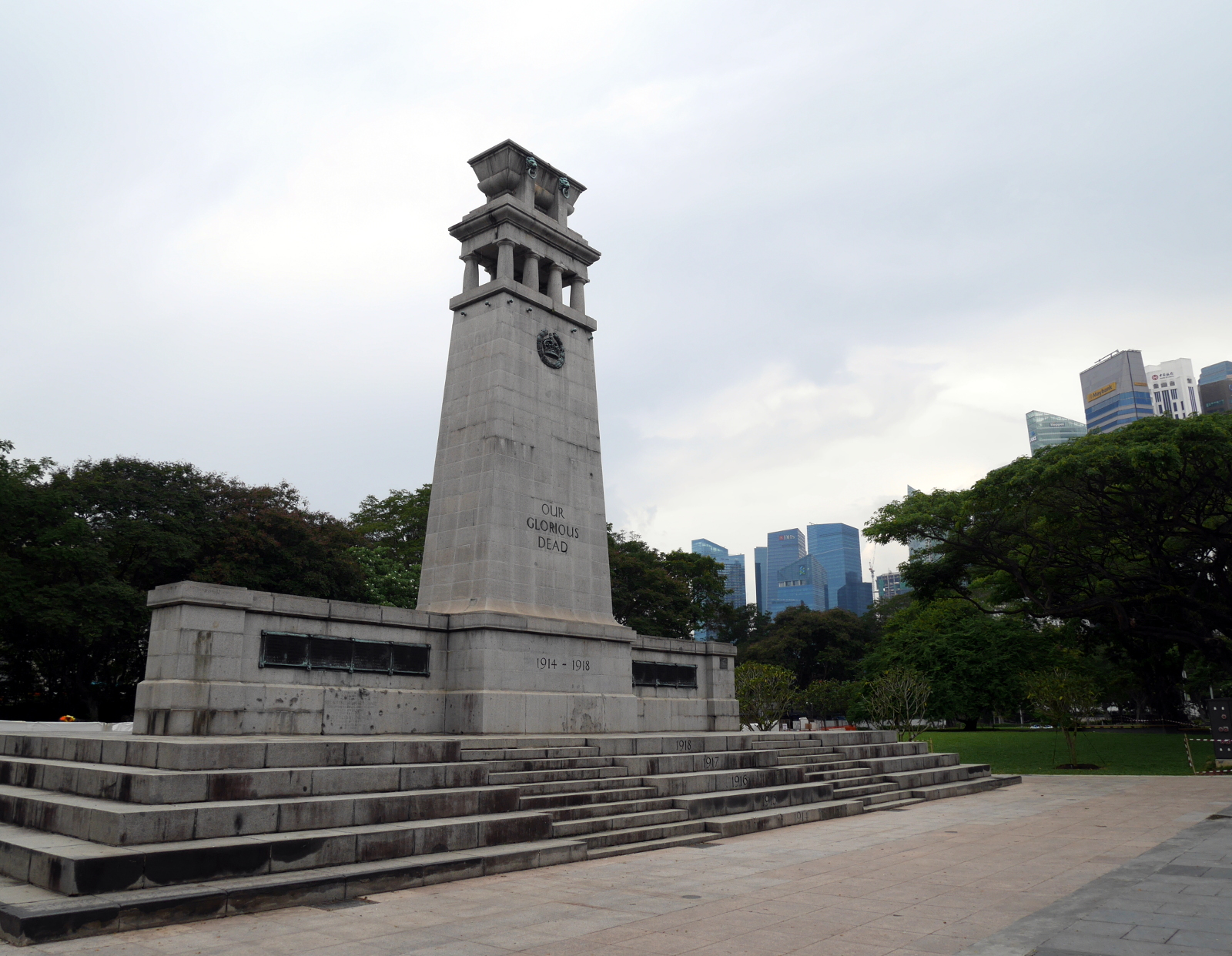
Singapore's monument to the Great War, which is inscribed in honor of the fallen of World War II on the back side.

Singapore’s monument to the fallen soldiers of the World Wars.

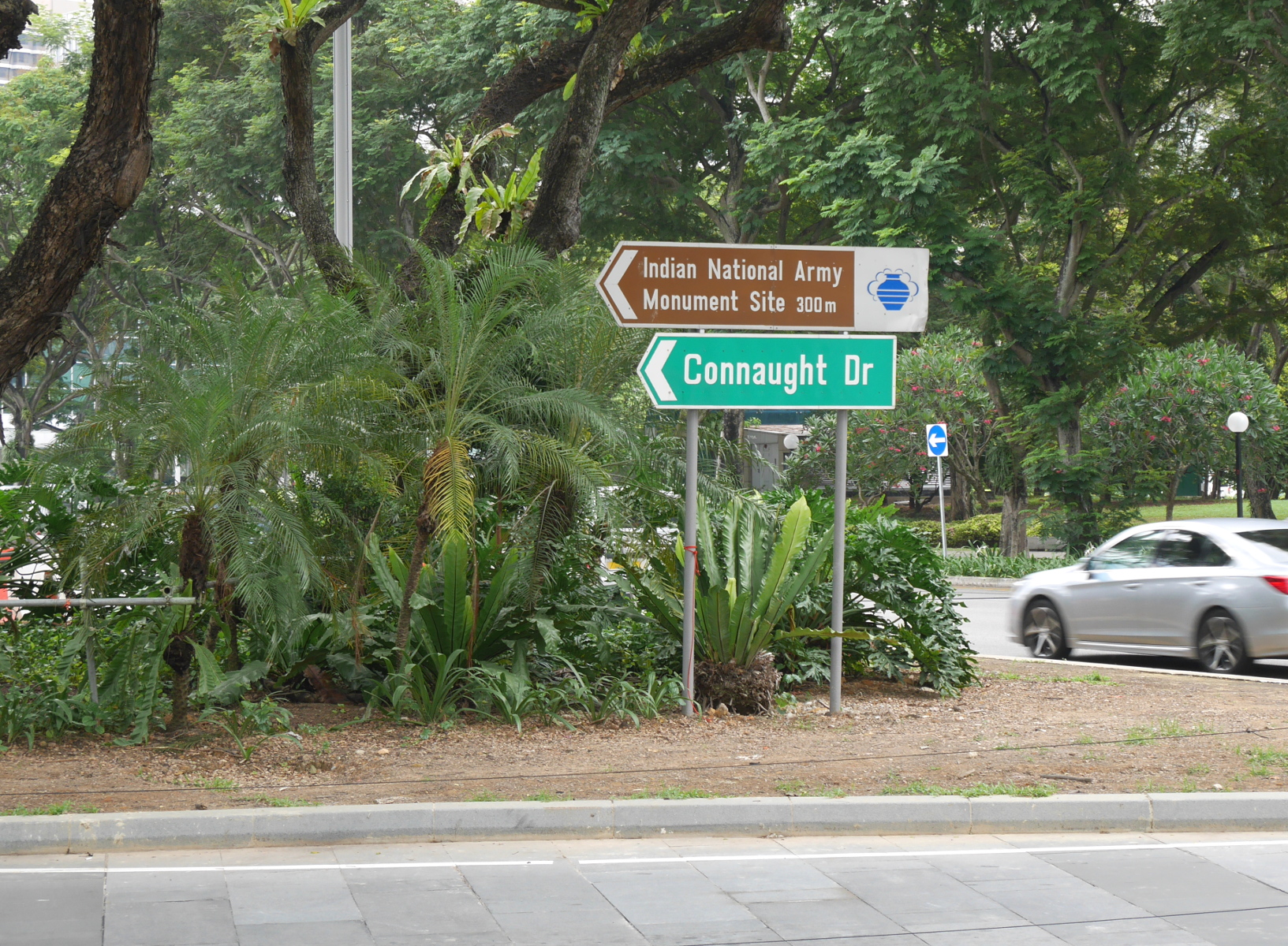
A sign on Connaught Drive, pointing to a historical marker about World War II. (The marker is located on the site of a memorial for the Japanese-affiliated Indian National Army, which was dynamited by Mountbatten’s troops after they retook Singapore in 1945.)

A sign on Connaught Drive, pointing to a historical marker about World War II. (The marker is located on the site of a memorial for the Japanese-affiliated Indian National Army, which was dynamited by Mountbatten’s troops after they retook Singapore in 1945.)

  1. C.M. Turnbull, A History of Singapore (Oxford, 1988), 320-21. []

Page 3 of 4

Powered by WordPress & Theme by Anders Norén