WillyLogan.com

Technology, History, and Place

Tag: infrastructure (Page 1 of 2)

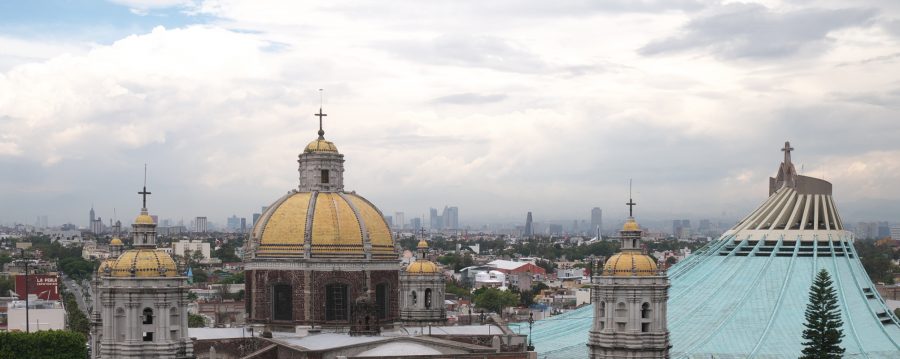
Villa de Guadalupe with Mexico City skyline in the distance.

Riding the Mexico City Metro

Mexico City got its first subway line in 1969, shortly before Washington, DC and San Francisco opened their metros but long after Boston and New York City had gotten theirs. Over the past year and a half, I have visited Mexico City a couple of times and used the metro to get around each time. Here are some things I have noticed about the Metro CDMX system and the experience of riding it.
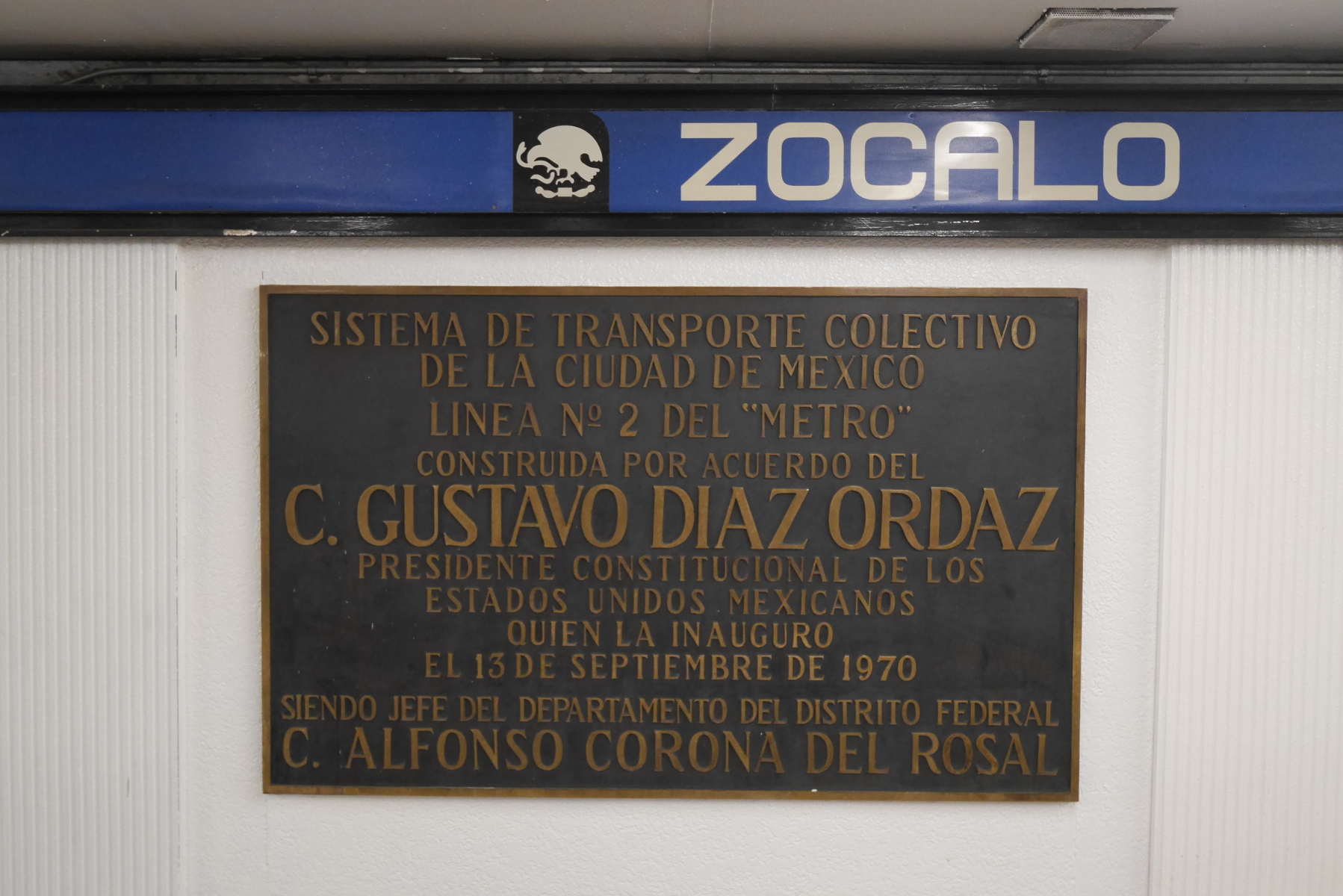
Dedication plaque in the Zócalo station.

Dedication plaque for Line 2 in the Zócalo station.

The most unique feature of Metro CDMX is that is is a decentralized network. Most metro systems start in the city center and radiate out into the suburbs, but Metro CDMX’s route map looks more like a net laid over the city. A decentralized network is more usable to more people, but it also means that you have to change trains to get almost anywhere.

Route map of the Washington Metro.

Route map of the Washington Metro. This is a centralized network, which makes it easy to go from the periphery to the center, or vice versa; but if you want to go from one part of the periphery to another, you will probably have to go through the center. (Source: https://www.wmata.com/schedules/maps/)
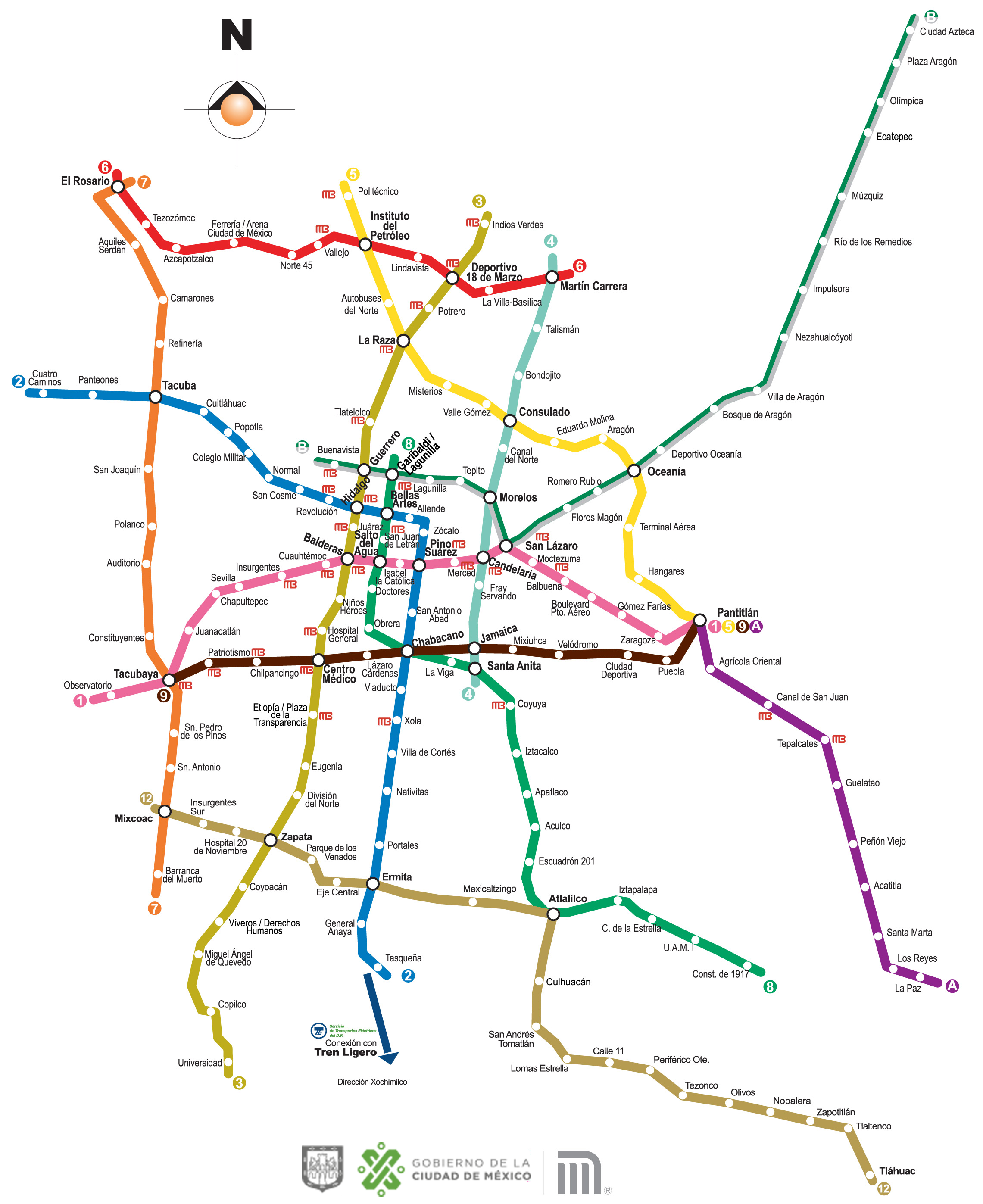
Route map of Metro CDMX.

Route map of Metro CDMX. Since this is a decentralized network, you might not have to go all the way to the center if you want to go from one part of the periphery to another. (Source: https://www.metro.cdmx.gob.mx/la-red/mapa-de-la-red)

The rolling stock has rubber tires like buses, which run on metal tracks in the tunnels and stations. (There are also steel wheels running on conventional rails, but they are hidden behind the rubber tires.) The same technology is used in the Montreal metro, as well as at a smaller scale in various airport people-movers in the United States. I have heard it asserted that this type of metro is quieter than steel-wheeled trains, but I am dubious about that, because Metro CDMX trains do not seem any quieter than other metros I have ridden.
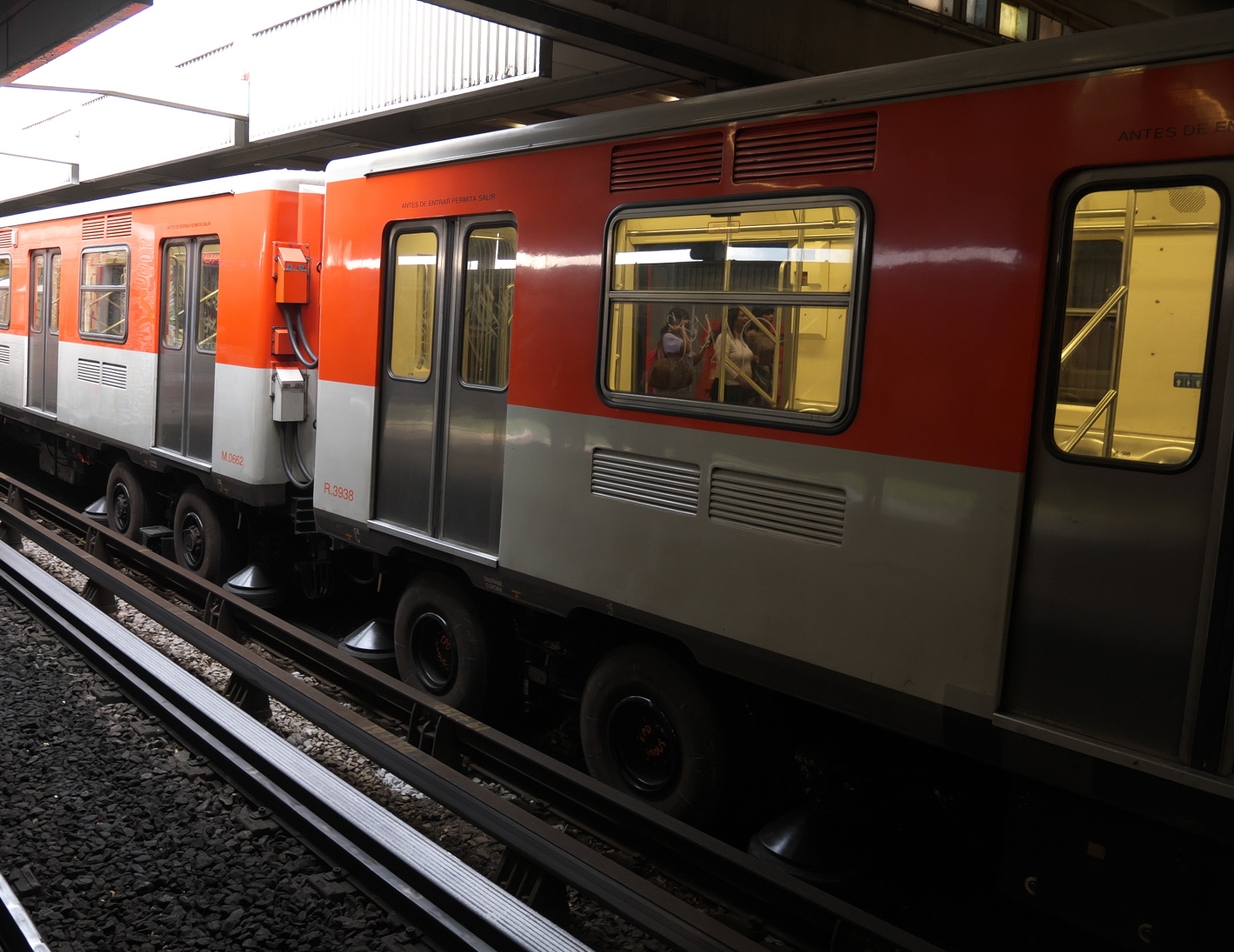
Rubber-tired train of Metro CDMX.
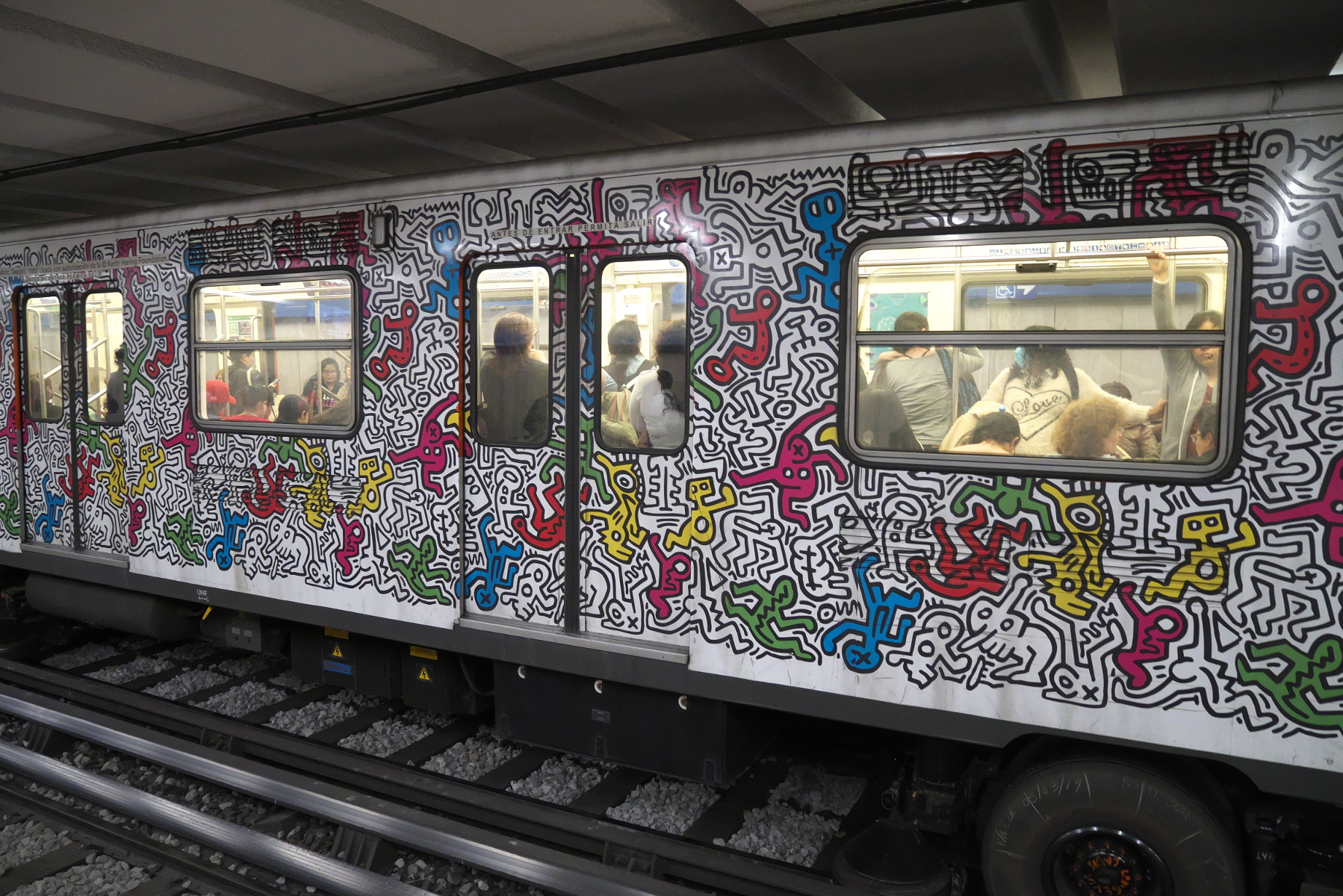
Rubber-tired train of Metro CDMX.

Metro CDMX trains love their Keith Haring.

Metro CDMX trains love their Keith Haring.

To ride on Metro CDMX, you can buy a paper ticket, or use an RF-ID smartcard with stored value. Either way, the price is the same: M$5 for a ride anywhere in the system. At 25¢ in US currency, this is amazingly cheap, probably the best value for public transport anywhere in the world.

Every metro station has a unique symbol associated with its name or the neighborhood it serves. The symbols appear on signage in stations and on the trains. Many of the stations are named after national heroes.
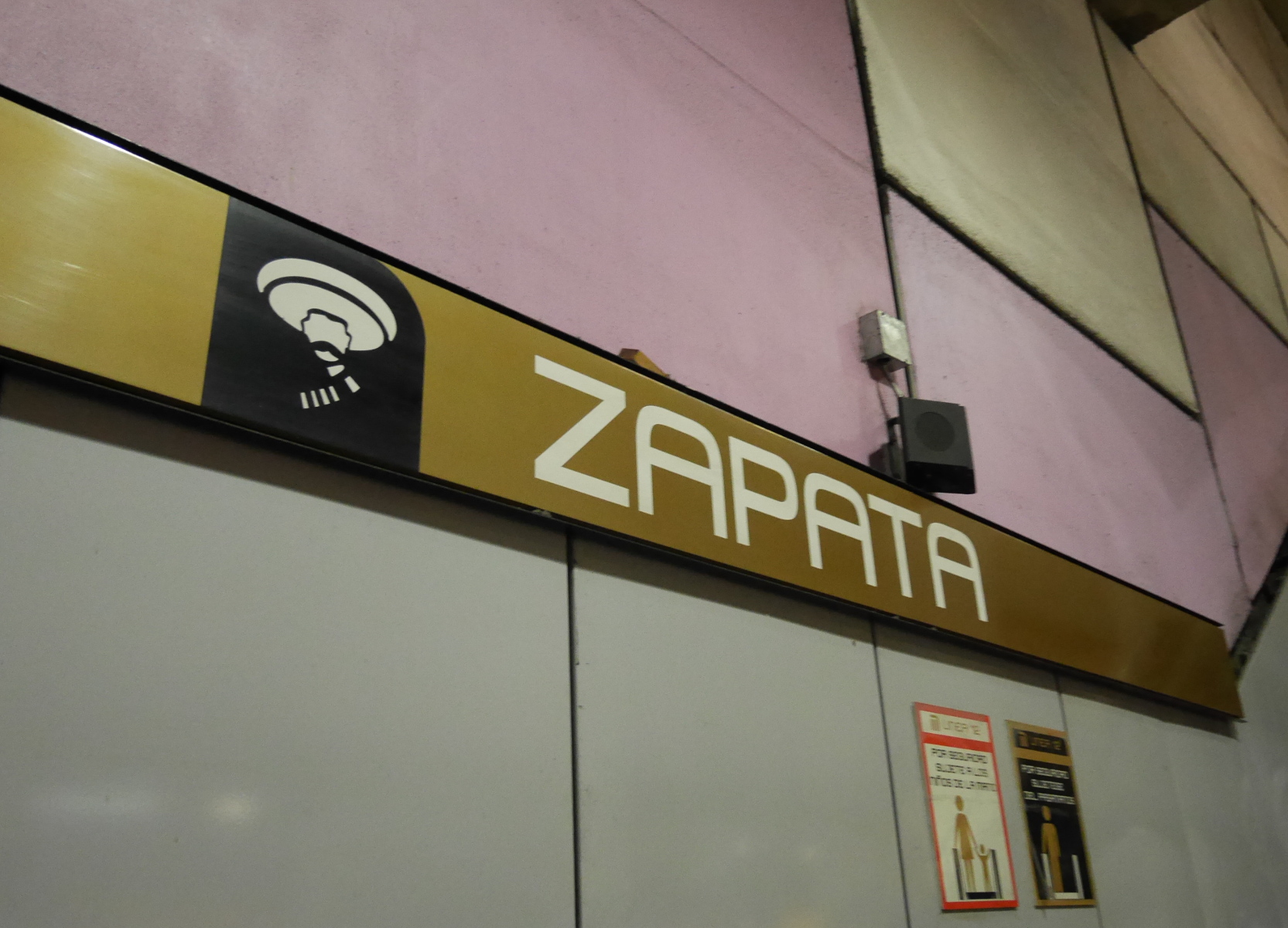
Signage in Zapata station, named after agrarian revolutionary Emiliano Zapata.

Signage in Zapata station, named after agrarian revolutionary Emiliano Zapata.

There is plenty of artwork in the stations, including murals, replica archeological artifacts, and displays of caricatures. The Zócalo station has dioramas of that part of the city over time.
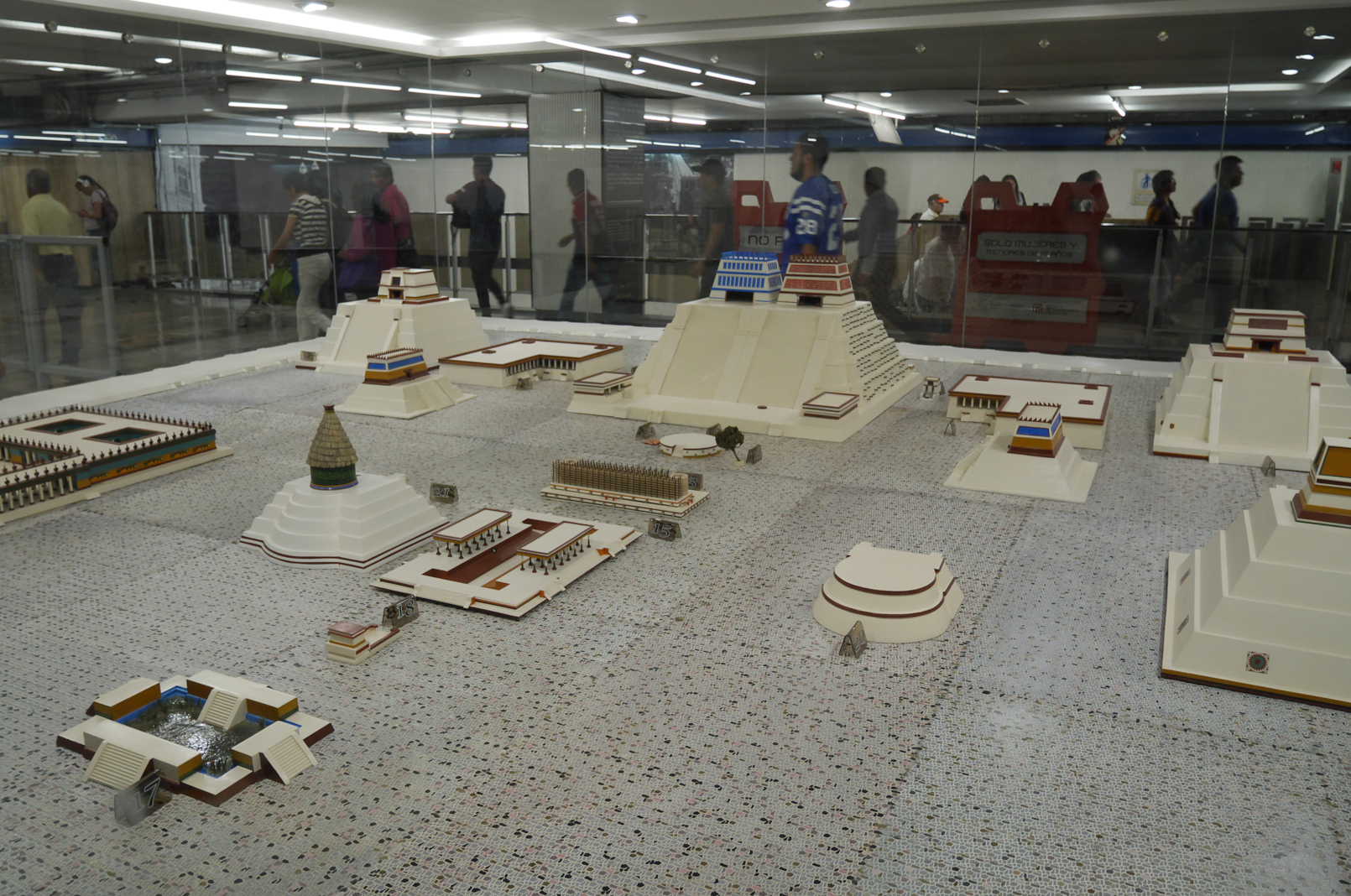
Diorama of the prehispanic incarnation of the Zócalo, in the concourse of the metro station.
Diorama of the prehispanic incarnation of the Zócalo, in the concourse of the metro station.

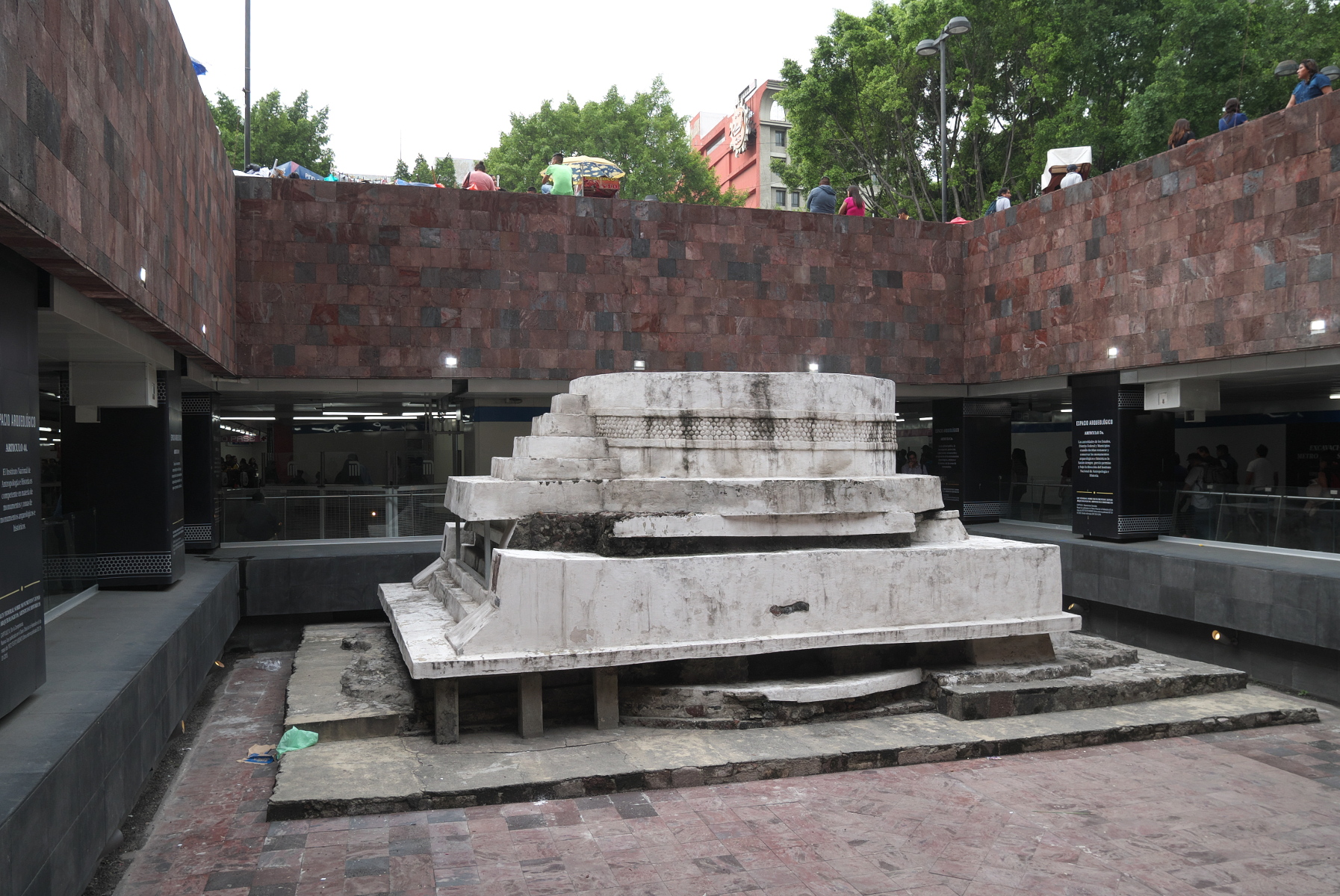
When Pino Suarez station was under construction, this Aztec temple to Ehecatl, the wind god, was unearthed. It was restored and incorporated into the design of the station.

When Pino Suarez station was under construction, this Aztec temple to Ehecatl, the wind god, was unearthed. It was restored and incorporated into the design of the station.

Metro trains in Mexico City tend not to get nearly as crowded as their counterparts in Delhi, even though Mexico City is the bigger city. The only time I got bodily pushed from behind into a crowded train car (a common occurrence in Delhi), that turned out just to have been a distraction created by pickpocketers. Ordinarily, when a train car is over-crowded, passengers just don’t get on the train. They line up on the platform and wait for the next train to come.

Some lines have vendors that sell things from train car to train car: snacks, books, CDs of folk music, anything that can be sold for M$10.

Metro CDMX farecards can be used on other systems as well, including buses and a single lightrail line connecting the metro to the canals at Xochimilco. The buses, like the metro, seemed to work well, but Tren Ligero (the lightrail) was overcrowded and slow when I rode on it.
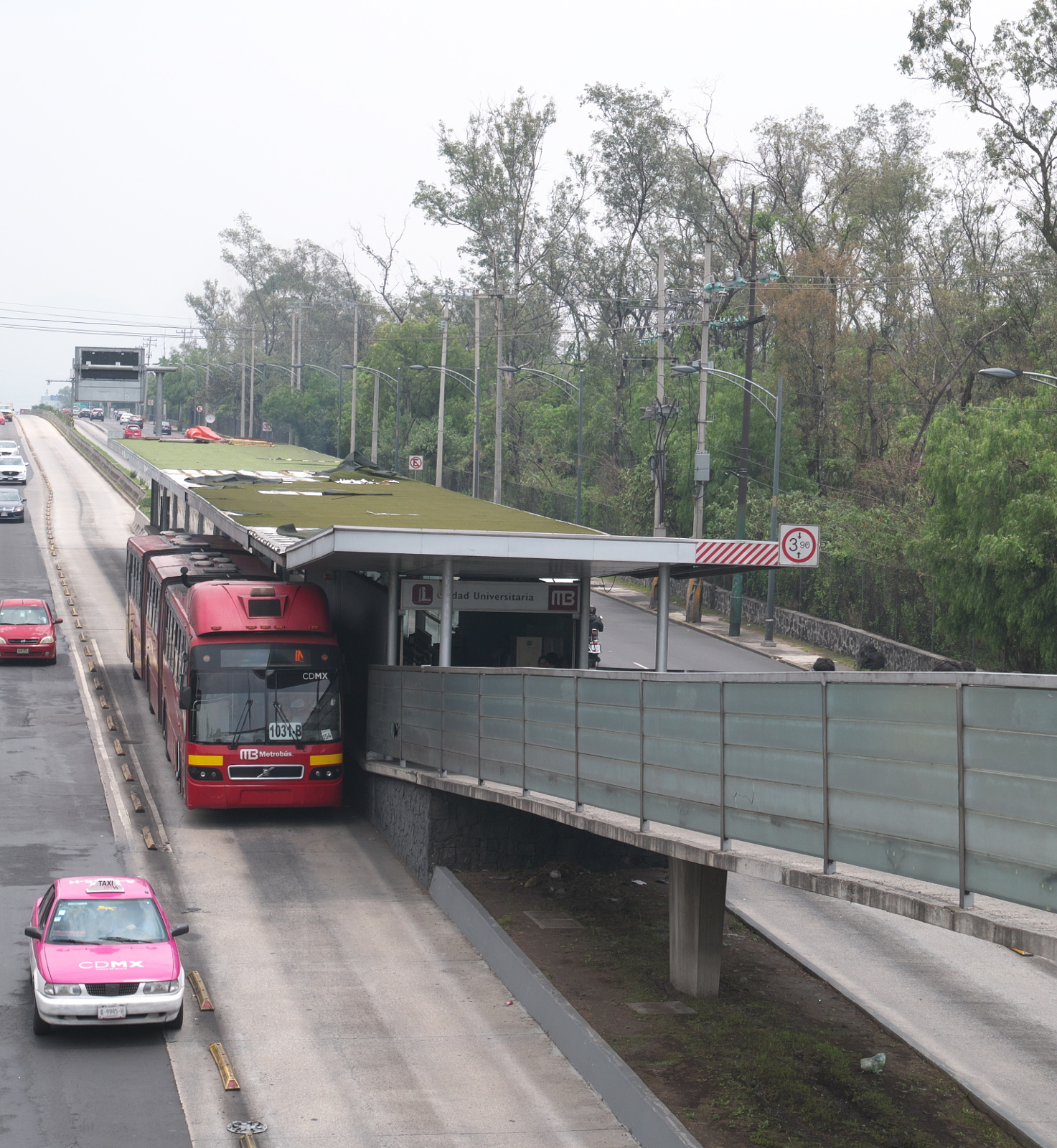
Metrobus picking up passengers at a station on Avenida de los Insurgentes.

Metrobus picking up passengers at a station on Avenida de los Insurgentes. (This is the same technology as the TransJakarta Busway.)
Gambhiri-River-Bridge

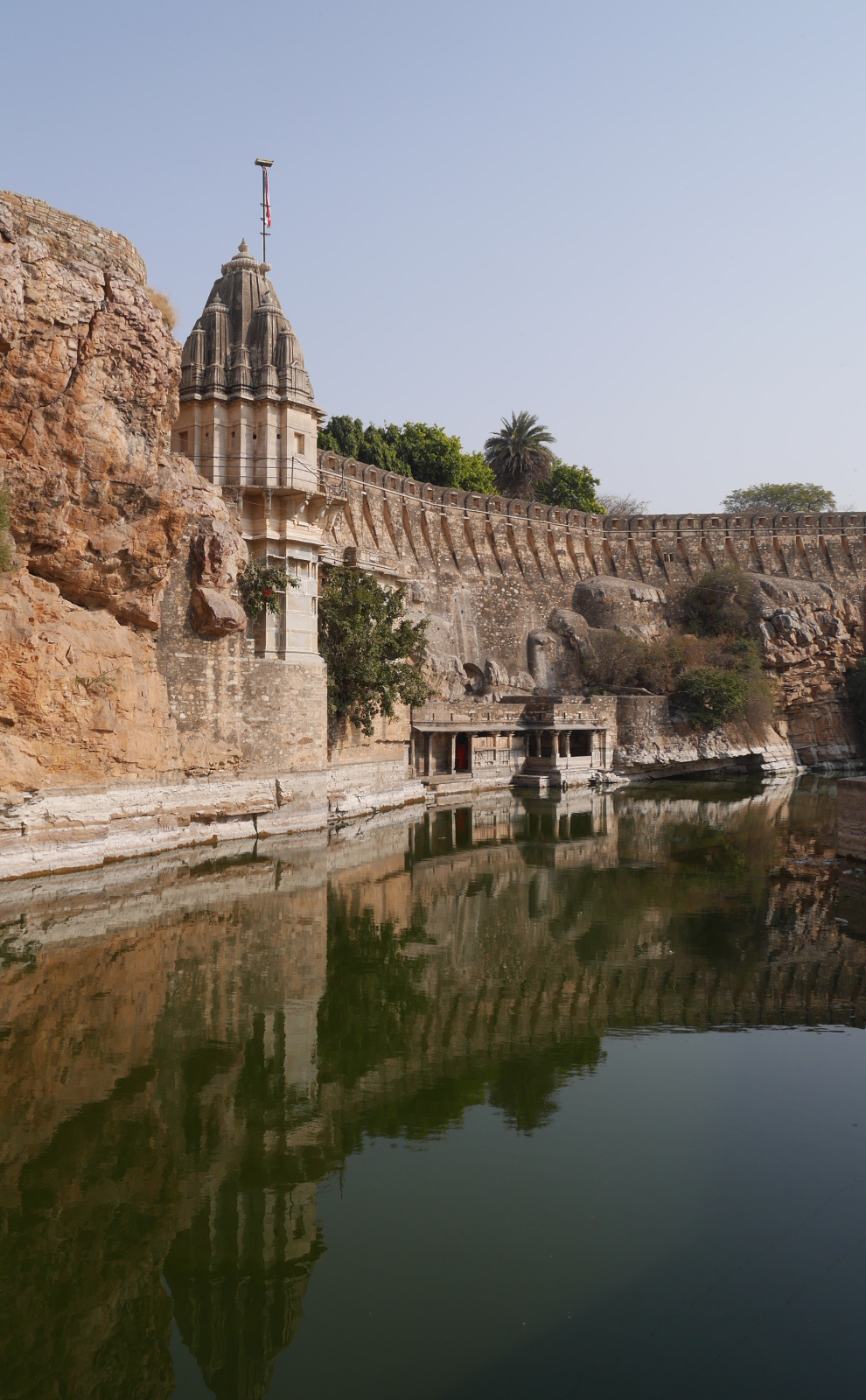
Chittaurgarh’s 700-year-old bridge

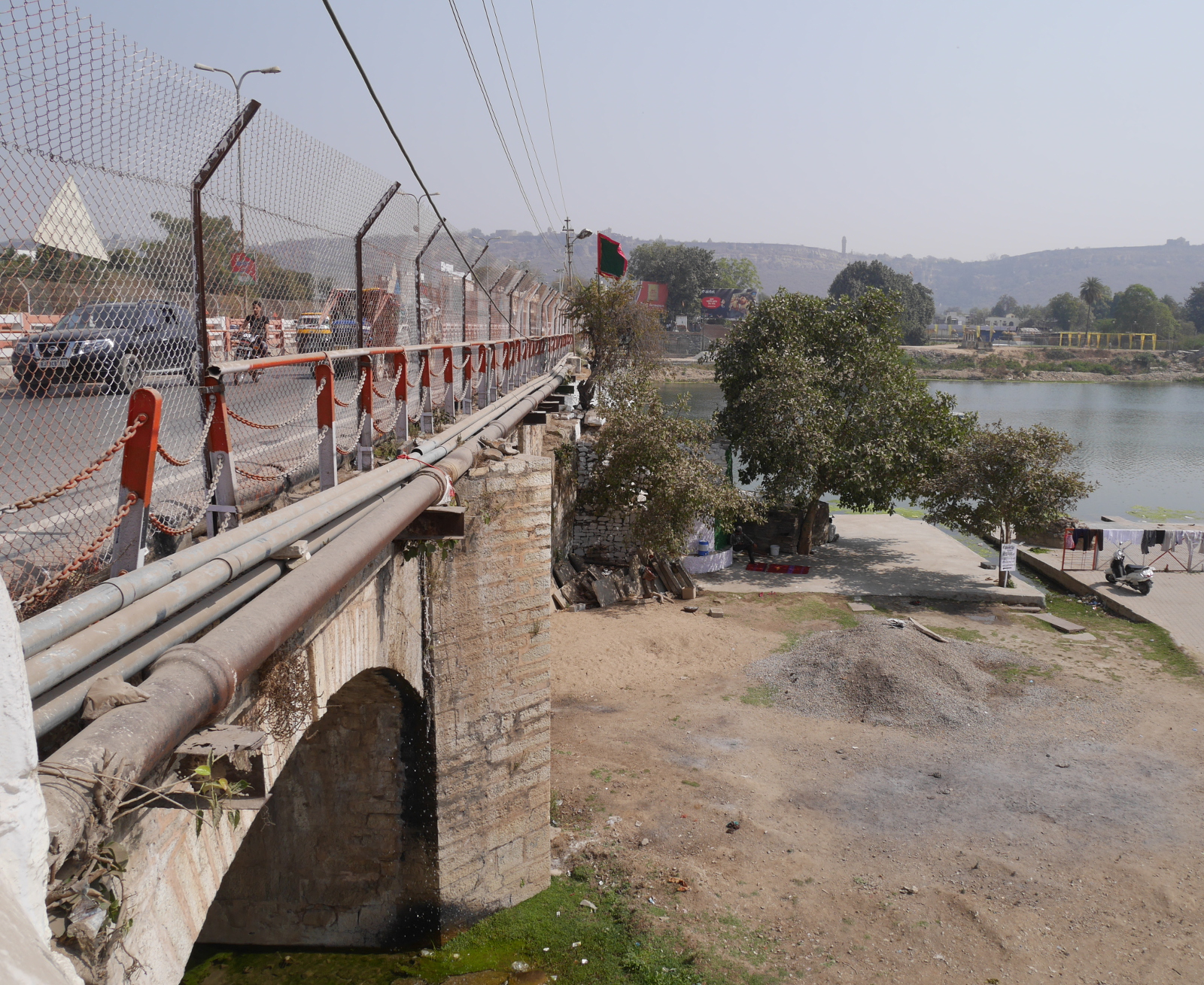
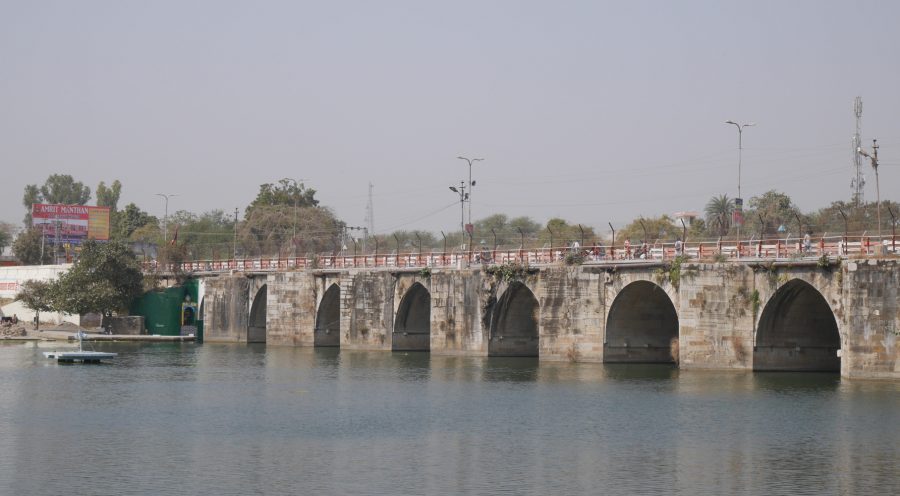
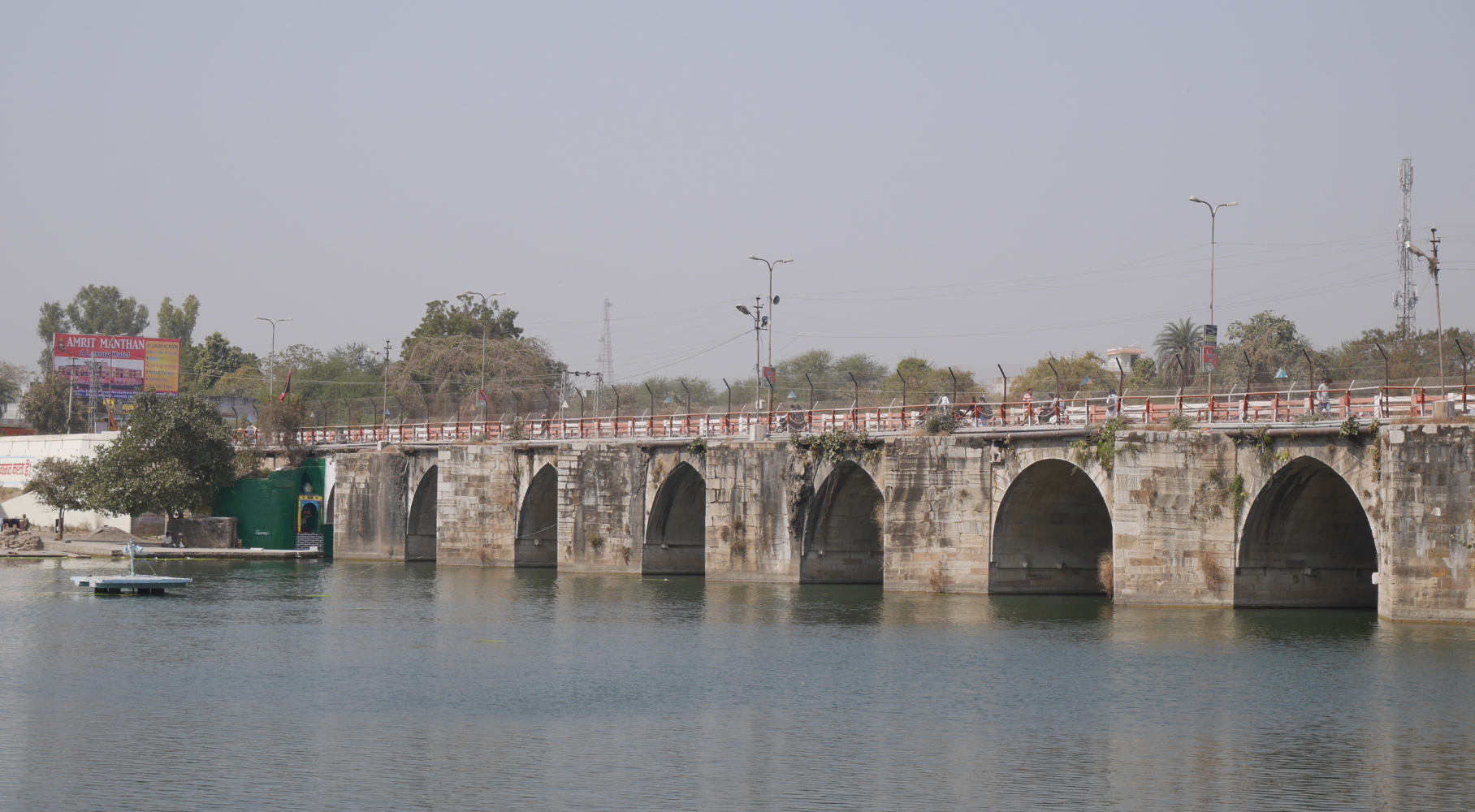
View of the medieval Gambhiri River Bridge from the eastern riverbank.

View of the medieval Gambhiri River Bridge from the eastern riverbank.

For at least a thousand years, people have been building large structures out of stone in northwestern India. The modern Indian state of Rajasthan is full of the remains of these monuments. Most of the monuments—fortresses, palaces, tombs, cenotaphs, and the like—have no real use anymore, except maybe as tourist attractions. There are plenty of pre-modern temples still in use, although many of them have been altered beyond recognition over centuries of use. And then there are some pieces of infrastructure that, with proper maintenance, still serve their original function hundreds of years after they were built.

One example is a bridge over the Gambhiri River in the town of Chittaurgarh in southern Rajasthan. The bridge is located on the main road into town. It is built entirely of stone, with nine slightly-pointed arches and one semicircular arch. (The river flows through eight of the arches, while the remaining two are on the shore. There are also two additional arches on each side of the bridge, but these are made in a different style and seem to have been added later.) The piers founded in the river have triangular projections on the upstream side, to help the river water, and any debris that might be floating in it, flow smoothly around the bridge.

The Rajasthan state Department of Archaeology and Museums has set up a Hindi interpretive plaque on the western side of the bridge. According to the plaque, the bridge was built early in the fourteenth century by Khijra Khan, after his father Alauddin Khilji captured Chittaurgarh in 1303. The bridge is built partly of stone blocks appropriated from other buildings. Inscriptions of Tej Singh and Samar Singh, two late-thirteenth-century rulers of Mewar, are still visible on the bridge. There are also some surviving architectural flourishes from the original structures, including designs of flowers and leaves. (None of this is visible to the casual observer from the shore, but I trust that the state archeologists know where to look.)

The Gambhiri River Bridge has been modified a little over the past seven hundred years. Although it was designed for horses and carts, it is strong enough to support motor vehicles. In modern times, a three-foot railing was added to the side of the bridge; when this proved inadequate for whatever reason, an eight-foot fence was also added. The bridge also carries several pipelines and some cables. Just downstream, a newer bridge has been built for eastbound traffic. The medieval bridge now just carries westbound traffic away from Chittaurgarh.

View of the Gambhiri bridge from the western bank.

View of the Gambhiri bridge from the western bank.

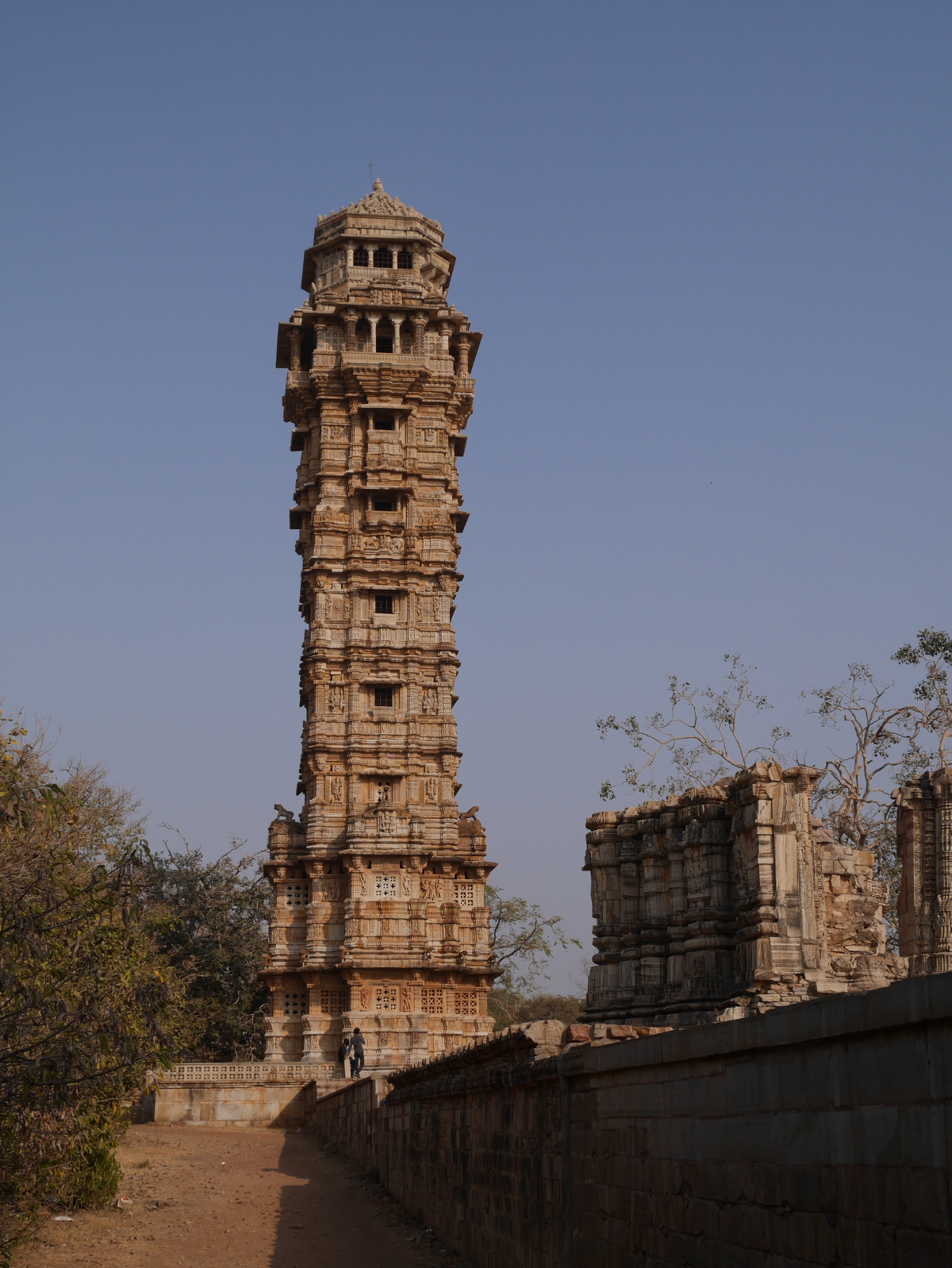
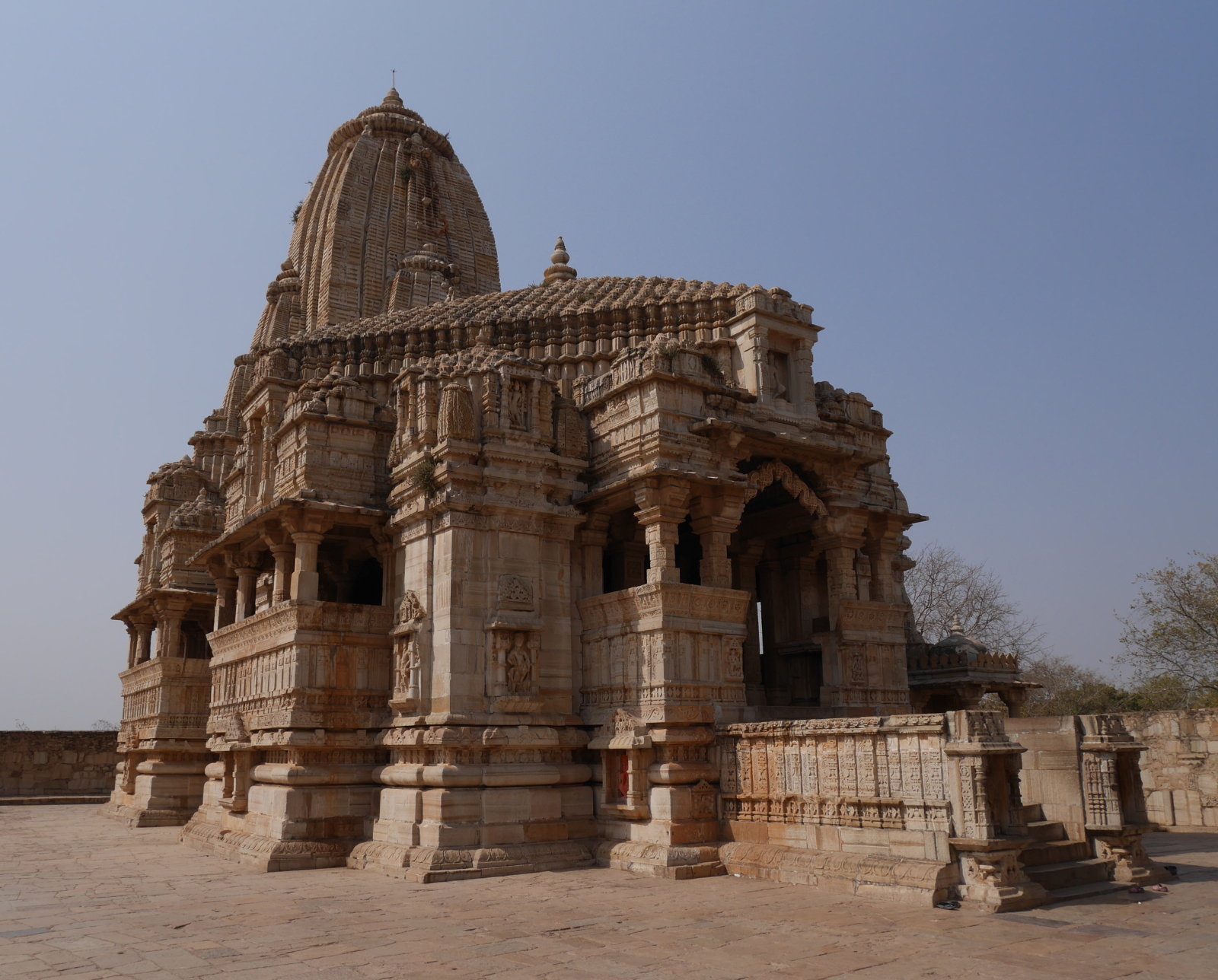
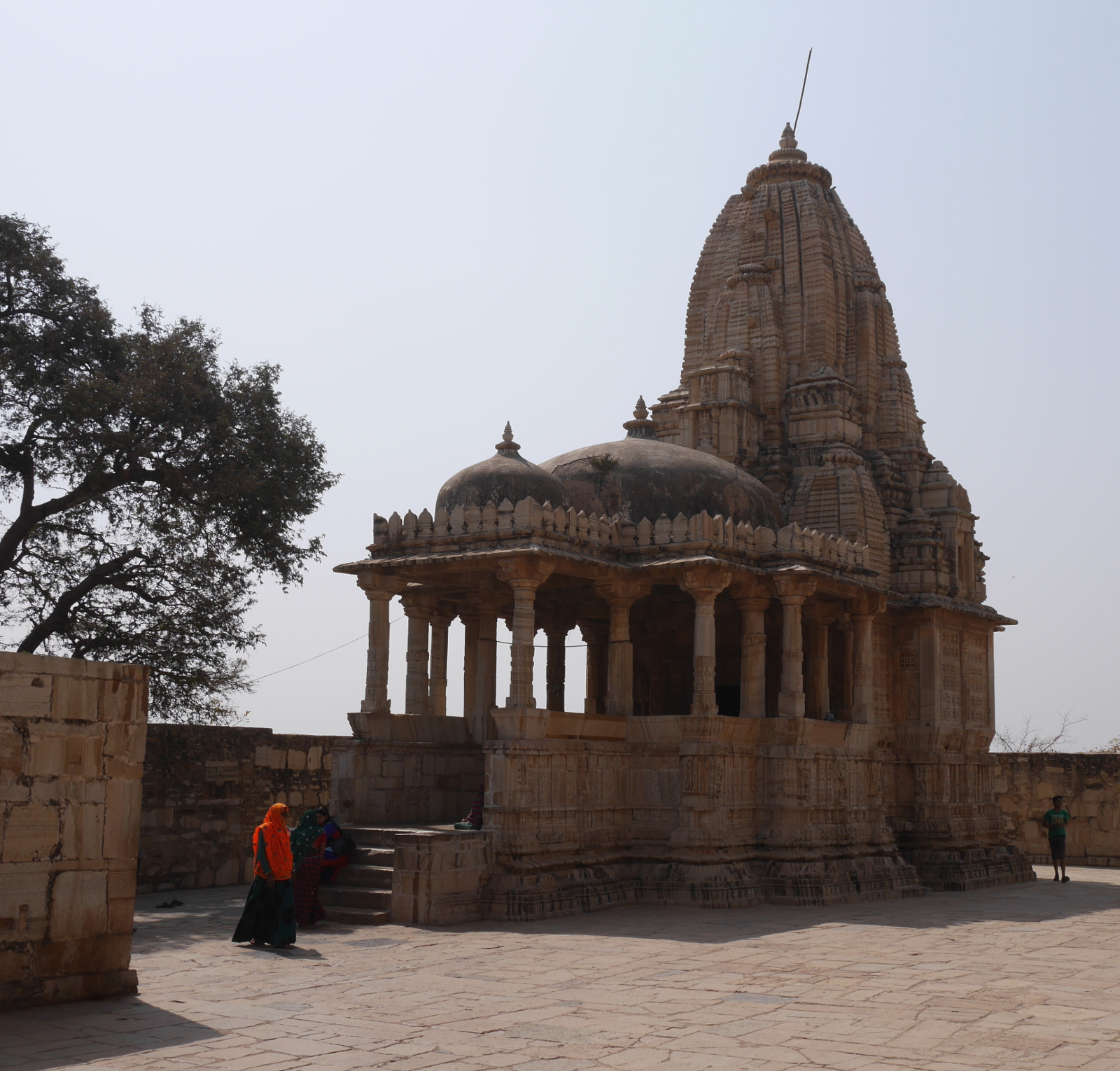
For readers who aren’t familiar with Chittaurgarh: The place is famous for the fortress by that name, a massive structure stretching five kilometers along the top of a ridge. The fortress was defensible, thanks to its position, but it was also a highly sought-after strategic prize, and it was captured and re-captured several times throughout its long history. Emperor Akbar won the fort for the Mughal Empire in a long and bloody siege in 1567-68. The fortress is now maintained by the Archaeological Survey of India, although it is so huge that inhabited villages exist within the walls alongside the historical monuments. Architectural highlights inside the fort include the Vijay Stambh (Tower of Victory, 1457-68), Kumbha Shyam Mandir (magnificent Nagara-style temple), Mira Bai Mandir, and Gaumukh Kund (rainwater storage tank).

Vijay Stambh (Tower of Victory), Chittaurgarh.

Vijay Stambh (Tower of Victory), Chittaurgarh.

Kumbha Shyam Mandir.

Kumbha Shyam Mandir.

Meera Mandir, where poet-saint Meera Bai worshiped Krishna.

Meera Mandir, where poet-saint Meera Bai worshiped Krishna.

Gaumukh Kund (Cow-mouth Well), Chittaurgarh.

Gaumukh Kund (Cow-mouth Well), Chittaurgarh.

Riding the meter-gauge rails

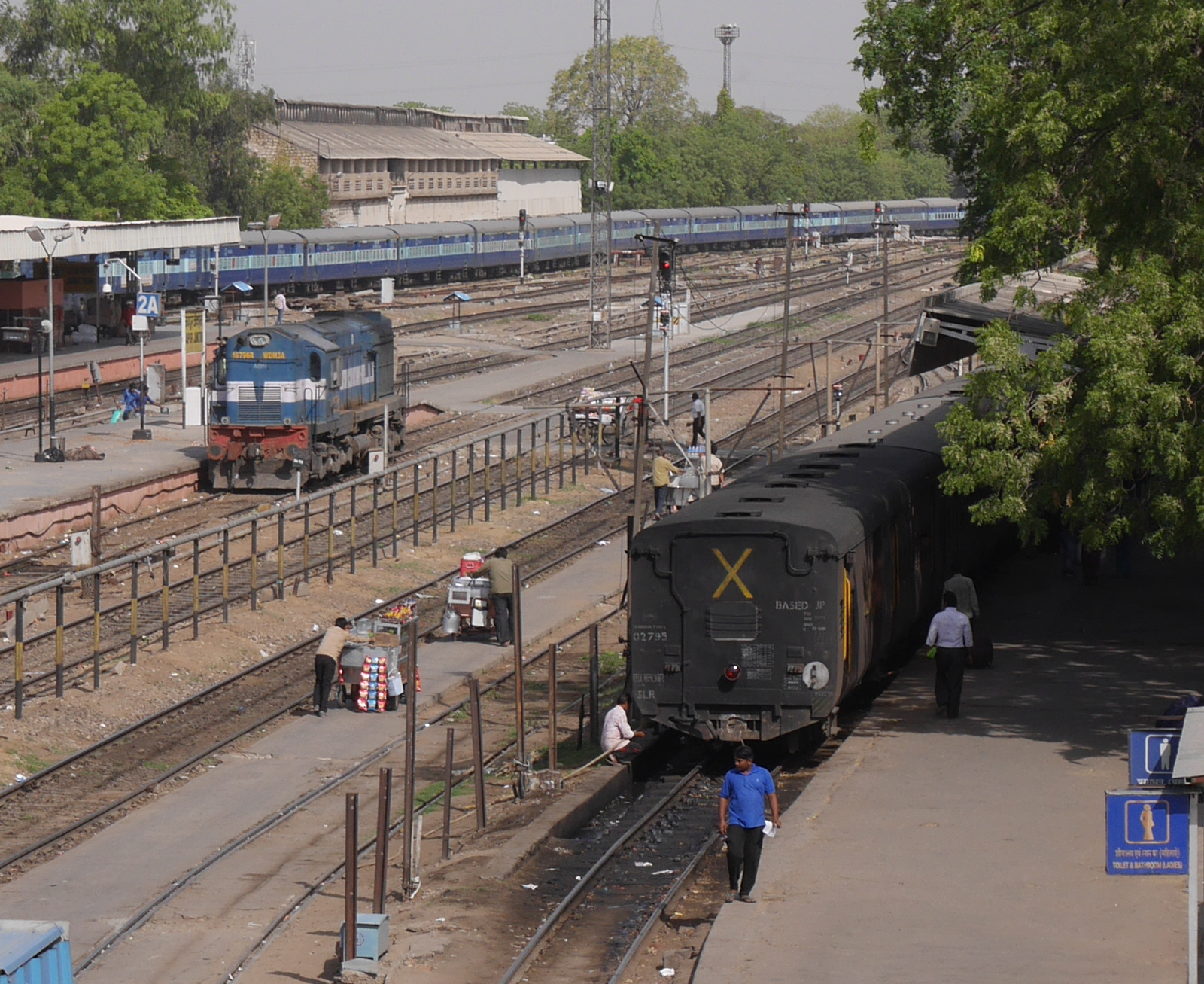
Broad-gauge (left) and meter-gauge (right) trains at Jaipur Junction.

Broad-gauge (left) and meter-gauge (right) trains at Jaipur Junction.

When private British capital first started building railroads in India in the mid-nineteenth century, the lines were built in broad gauge. With a spacing between the rails of 5 ft 6 in, this was, and still is, the widest rail gauge in common use anywhere in the world. The colonial Government of India started to build their own rail lines in the 1870s. These public-sector railways were more cheaply built than their private counterparts, and they were made in meter gauge (3 ft 3 3/8 in).

Even after independence and the nationalization of the private railways, broad-gauge and meter-gauge lines continued to be developed in parallel with each other. Only in the 1990s did the Indian Railways start to convert meter-gauge lines to broad gauge, under Project Unigauge. Since then, large stretches of meter-gauge lines have been replaced by broad gauge.

Meter-gauge lines survive here and there. One such line runs between Jaipur Junction and Sikar, 107 km (66 mi) to the northwest. Meter gauge used to run all of the way to Churu, another fifty miles to the north, but that stretch has recently been closed for conversion to broad gauge. (The time table posted in Jaipur Junction station still says Churu on it, although the name has been whited out and replaced with Sikar.) Someday the Jaipur–Sikar line will also become broad gauge. But in the meantime, seven meter-gauge trains will continue to run back and forth between Jaipur and Sikar every day.

Since meter gauge won’t be around forever, I felt obliged to ride the Jaipur–Sikar train when I had the chance. A month ago, I rode one of these trains from Jaipur as far as Chomun, one-third of the way to Sikar. The meter-gauge tracks at Jaipur Junction station are on the north side of the broad-gauge lines, so the tracks don’t have to cross each other. I found a place where both gauges run side-by-side, showing the difference in size.

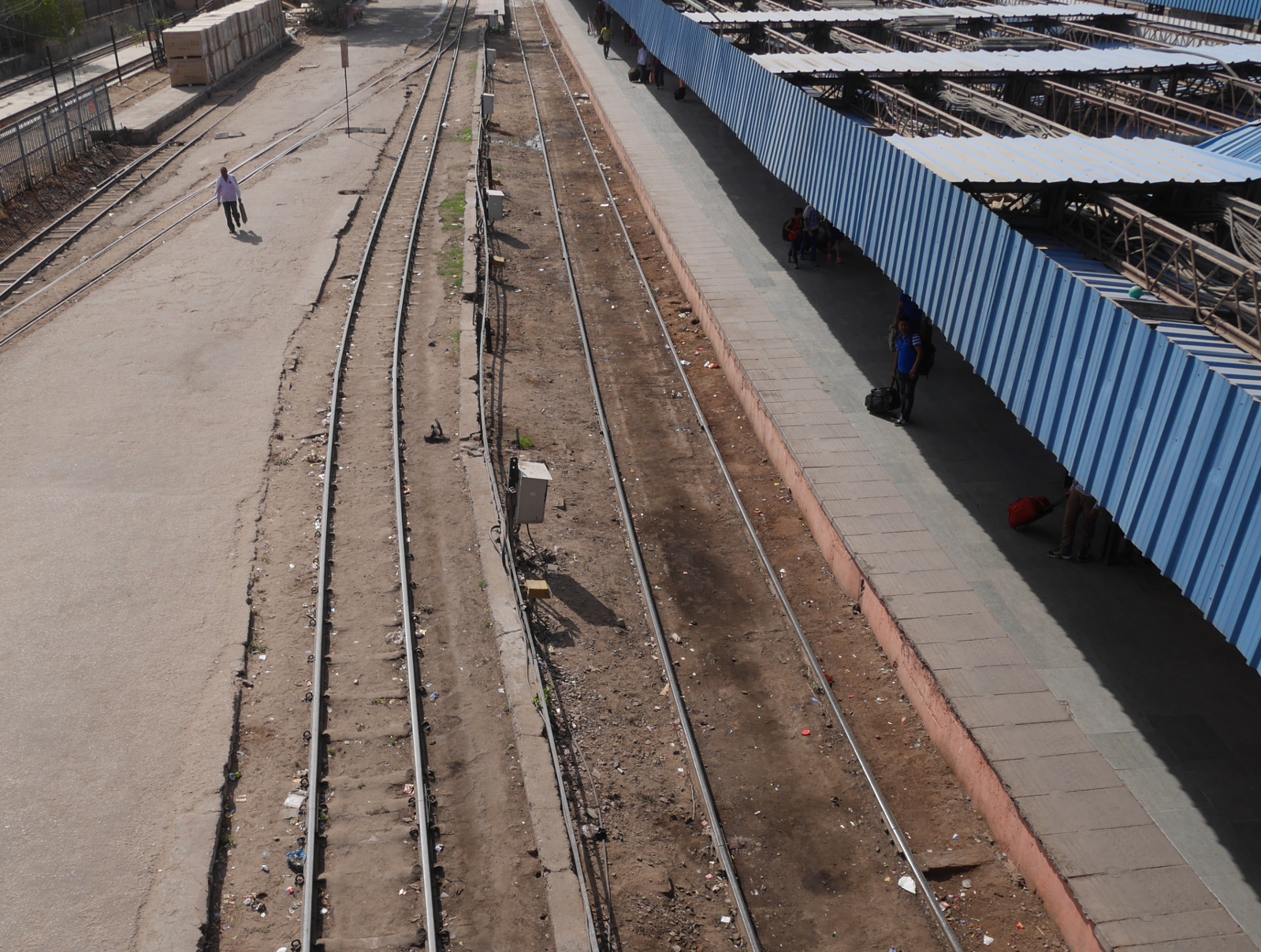
Comparison of meter gauge (left) and broad gauge (right).

Comparison of meter gauge (left) and broad gauge (right).

The meter-gauge train was smaller and, I dare say, cuter than the broad-gauge trains I am used to seeing. Inside, the coach was just wide enough for a bench seating four or five adults.

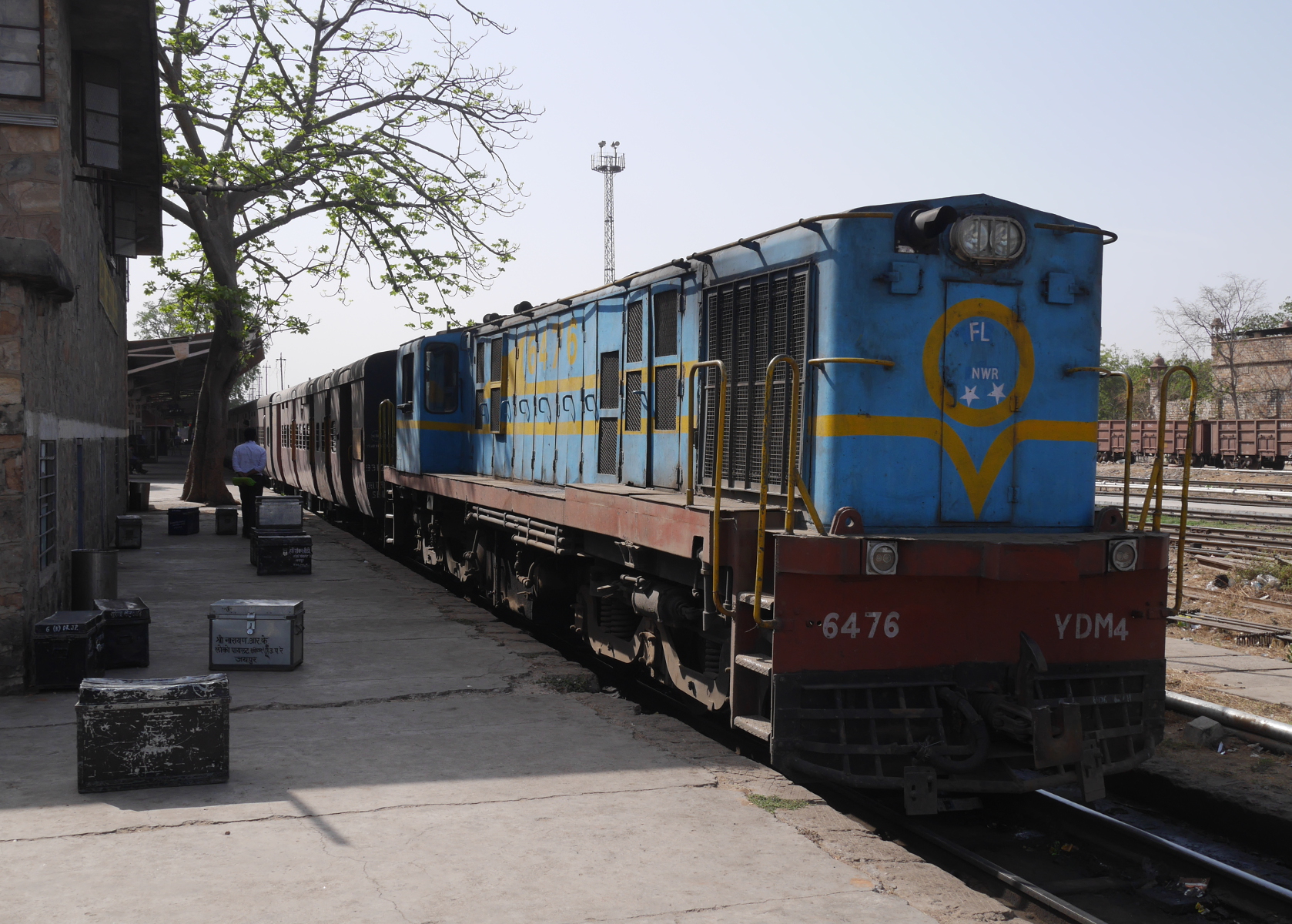
Meter-gauge locomotive of 52083 Jaipur-Sikar MG Pass train.

Meter-gauge locomotive of 52083 Jaipur-Sikar MG Pass train.

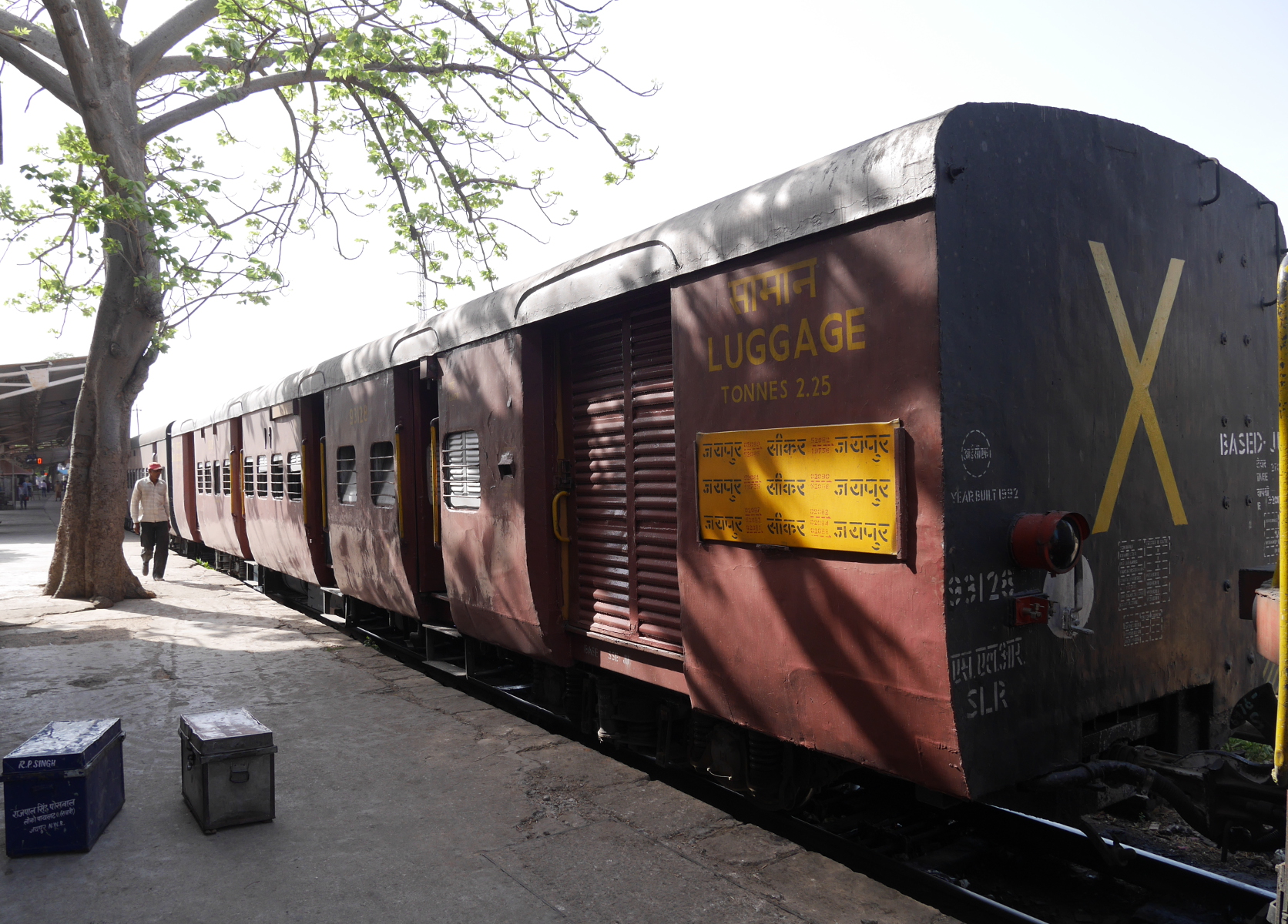
Meter-gauge luggage car.

Meter-gauge luggage car.

Panorama of a compartment in a meter-gauge train.

Panorama of a compartment in a meter-gauge train.

I sat in the coach just behind the diesel-electric locomotive, because that one was farthest along the platform and nobody else was in it at first. When the train left Jaipur station, only two other men were in my compartment. At the first stop, Dher ka Balaji, the compartment filled up. The train passed by Jaipur’s sprawl for a while, then it reached the open countryside. After several station stops that I didn’t see the name of, the train pulled into Chomun station, a nice little colonial Public Works Department structure.

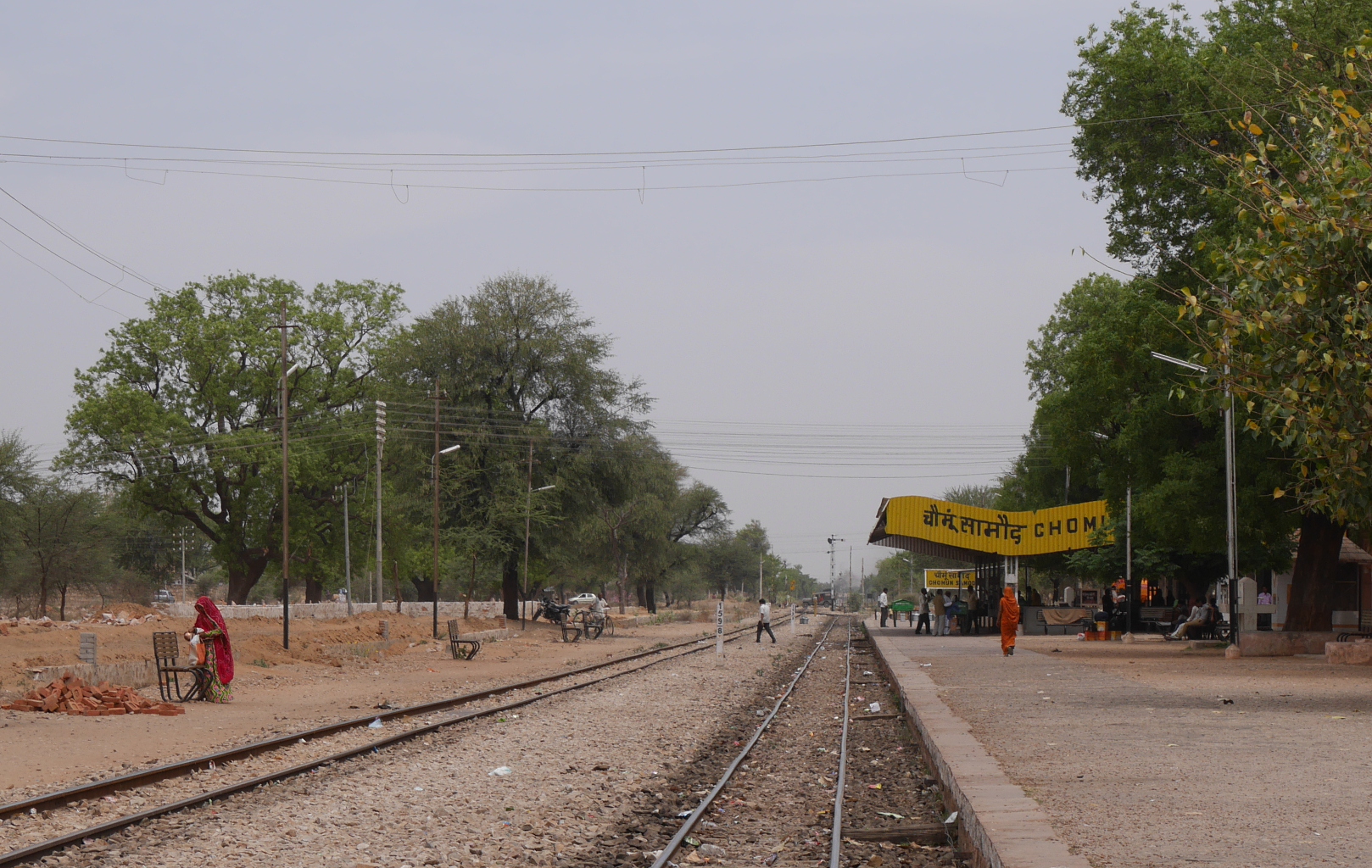
The single platform of Chomun Samod station.

The single platform of Chomun Samod station.

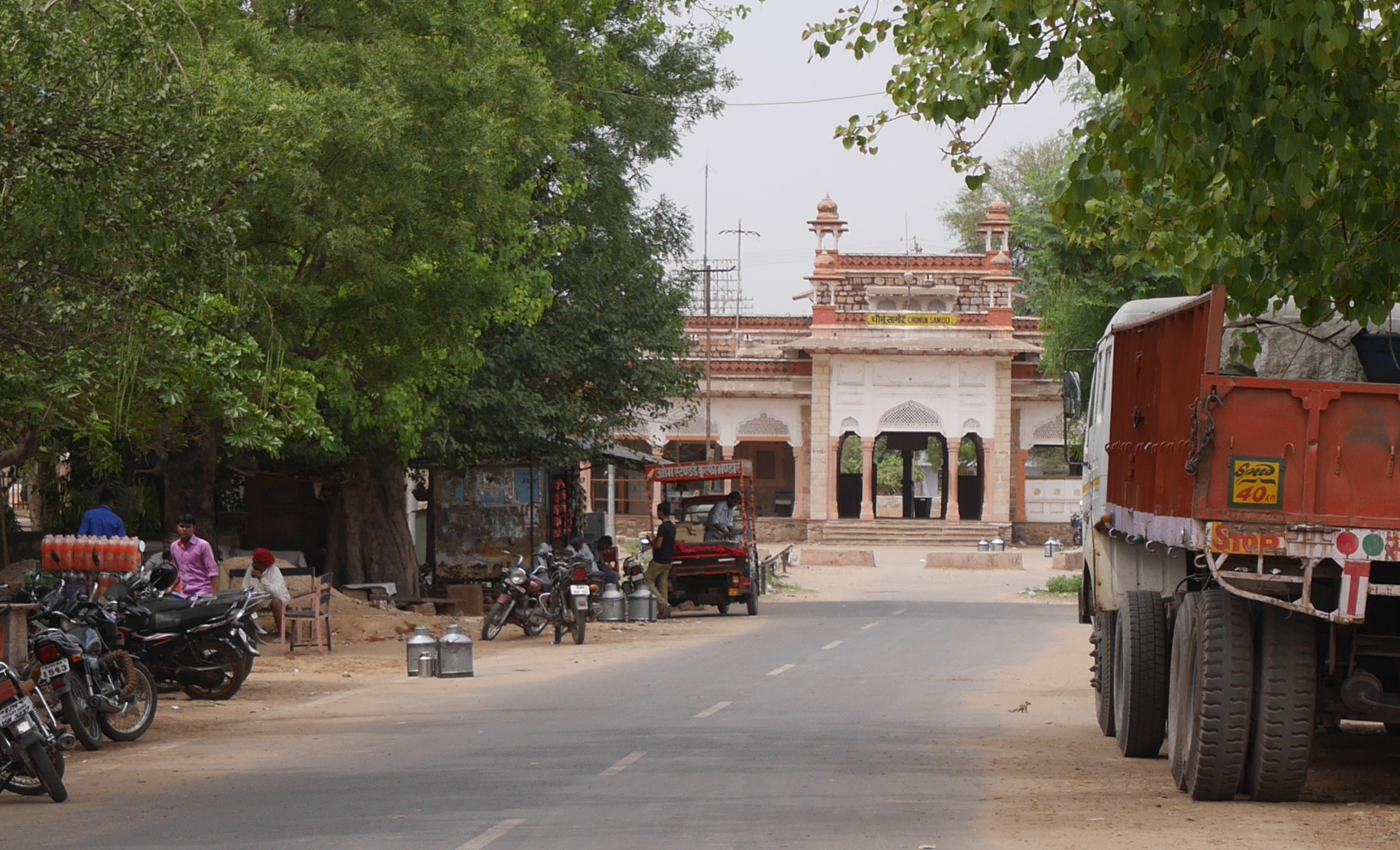
Glimpse of the facade of Chomun Samod station.

Glimpse of the facade of Chomun Samod station.

At Chomun, my meter-gauge technological tourism came to an end. I returned to Jaipur by city bus.

Having ridden on a meter-gauge train, I can now appreciate how much the Indian Railways have changed since the days when the narrower gauge was more prevalent. The train I rode to Chomun just didn’t have the capacity of the much larger broad-gauge trains I have ridden in India.

Page 1 of 2

Powered by WordPress & Theme by Anders Norén