WillyLogan.com

Technology, History, and Place

Tag: Rajasthan (Page 1 of 2)

By flying boat across India

In 1941, as war clouds loomed over southeast Asia, a Chicago News correspondent by the name of George Weller flew from Cairo to Singapore on assignment. In Singapore, Weller reported on the British Empire’s ineffectual preparations for an attack that was sure to come from Imperial Japan. When the attack did come, it was not from the sea—as the British expected and were prepared for—but through the jungles of Malaya. Weller reported on the Japanese forces’ astonishingly effective campaign down the Malayan Peninsula and the subsequent doomed defense of Singapore. He was there until almost the very end, when the remaining British Empire forces in Singapore surrendered on February 15, 1942. The following year, he published his firsthand account of the fall of Malaya and Singapore, the engrossing Singapore Is Silent.

Japanese troops parading in Singapore after the fall of the city. [Source: Wikimedia Commons, PD]

Japanese troops parading in Singapore after the fall of the city. [Source: Wikimedia Commons, PD.]

Something that I found particularly interesting in Singapore Is Silent was Weller’s account of his flight from Cairo to Singapore. The two cities are a little over 5,100 miles apart by the great-circle route, which runs mostly over the Indian Ocean and only crosses the southern part of peninsular India. A flight like this would be no big deal with a modern long-range airliner like a 787 (even thought it seems that there are currently no airlines offering direct service between Cairo and Singapore). But this was far beyond the range of the airliners of the day.

A Short Sunderland Mk V in military (RAF) service. [Source: Wikimedia Commons, PD.]

A Short Sunderland Mk V in military (RAF) service. [Source: Wikimedia Commons, PD.]

In Singapore Is Silent, Chicagonews (as Weller calls himself in the narrative) flies to Singapore aboard a Short Sunderland operated by British Overseas Airways Corporation (BOAC). The Sunderland was a flying boat, so it could only take off and land on water. The plane had a maximum range of 1,780 miles, which meant that it had to stop several times to refuel on its way to Singapore. BOAC routed its plane north of the great-circle route, sending it across northern India, where there were plenty of places to stop. Chicagonews’s route across India was this: Karachi (still a part of India at this point), Jaipur, Allahabad, “the narrow upper waters of the Ganges” (no city name specified), and Calcutta.

Karachi is on the coast and Allahabad and Calcutta are on the Ganges (Ganga) river system, but what about Jaipur? It is in arid Rajasthan, with no ocean or large river in sight.

Chicagonews’s plane touches down on “the Rajah’s lake near Jaipur,” where a motor launch takes the passengers to shore. This was clearly one of the artificial lakes around Jaipur. Although I have not been able to find a source to tell me which one it was, I think that it was most likely Jamwa Ramgarh, an irrigation reservoir 15 miles northeast of the city that was built in 1901. With a long axis of about 4½ miles, the lake would have been long enough for the takeoff run of a big flying boat.
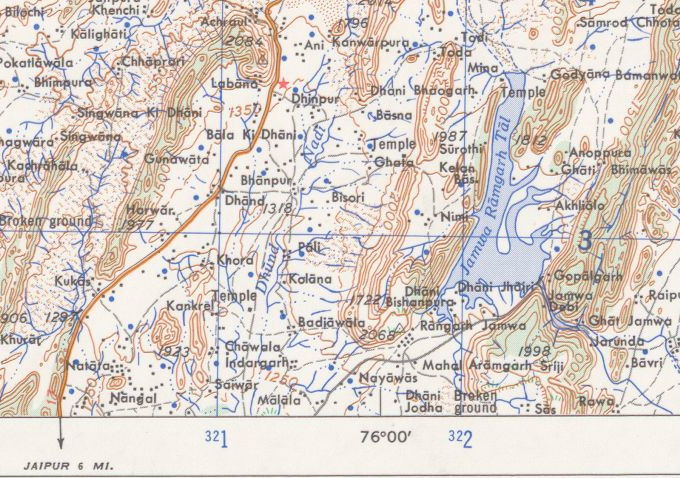
Jamwa Ramgarh Tal, as pictured on a 1963 US Army Map Service map. The lake has been dry since 2000. Source: Perry-Castañeda Library Map Collection.

Jamwa Ramgarh Tal, as pictured on a 1963 US Army Map Service map. The lake has been dry since 2000. [Source: Perry-Castañeda Library Map Collection.]

The route crossing India by flying boat was a recent development. In the late thirties, Imperial Airways (BOAC’s predecessor) had taken its flying boats only as far as Karachi; for the crossing of India itself, passengers had transferred to landplanes and flown a route of Karachi–Jodhpur–Delhi–Allahabad–Calcutta. When Imperial Airways introduced flying boats for the crossing of India, the route was changed to Karachi–Rajsamand Lake (near Udaipur)–Gwalior–Allahabad–Calcutta.

The age of overseas travel by flying boats was brief. Long-distance routes like BOAC’s Cairo-Singapore were disrupted by Axis conquests during World War II. By the end of the war, land-based planes had become bigger, faster, and longer-ranged, so airliners could make overseas flights with fewer intermediate stops. For example, BOAC adopted the Boeing 377 in 1949, which had a range of 4,200 miles, more than twice the range of the Short Sunderland from just a decade earlier. The Boeing 707, which BOAC adopted in 1960, had a long enough range that it could fly all the way from Cairo to Singapore without making any stops at all in between.

The airport in Jaipur (now a strictly land-based airfield in Sanganer on the south side of the city) is no longer a stopover point for international flights. Long-range planes can simply bypass Jaipur on their way to bigger airports. Jaipur International Airport (JAI) does have direct flights to Dubai, but otherwise its traffic is domestic.
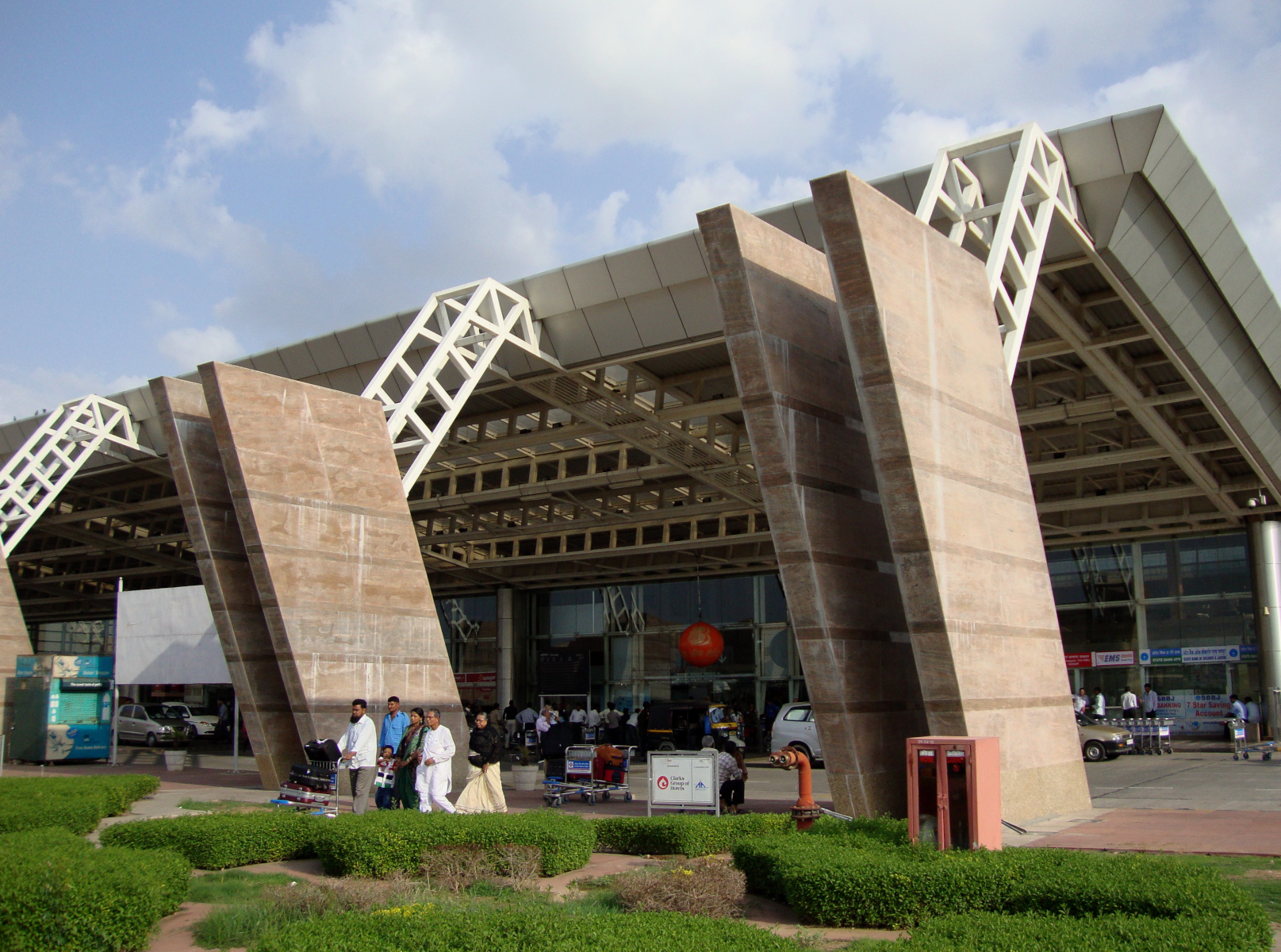
JAI terminal building

The modern terminal building at Jaipur International Airport.
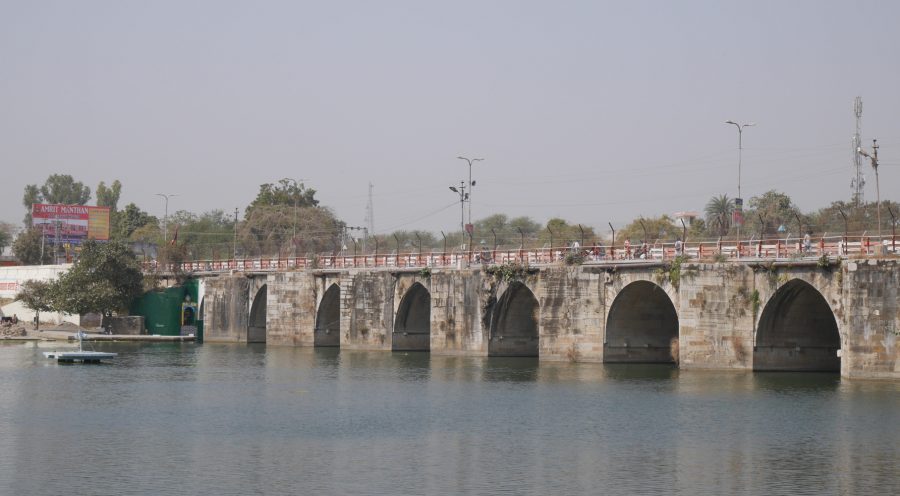
Gambhiri-River-Bridge

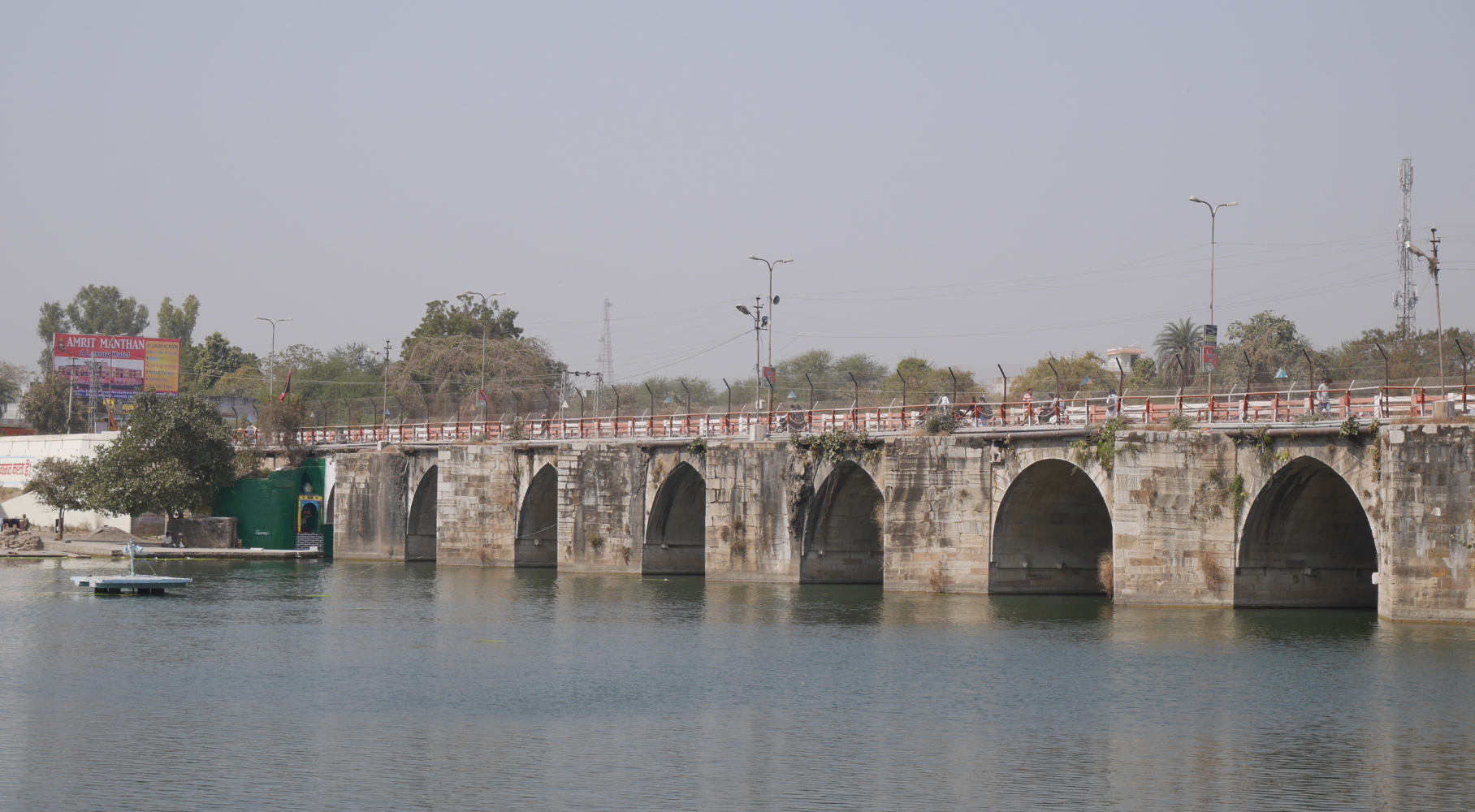
Chittaurgarh’s 700-year-old bridge

View of the medieval Gambhiri River Bridge from the eastern riverbank.

View of the medieval Gambhiri River Bridge from the eastern riverbank.

For at least a thousand years, people have been building large structures out of stone in northwestern India. The modern Indian state of Rajasthan is full of the remains of these monuments. Most of the monuments—fortresses, palaces, tombs, cenotaphs, and the like—have no real use anymore, except maybe as tourist attractions. There are plenty of pre-modern temples still in use, although many of them have been altered beyond recognition over centuries of use. And then there are some pieces of infrastructure that, with proper maintenance, still serve their original function hundreds of years after they were built.

One example is a bridge over the Gambhiri River in the town of Chittaurgarh in southern Rajasthan. The bridge is located on the main road into town. It is built entirely of stone, with nine slightly-pointed arches and one semicircular arch. (The river flows through eight of the arches, while the remaining two are on the shore. There are also two additional arches on each side of the bridge, but these are made in a different style and seem to have been added later.) The piers founded in the river have triangular projections on the upstream side, to help the river water, and any debris that might be floating in it, flow smoothly around the bridge.

The Rajasthan state Department of Archaeology and Museums has set up a Hindi interpretive plaque on the western side of the bridge. According to the plaque, the bridge was built early in the fourteenth century by Khijra Khan, after his father Alauddin Khilji captured Chittaurgarh in 1303. The bridge is built partly of stone blocks appropriated from other buildings. Inscriptions of Tej Singh and Samar Singh, two late-thirteenth-century rulers of Mewar, are still visible on the bridge. There are also some surviving architectural flourishes from the original structures, including designs of flowers and leaves. (None of this is visible to the casual observer from the shore, but I trust that the state archeologists know where to look.)

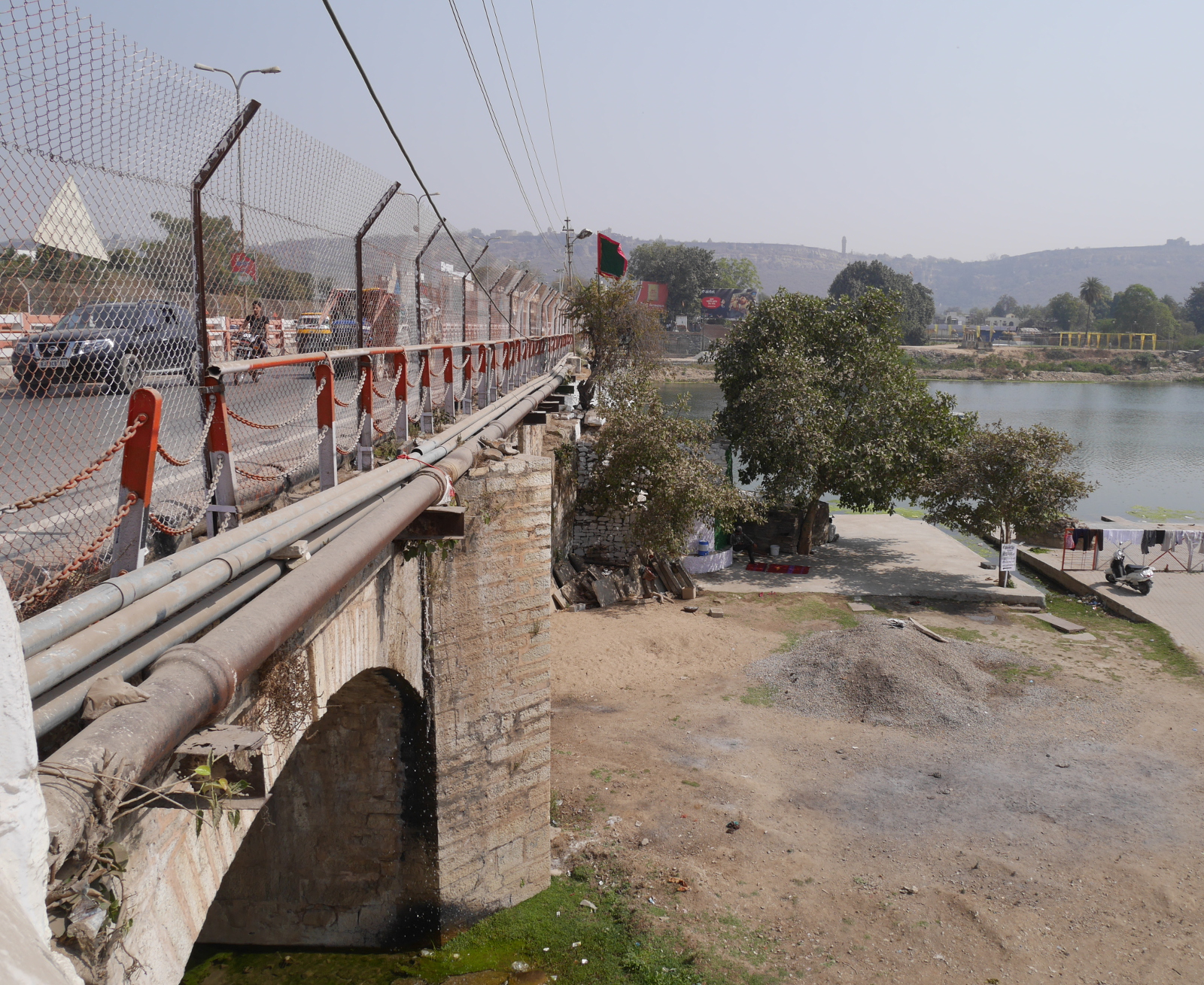
The Gambhiri River Bridge has been modified a little over the past seven hundred years. Although it was designed for horses and carts, it is strong enough to support motor vehicles. In modern times, a three-foot railing was added to the side of the bridge; when this proved inadequate for whatever reason, an eight-foot fence was also added. The bridge also carries several pipelines and some cables. Just downstream, a newer bridge has been built for eastbound traffic. The medieval bridge now just carries westbound traffic away from Chittaurgarh.

View of the Gambhiri bridge from the western bank.

View of the Gambhiri bridge from the western bank.

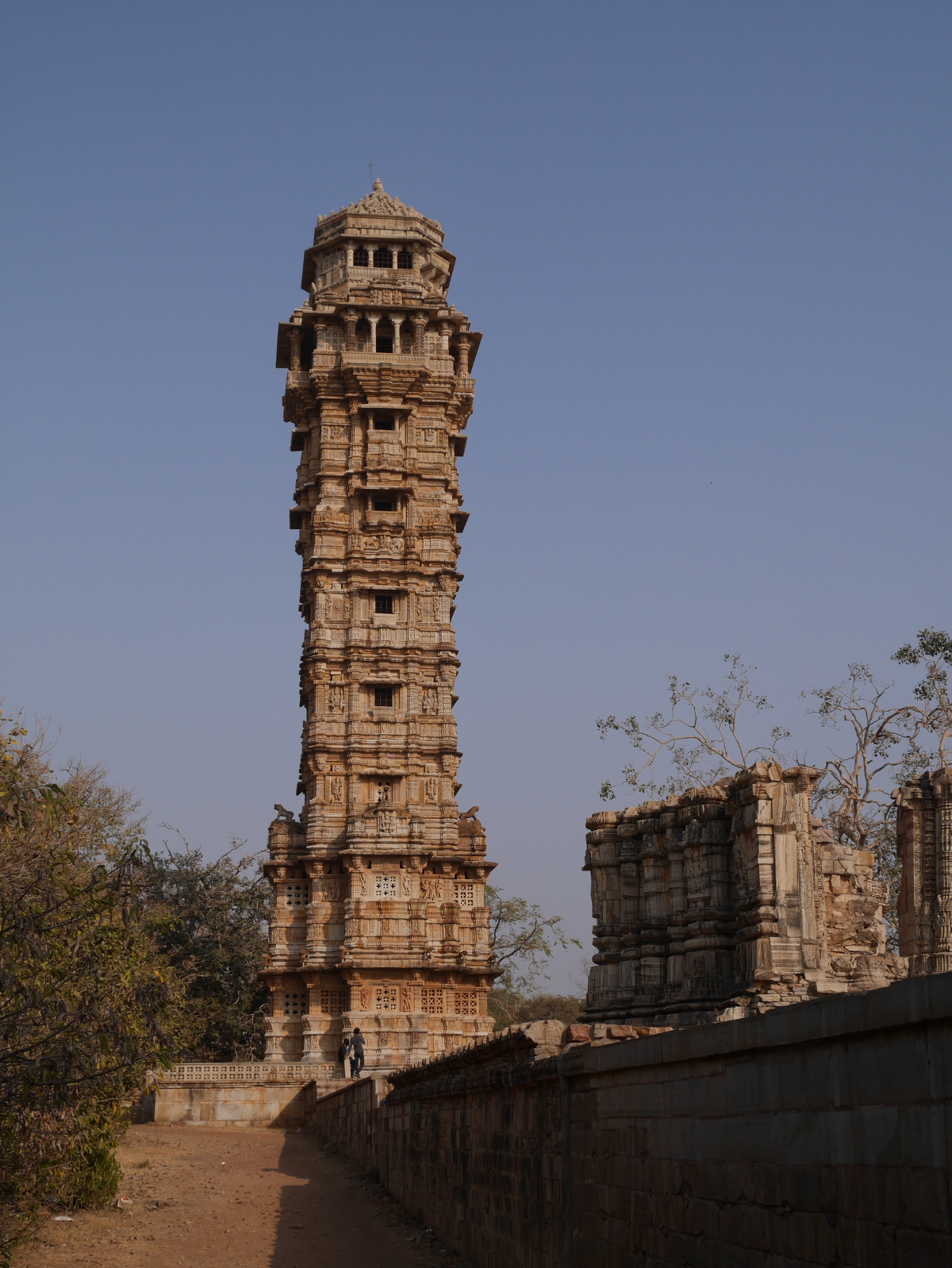
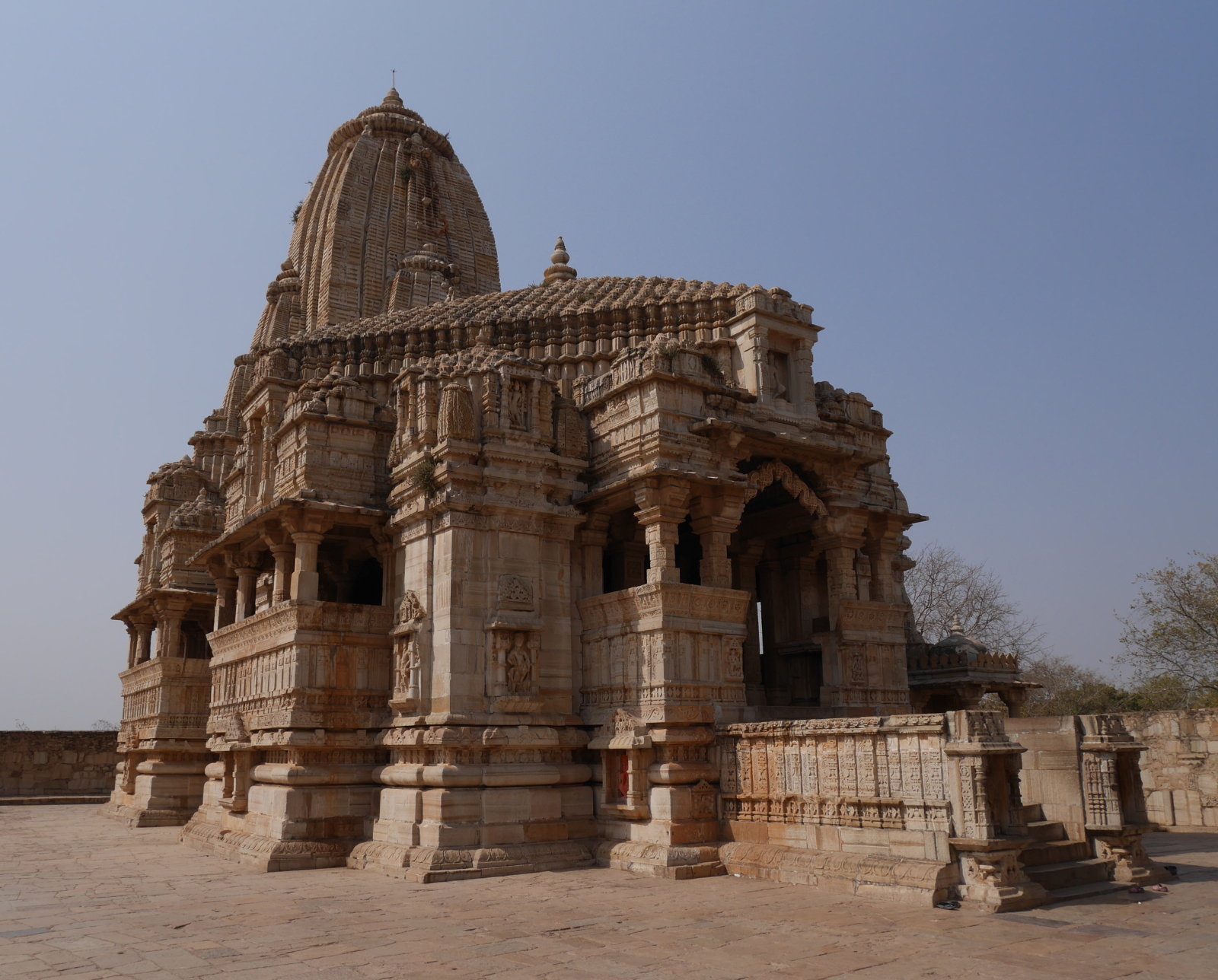
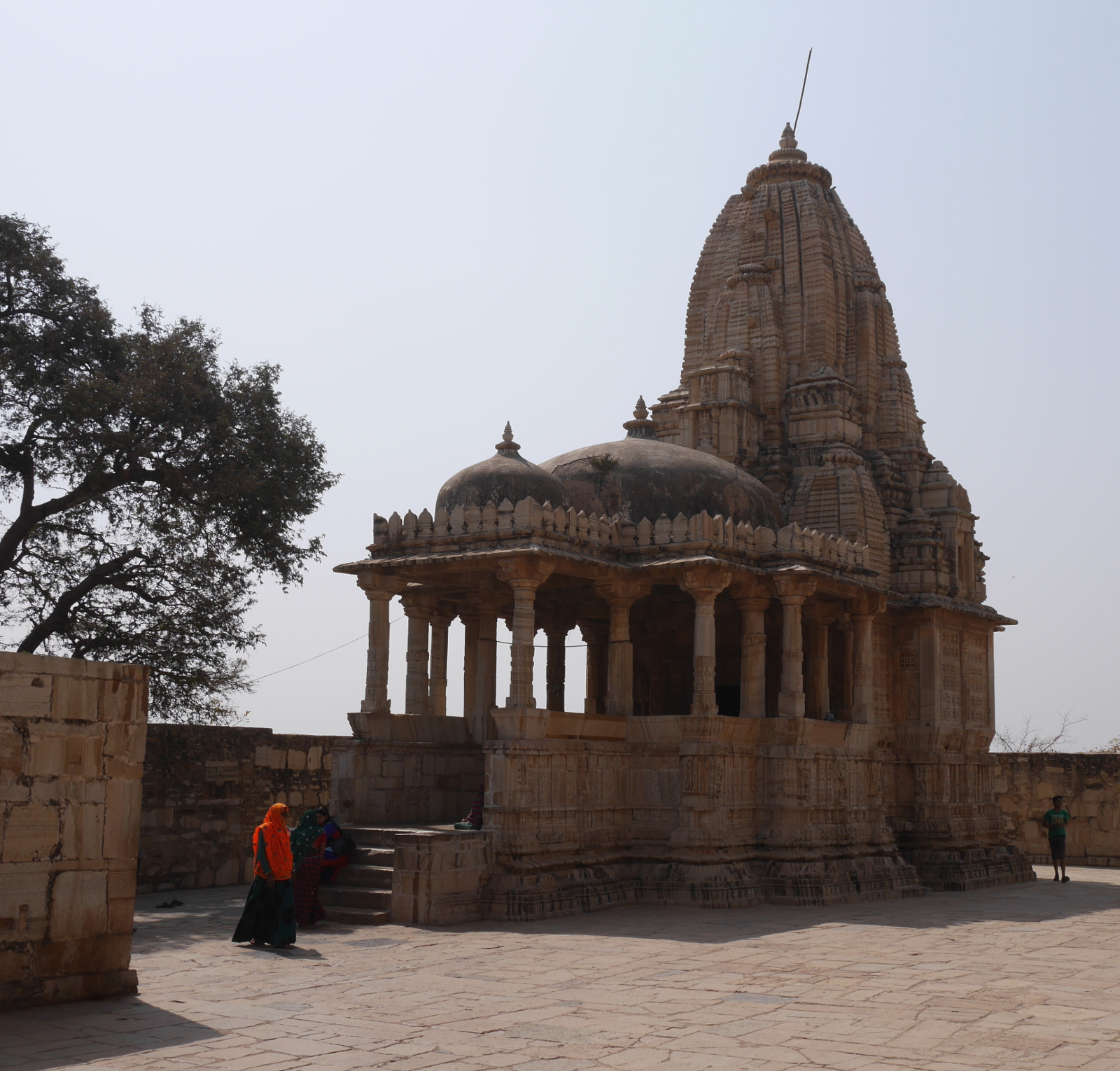
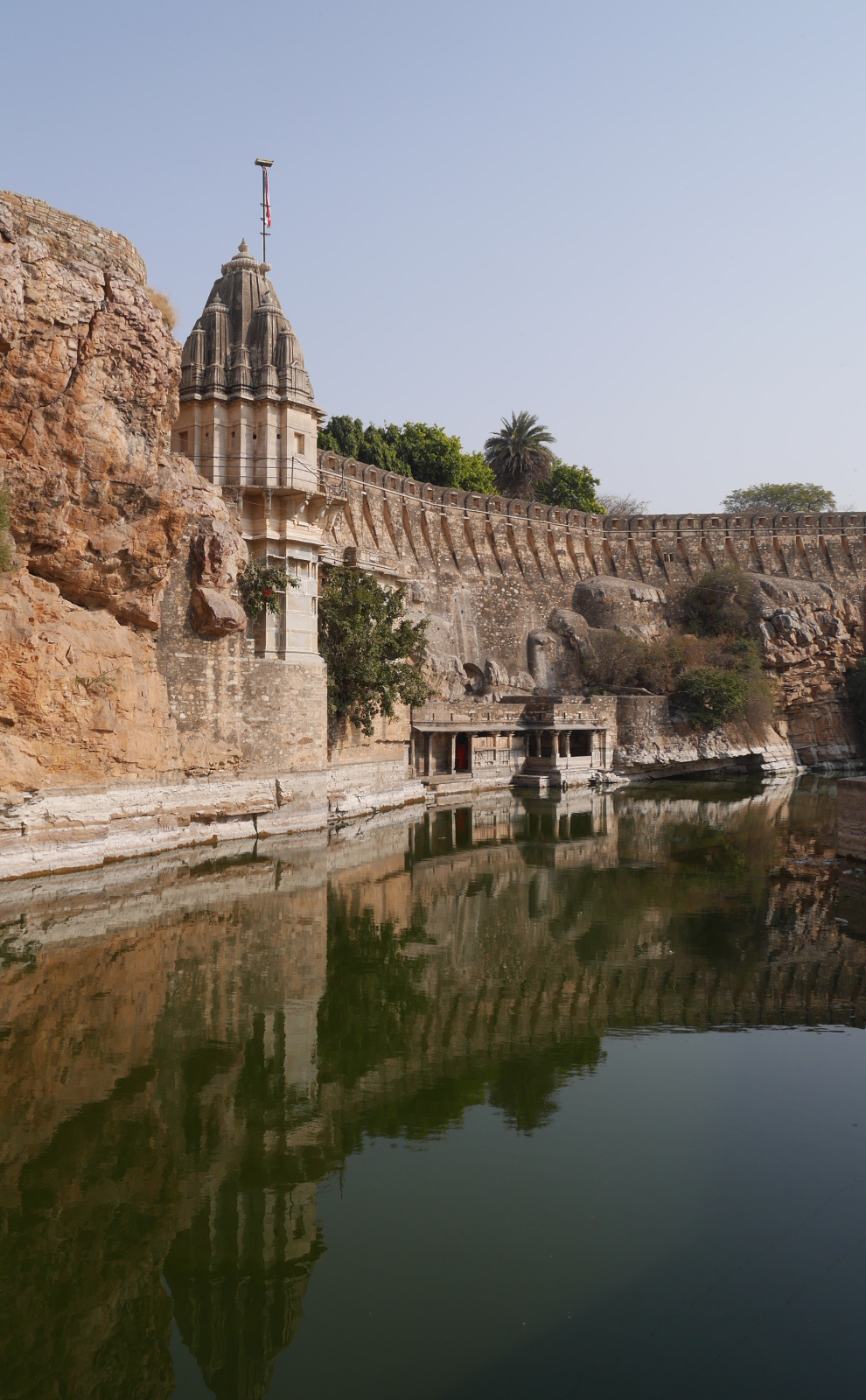
For readers who aren’t familiar with Chittaurgarh: The place is famous for the fortress by that name, a massive structure stretching five kilometers along the top of a ridge. The fortress was defensible, thanks to its position, but it was also a highly sought-after strategic prize, and it was captured and re-captured several times throughout its long history. Emperor Akbar won the fort for the Mughal Empire in a long and bloody siege in 1567-68. The fortress is now maintained by the Archaeological Survey of India, although it is so huge that inhabited villages exist within the walls alongside the historical monuments. Architectural highlights inside the fort include the Vijay Stambh (Tower of Victory, 1457-68), Kumbha Shyam Mandir (magnificent Nagara-style temple), Mira Bai Mandir, and Gaumukh Kund (rainwater storage tank).

Vijay Stambh (Tower of Victory), Chittaurgarh.

Vijay Stambh (Tower of Victory), Chittaurgarh.

Kumbha Shyam Mandir.

Kumbha Shyam Mandir.

Meera Mandir, where poet-saint Meera Bai worshiped Krishna.

Meera Mandir, where poet-saint Meera Bai worshiped Krishna.

Gaumukh Kund (Cow-mouth Well), Chittaurgarh.

Gaumukh Kund (Cow-mouth Well), Chittaurgarh.

Riding the meter-gauge rails

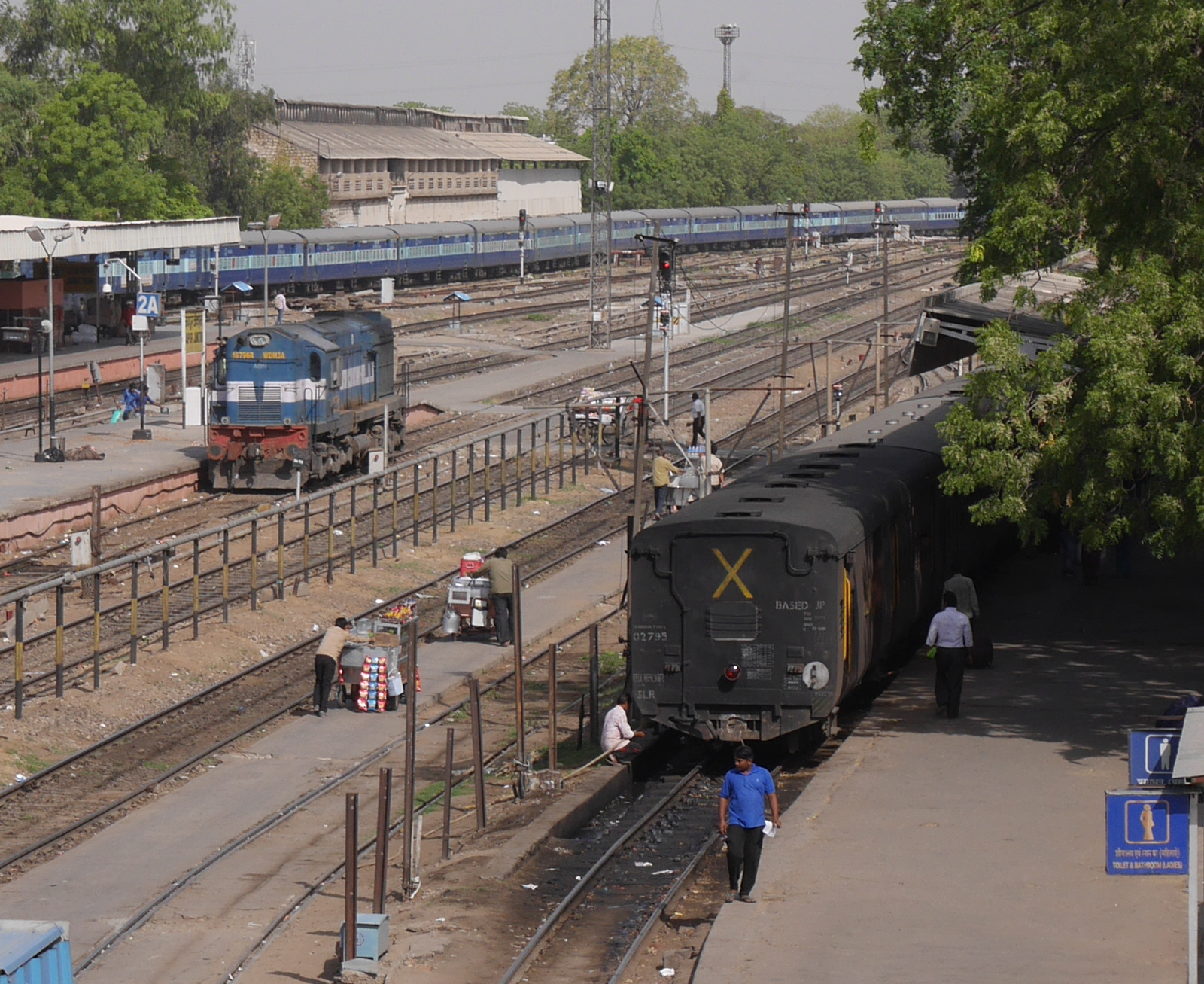
Broad-gauge (left) and meter-gauge (right) trains at Jaipur Junction.

Broad-gauge (left) and meter-gauge (right) trains at Jaipur Junction.

When private British capital first started building railroads in India in the mid-nineteenth century, the lines were built in broad gauge. With a spacing between the rails of 5 ft 6 in, this was, and still is, the widest rail gauge in common use anywhere in the world. The colonial Government of India started to build their own rail lines in the 1870s. These public-sector railways were more cheaply built than their private counterparts, and they were made in meter gauge (3 ft 3 3/8 in).

Even after independence and the nationalization of the private railways, broad-gauge and meter-gauge lines continued to be developed in parallel with each other. Only in the 1990s did the Indian Railways start to convert meter-gauge lines to broad gauge, under Project Unigauge. Since then, large stretches of meter-gauge lines have been replaced by broad gauge.

Meter-gauge lines survive here and there. One such line runs between Jaipur Junction and Sikar, 107 km (66 mi) to the northwest. Meter gauge used to run all of the way to Churu, another fifty miles to the north, but that stretch has recently been closed for conversion to broad gauge. (The time table posted in Jaipur Junction station still says Churu on it, although the name has been whited out and replaced with Sikar.) Someday the Jaipur–Sikar line will also become broad gauge. But in the meantime, seven meter-gauge trains will continue to run back and forth between Jaipur and Sikar every day.

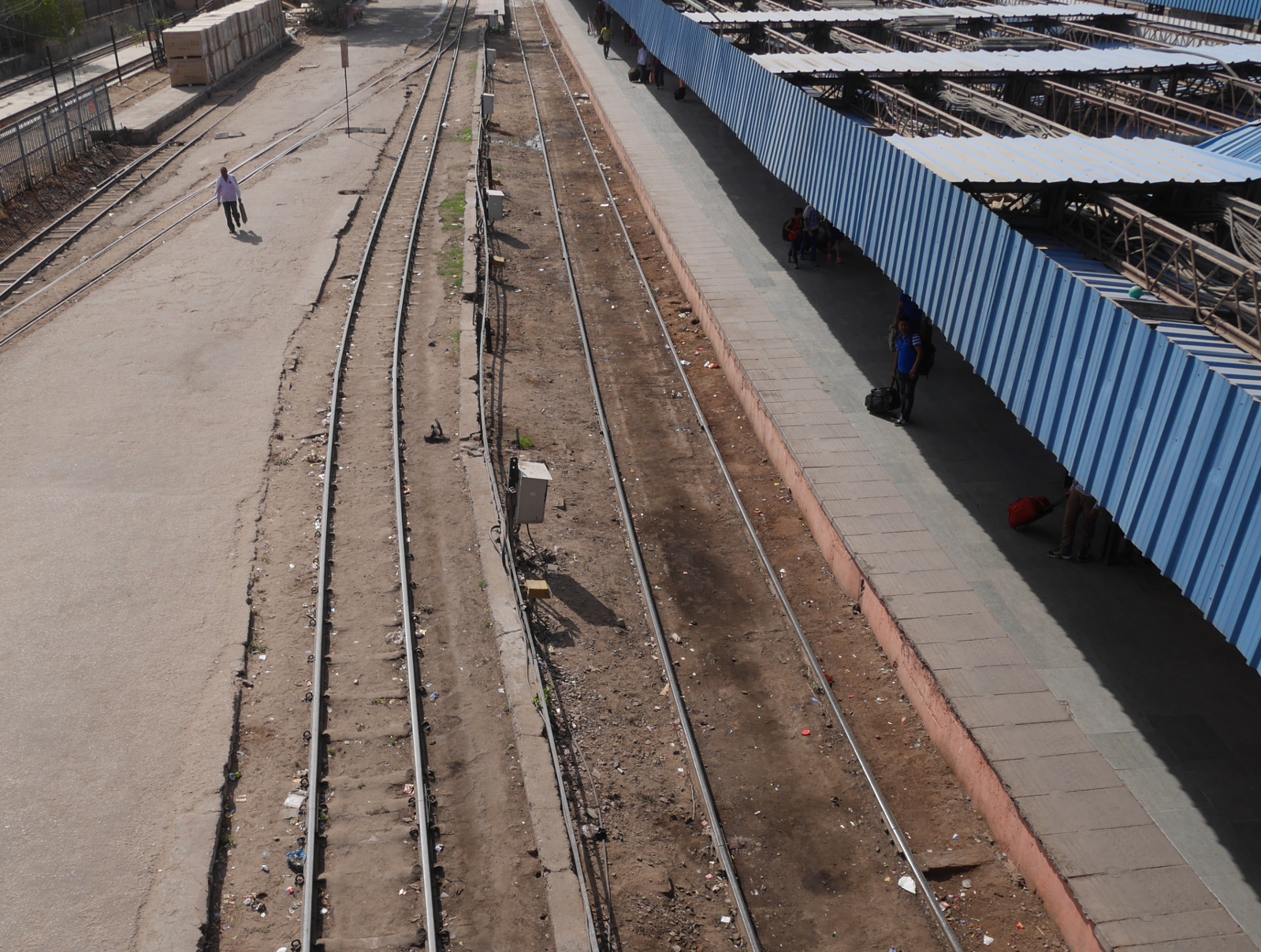
Since meter gauge won’t be around forever, I felt obliged to ride the Jaipur–Sikar train when I had the chance. A month ago, I rode one of these trains from Jaipur as far as Chomun, one-third of the way to Sikar. The meter-gauge tracks at Jaipur Junction station are on the north side of the broad-gauge lines, so the tracks don’t have to cross each other. I found a place where both gauges run side-by-side, showing the difference in size.

Comparison of meter gauge (left) and broad gauge (right).

Comparison of meter gauge (left) and broad gauge (right).

The meter-gauge train was smaller and, I dare say, cuter than the broad-gauge trains I am used to seeing. Inside, the coach was just wide enough for a bench seating four or five adults.

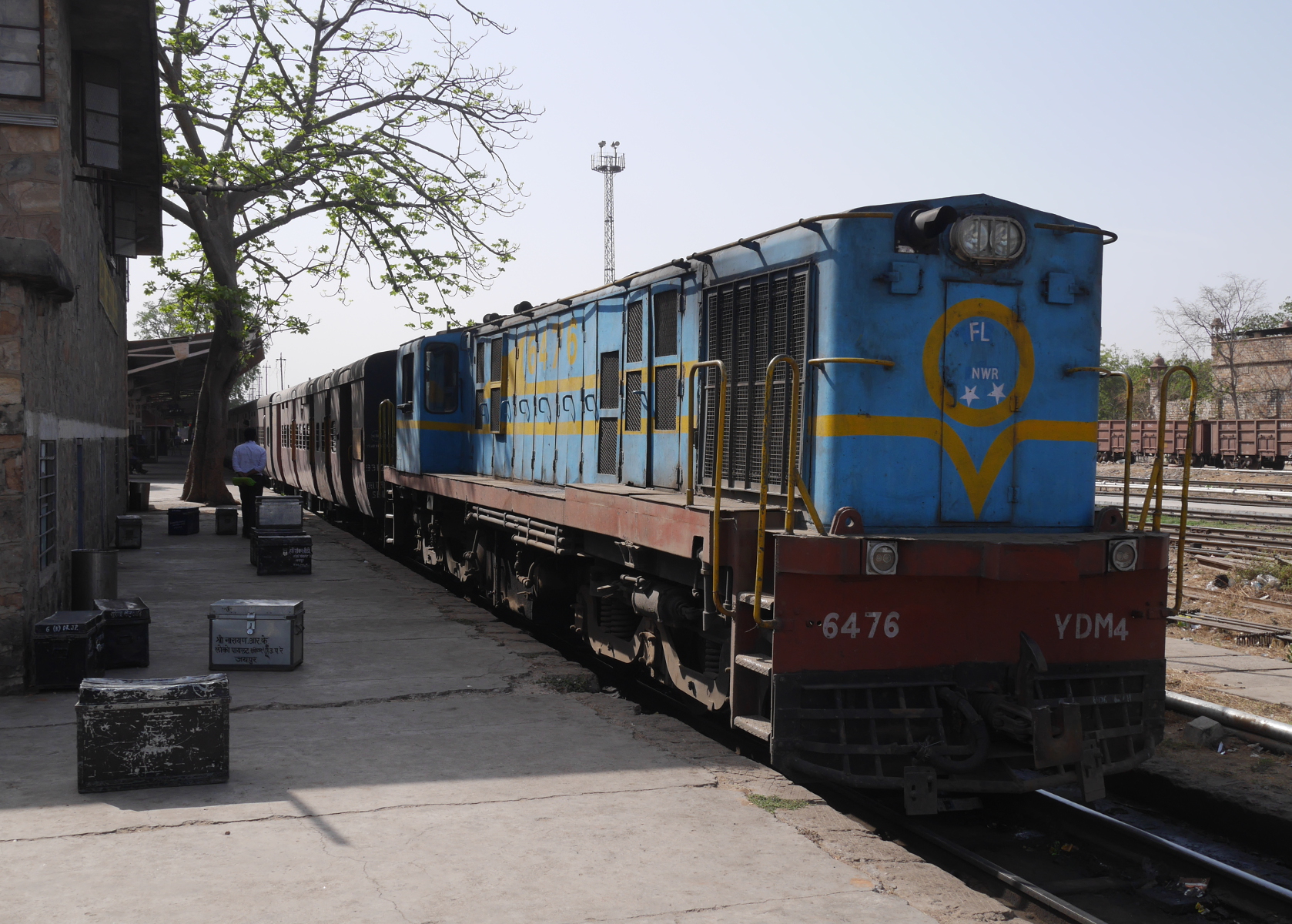
Meter-gauge locomotive of 52083 Jaipur-Sikar MG Pass train.

Meter-gauge locomotive of 52083 Jaipur-Sikar MG Pass train.

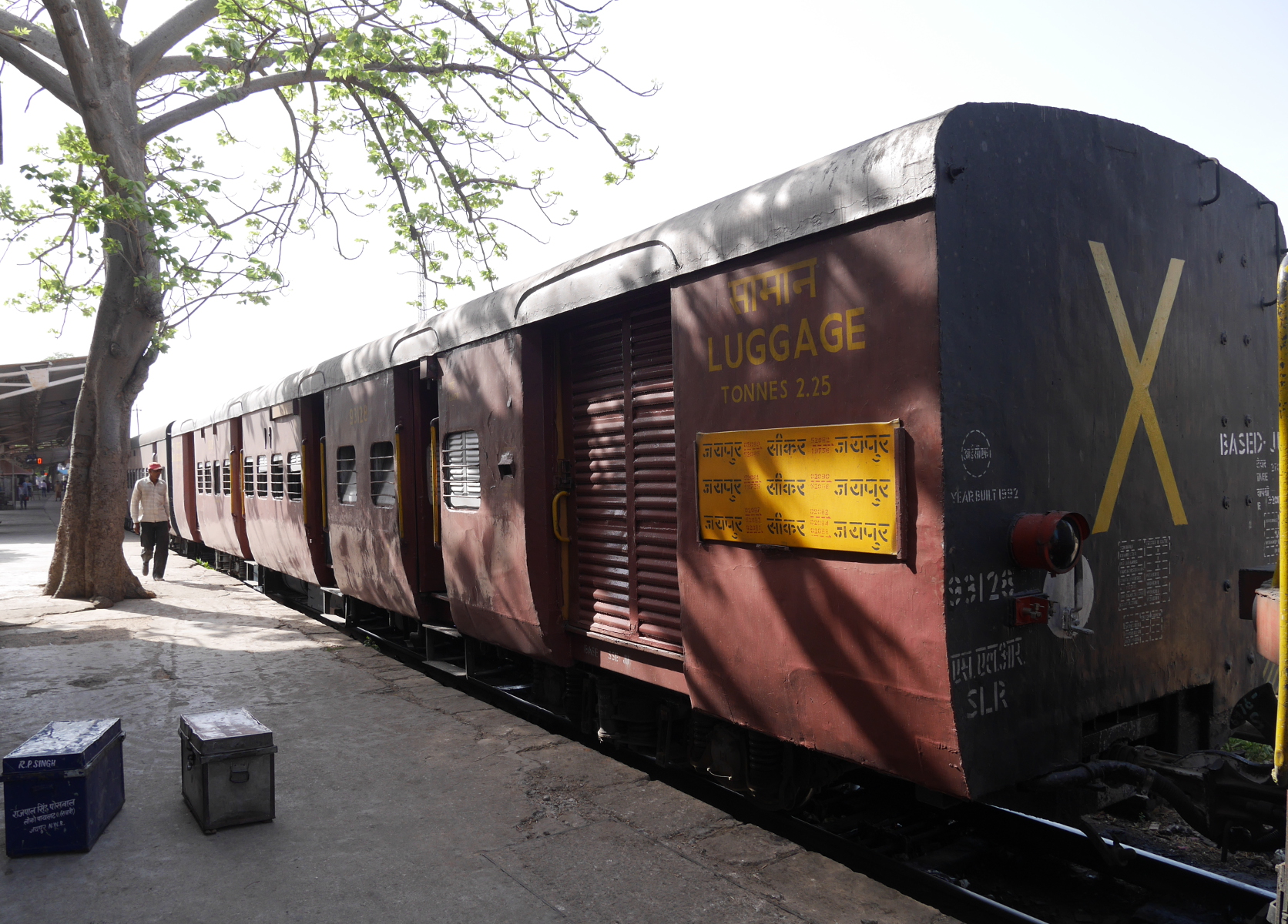
Meter-gauge luggage car.

Meter-gauge luggage car.

Panorama of a compartment in a meter-gauge train.

Panorama of a compartment in a meter-gauge train.

I sat in the coach just behind the diesel-electric locomotive, because that one was farthest along the platform and nobody else was in it at first. When the train left Jaipur station, only two other men were in my compartment. At the first stop, Dher ka Balaji, the compartment filled up. The train passed by Jaipur’s sprawl for a while, then it reached the open countryside. After several station stops that I didn’t see the name of, the train pulled into Chomun station, a nice little colonial Public Works Department structure.

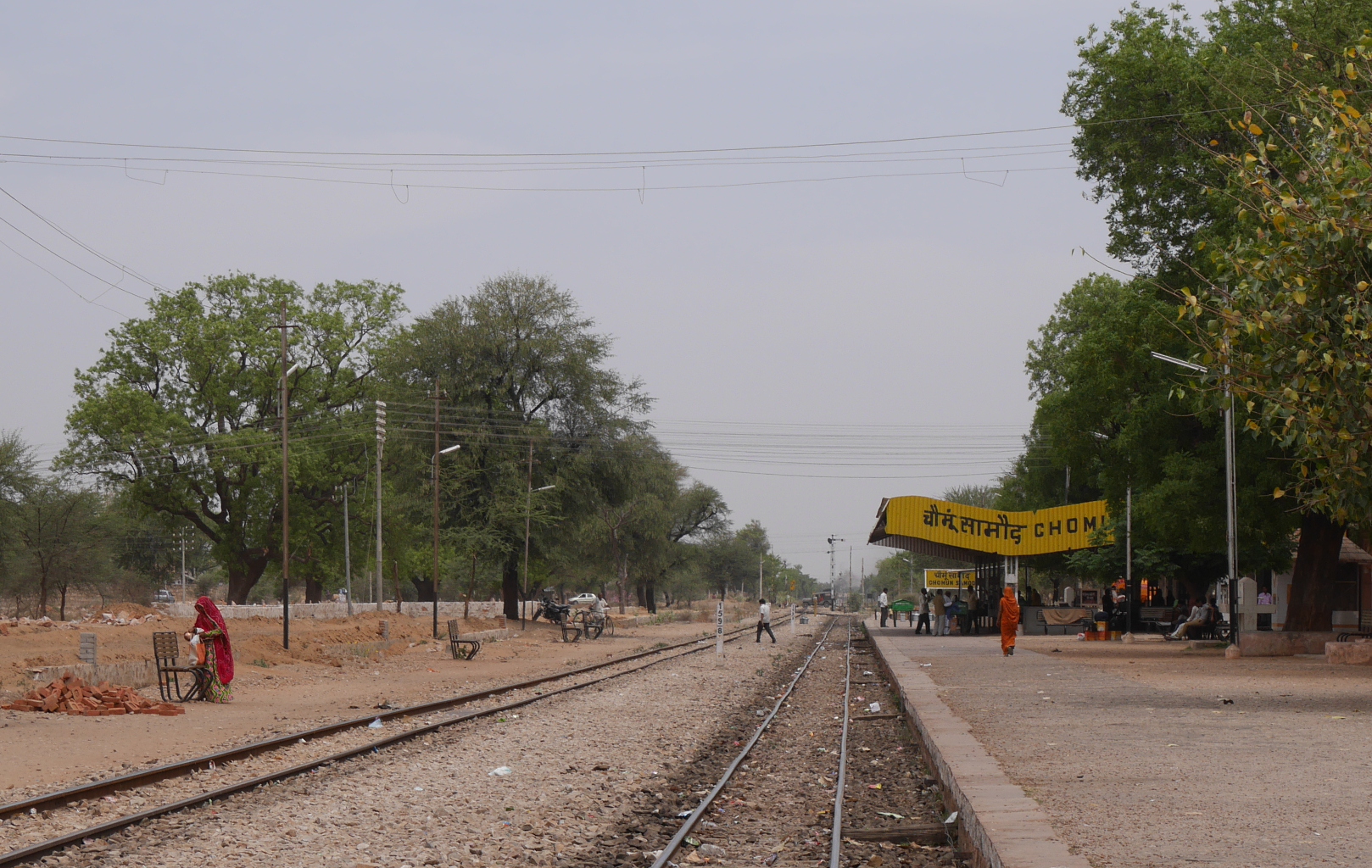
The single platform of Chomun Samod station.

The single platform of Chomun Samod station.

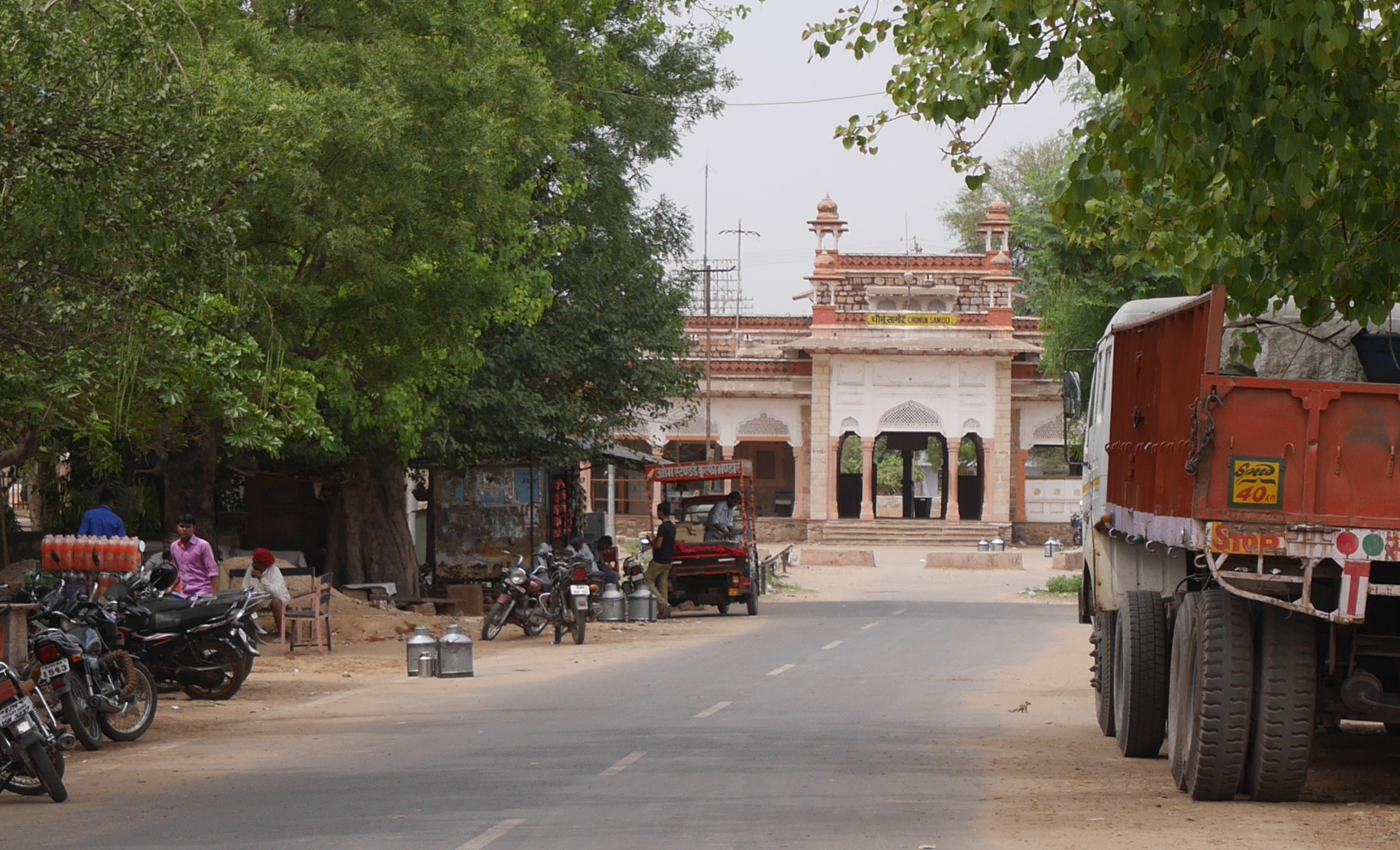
Glimpse of the facade of Chomun Samod station.

Glimpse of the facade of Chomun Samod station.

At Chomun, my meter-gauge technological tourism came to an end. I returned to Jaipur by city bus.

Having ridden on a meter-gauge train, I can now appreciate how much the Indian Railways have changed since the days when the narrower gauge was more prevalent. The train I rode to Chomun just didn’t have the capacity of the much larger broad-gauge trains I have ridden in India.

Page 1 of 2

Powered by WordPress & Theme by Anders Norén