WillyLogan.com

Technology, History, and Place

Tag: Delhi

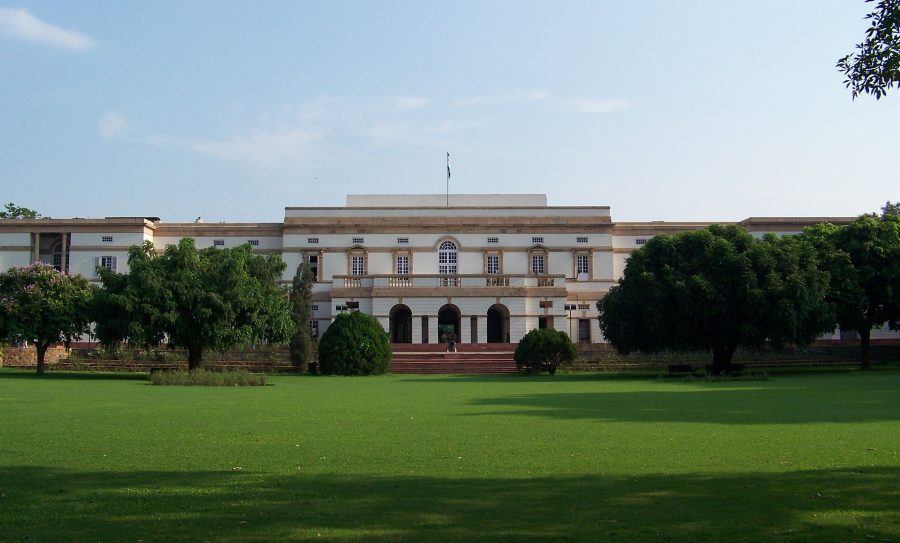
Front facade of Teen Murti Bhawan, New Delhi.

A tryst with research

When he served as the first Prime Minister of independent India from 1947 until his death in 1964, Jawaharlal Nehru lived in Teen Murti Bhawan in New Delhi, a palatial residence originally built for the British Commander in Chief of India. Teen Murti Bhawan sits on a large landscaped plot due south of the president’s palace (Rashtrapati Bhawan), formerly the Viceroy’s House. A long circular drive leads from the compound gate to Teen Murti house itself. Behind the house is a formal garden planted with rose bushes. After Nehru’s death, the house was preserved as a memorial to the man and his times, the Nehru Memorial Museum and Library. Schoolchildren flock to the free museum, tramping through the big house’s empty corridors and taking in a show in Hindi or English at the planetarium on the grounds (built after Nehru’s death).

Behind and to the east of the house, tucked in among the trees, is a remarkable research institution, the library of the Nehru Memorial Museum and Library. Housed in a modern concrete building with dark wood paneling on the interior, the Nehru Library has an elite air, fitting for a place established in memory of wealthy, England-educated Nehru. The regular collection of the library is focused on modern India, and the Nehru Library is without a doubt one of the best places in India to study the late colonial and independence periods. In the back of the library, reached by its own stairway, there is also a small reading room for the library’s archival division, which is supposed to hold the world’s largest collection of manuscripts related to modern India.

The lobby of the library sometimes hosts public exhibitions, but the main stacks are only open to serious researchers, who have to apply for a membership and pay a nominal fee. (When I did some research for my dissertation at NMML two years ago, I paid Rs. 300 for a two-month membership. There are also options of a one-week membership for Rs. 100 and six months for Rs. 500.) Getting permission to access the archives requires its own application, with a letter of introduction from the researcher’s home institution and a form from the researcher’s diplomatic mission in India (for international scholars; I used a photocopy of a form I got for the National Archives of India).

The Nehru Library has open stacks, which is a rare treat in specialized research libraries. The archives, of course, are not open, and the holdings can only be accessed by filling out a request slip. Not all of the archival records are accessible even to legitimate scholars. The papers of Jawaharlal Nehru are only open to 1947. Nehru’s papers from his tenure as Prime Minister are off-limits because they are still classified. (The Indian government’s policy for declassification is not transparent. Even though Nehru has been dead for more than fifty years, his papers are kept out of public view because they theoretically still hold state secrets.) But scholars of modern India need not despair, because the papers of many other post-independence leaders are accessible.

When I did my research at NMML, I ran into two challenges that made my work there harder than I expected it to be. The first was just getting there. Teen Murti Bhawan is located in the sprawling neighborhoods of colonial bungalows on the south side of Rajpath in New Delhi, an area that is poorly served by the city’s metro. I rode the 604 or 620 city buses from Sansad Marg (still sometimes called by its English name Parliament Street) to Teen Murti Circle, but the street was frequently blocked by sit-down protests staged by one or another disaffected part of the population. When that happened, the bus would be routed down a different street, and I never did figure out where.

The other challenge was a result of my not understanding how government business works in India. The National Archives of India is closed for only a few holidays every year: Republic Day (January 26), Independence Day (August 15), Gandhi Jayanti (October 2), and the lunar festivals of Holi (February or March) and Diwali (October or November). NMML and most other offices are also closed on India’s many regular gazetted holidays, which are posted online on the official government calendar, but are not posted anywhere in the building itself. This was at least the case two years ago. I kept making the long trek to Teen Murti Bhawan only to find that the library was closed for a religious holiday celebrated by one of the minority communities. One day, the library was dark and empty for Mahavir Jayanti (Jainism), and the next it was closed for Good Friday (Christianity). If I had known to check for gazetted holidays, I could have planned accordingly and used my time better.

These challenges aside, researching at the Nehru Memorial Museum and Library was a rewarding experience. The private papers I read at NMML provided a human counterpoint to the formal, technical documents I found at the National Archives. The landscaped setting of Teen Murti Bhawan was a refreshing place to research. When I needed a break from manuscripts, I could go walking outside. I enjoyed spending a few weeks at the Nehru Memorial Museum and Library while researching my dissertation, and I hope I get the chance to return there for a future project.
A guide to research at the National Archives of India

The main campus of the National Archives of India (NAI) in New Delhi holds the major official records produced by the Government of India during the colonial and independence periods, as well as some records from the pre-colonial Hindu and Muslim kingdoms that ruled parts of India. If you study Indian history, a visit to NAI will be essential at some point during your academic career. A year ago, I had the opportunity to spend two months researching at NAI, jointly funded by the Society for Historians of American Foreign Relations and my home institution, Auburn University. Getting registered and oriented at NAI took some time. The National Archives’ website has plenty of useful information, but there were some things I wish I had known as I was planning my visit. I have written this guide with hopes that that foreign scholars coming after me will find it useful for planning their research visits to NAI.

(Note: All prices listed in this guide are current as of March 2015.)

Orientation

The National Archives of India are located on the southwestern side of the intersection of Janpath and Dr. Rajendra Prasad Marg, just north of Rajpath in the heart of New Delhi. Like most official buildings in New Delhi, the Archives are located in a gated compound. The main gate is on Janpath; at the reception office to the right of the gate, researchers need to sign up for a free pass to enter the compound each day. There is also a back gate on Rajendra Prasad Marg.

There are two main buildings inside the compound, simply called the Old Building and the New Building. The Old Building, completed in 1926, was designed by Edwin Lutyens, who also created several of New Delhi’s most prominent monuments, including Rashtrapati Bhawan and the India Gate. The Old Building is an elegant structure with columns on the outside and chandeliers inside, although it has something of an airy, neglected feeling, with pigeons flitting around inside the hallways. Apart from visiting the cashier’s office on the ground floor, and idle curiosity, a researcher at NAI won’t have much reason to visit the Old Building.

The New Building, which is located at the end of the driveway leading in from the main gate, was built in 1991 in a plain post-independence style. It is where a researcher will spend most of his or her time. The reading room is located on the ground floor: take a left after the lobby, and then another left before the stairs. The NAI website says that researchers can keep their bags in lockers downstairs, but most people just stash their bags in a glassed-in area in the corner of the reading room. There are about twenty-five tables in the reading room. The room can get crowded in the afternoon, so be sure to get there in the morning before the rush.

The NAI compound also includes a park and an outbuilding with a canteen, where you can get some of the cheapest food anywhere in the city (Rs. 10 for a plate of daal or rajma and rice). I preferred to eat at a dhaba just outside the back gate on Rajendra Prasad Marg. The dhaba does brisk business every day selling veg thalis for Rs. 40. The cooks vary the menu from day to day so it doesn’t get boring.

Getting there

The best way to reach NAI is by the Delhi Metro. From the Central Secretariat station on the yellow and violet lines, it is an easy seven-minute walk to the NAI front gate. Use Gate 2 to exit the metro station. From there it is a straight shot along Rajendra Prasad Marg, past Krishi Bhawan and Shastri Bhawan, two large government office buildings.

Access requirements

Anybody can get a daily pass to enter the NAI compound, but in order to actually request records, you need to fulfill further registration requirements. For foreign nationals, NAI requires the following documents: 1) a notarized form from the diplomatic mission of your country in India, 2) a letter of introduction from your home institution, 3) a copy of the photo page of your passport, and 4) a copy of your visa. (A tourist visa is acceptable provided you aren’t doing fieldwork.) Gathering these documents can take some time, so be sure to plan ahead.

[Addendum from 2019: A reader has informed me that NAI has an additional access requirement – proof of permanent address. This reader was able to use a driver’s license, but the regulation was enough to foil other would-be researchers.]

If you are a citizen of the USA, you can get the form through an appointment with American Citizen Services, which you can sign up for by calling +91 011 2419-8000 or using an online form. American Citizen Services are accessible by appointment only. The requirements for citizens of other nations are probably similar; just check your Embassy’s website.

The US Embassy, along with the embassies of most other nations, is in Chanakyapuri, a post-independence southern addition to the plan of New Delhi. Chanakyapuri is not accessible by the Delhi Metro. To get there, an autorickshaw is probably your best bet, starting at either the Race Course or Dhaula Kuan metro stations. The entrance is on the southwest corner of the Embassy compound (just look for the crowds of people). Security regulations for the Embassy are very strict, but if you have a proscribed item such as a mobile phone, you can check it at an unofficial counter across the street (next to where more people are waiting on benches) for Rs. 50 an item. The Embassy letter (actually a notarized form) costs $50 or the current equivalent in rupees.

For the letter of introduction, a printout of a scan is acceptable, although I recommend getting an original copy before you leave your home institution.

Once you have all of your documents in order, present them in the reading room and fill out a form that they give you. Then you will be permitted to start requisitioning records right away. The NAI website mentions a researcher card, but this seems to be a metaphor, because I didn’t receive any physical confirmation that I had registered.

Requisitioning records

Like every other archives I have been to, NAI is closed-stacks, and to access records you must fill out a requisition slip and wait for the staff to gather the requested records for you. Records are pulled at three set times during the day: 10 AM, 12:30 PM, and 3 PM. It takes about two-and-a-half hours for staff to fulfill a request. NAI has a computerized records catalog, which is accessible within the research room but not through the NAI website. Once you have filled out your request forms, place them in the box at the requisition counter. Archives staff do not need to sign off on your requests. Researchers are allowed to submit ten requisition slips per pull time, for a total of thirty a day.

When the staff have retrieved your requested records, they will place them on shelves behind the requisition desk. You can go behind the desk yourself to pick them up. Sign on the form that comes with them and deposit the form in another box at the requisition desk. Now you are ready to start your research at NAI.

At the end of the day, records do not have to be checked in behind the requisition desk. If you are done with them, return them at the records counter. If you want to keep looking at them later, place them on the hold shelf against the wall below the A/C units. Tuck a paper into your stack of records with your name and the date you will be done with your documents. The NAI website says that you shouldn’t hold records for more than a week. A sign in the reading room puts the limit at a month. In practice, scholars can hold their records for several months.

Copying records

Use of cameras or scanners (including mobile phone cameras) is against research room policy. This rule is strictly enforced. To get copies of records, you have to order them from NAI’s service, on a fee basis. The rate for plain paper copies is Rs. 6 a page. The catch is that NAI imposes a limit of one copy order per researcher per month, with a maximum of 500 pages each. Plan carefully.

Placing and picking up a copy order is a complicated process, and it took a long time for me to figure it out the first time. Place a copy order by following these nine steps:

Step 1: Mark pages that you want to copy with paper strips supplied in the research room.

Step 2: Fill out the two copy request forms in duplicate.

Step 3: Ask the research room manager to calculate the bill amount. For plain paper copies, the bill will be Rs. 6 per page plus an additional Rs. 125 search fee.

Step 4: Deposit the advance fee with the cashier. In the morning, go the the Nehru Room in the New Building; in the afternoon, go to the cashier in the Old Building.

Step 5: Turn in your complete copy order to the research room manager.

Step 6: Go back to the copy room behind the research room and schedule a time to pick up your copy order. (This was a step that I missed the first time around, so my copy order took far longer than it should have.)

On the scheduled day:

Step 7: Return to the copy room. The copy room manager will ask you to fill out another form.

Step 8: Take this form to the cashier to settle the account.

Step 9: Lastly, return to the copy room and supply the final receipt along with a photo ID. After the manager has run off a copy of these two documents, he will send you on your way with your completed order.

Conclusion

I found the two months I spent researching at the National Archives of India to be immensely rewarding, on a personal and academic level. I hope that I will get to use the archives again in the future. If you found this guide helpful, or if you notice that any information needs updating, please leave a comment below.

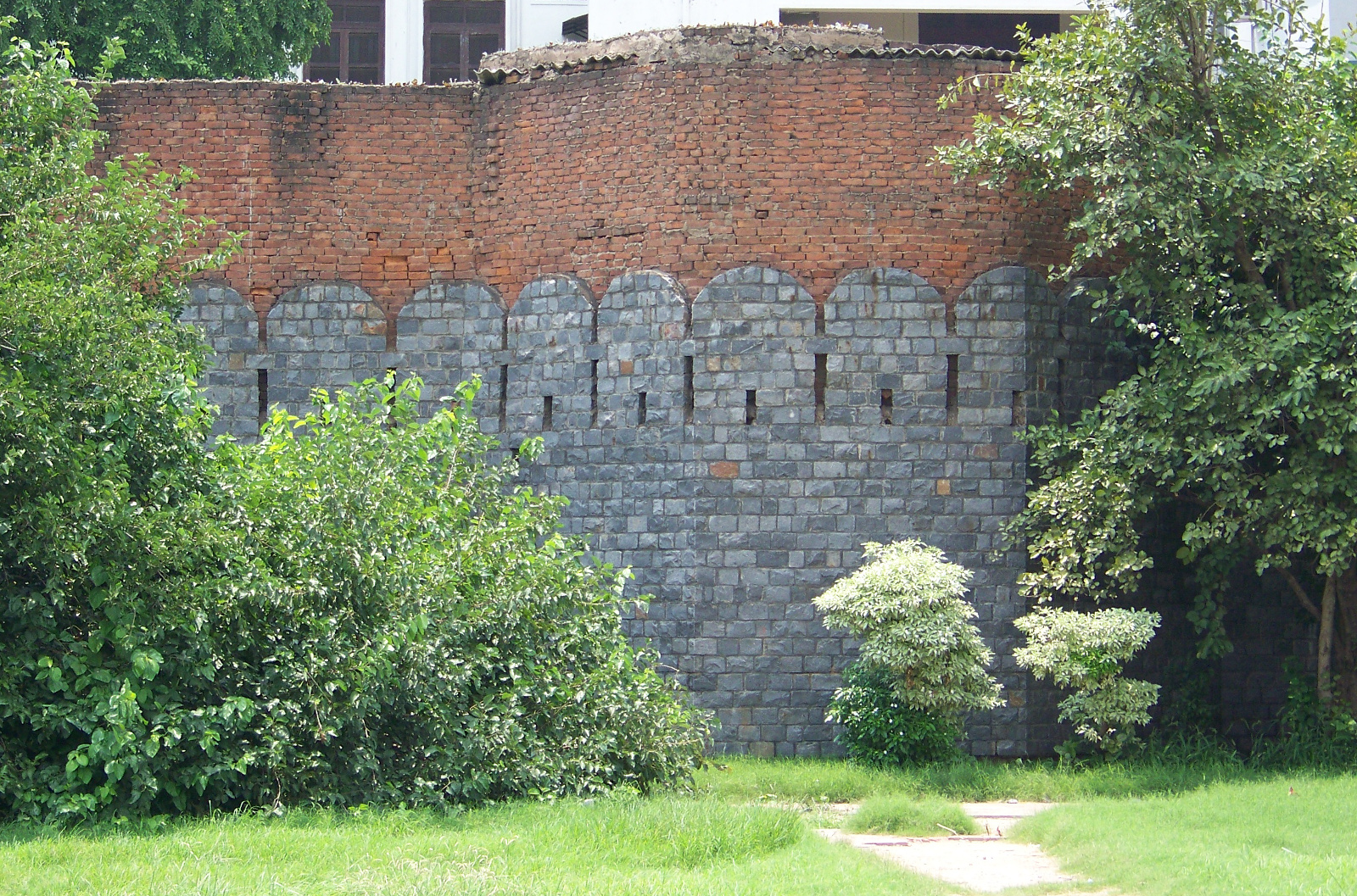
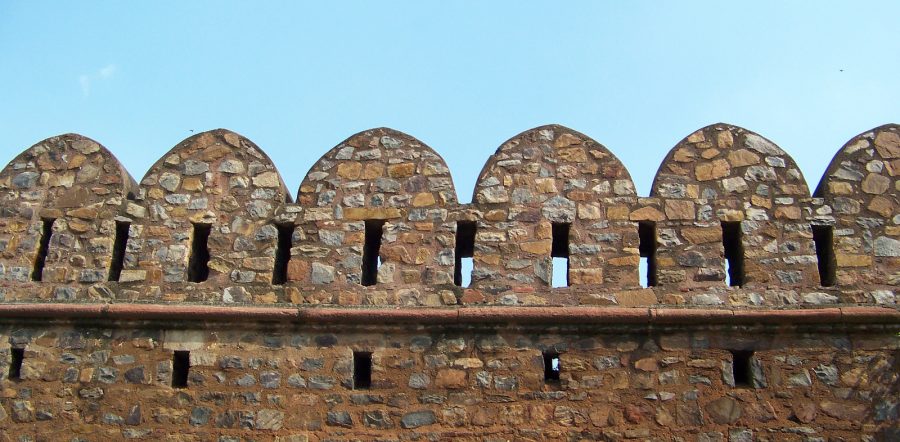
4341-delhi-wall-crenelations_1600px

Old Delhi’s walls and gates

The remains of the fortifications of Old Delhi don’t make it onto most tourists’ itineraries when they visit the city. This is understandable, because Old and New Delhi have a range of world-class tourist attractions – such as the Red Fort, Qutb Minar, and Lutyens’ Delhi – which overshadow the city walls. But as I have found on several visits to Delhi, exploring the remains of the fortifications can be a rewarding experience. From my visits to the gates and walls, I have learned about urban planning, military science from several eras, and adaptive reuse.

Old Delhi was founded in 1639 by Mughal emperor Shah Jahan, who wanted to move his capital to a more suitable location than Agra, which was experiencing problems with drainage, overcrowding, and erosion. The original name of Old Delhi was Shahjahanabad, after the city’s founder. The centerpiece of Shahjahanabad was the Qila Mubarak (Blessed Fortress), now known as the Lal Qila or Red Fort. The fort stands on the eastern side of Shahjahanabad, with its back to the Yamuna River. It served as the royal palace and center of the Mughal government. To the west of the fort, an area of about 1,500 acres was enclosed by city walls built of stone rubble. The walls were broken by eight main gates and several lesser portals.

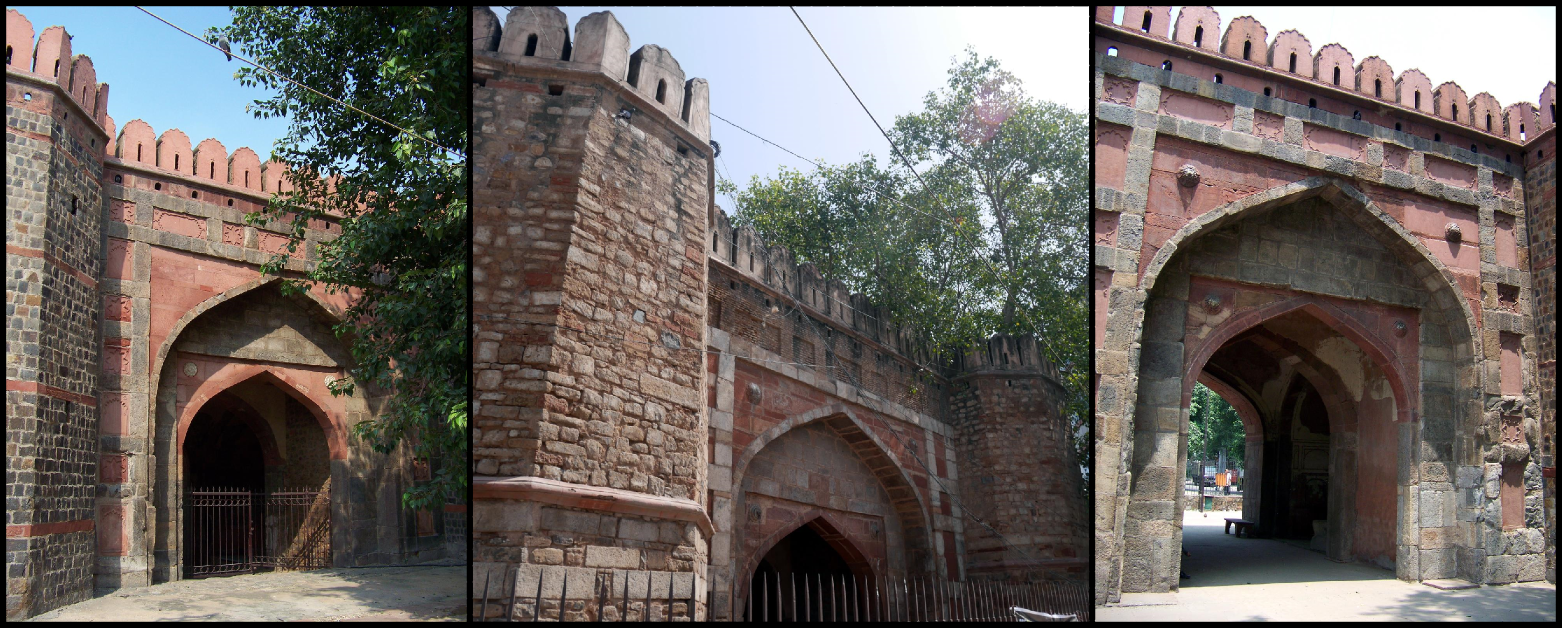
The walled area of Old Delhi still retains its historic identity. It even has its own postal code, 110 006, and it is colloquially referred to as “Delhi-6.” Only fragments of the walls and four of the eight main gates remain, though. On the southern side of Old Delhi, Ajmeri Gate, Turkman Gate, and Delhi Gate still stand on little plots of land, disconnected from the historic walls and surrounded by their own fences and gates.

Left to right: Ajmeri Gate, Turkman Gate, Delhi Gate.

Left to right: Ajmeri Gate, Turkman Gate, Delhi Gate.

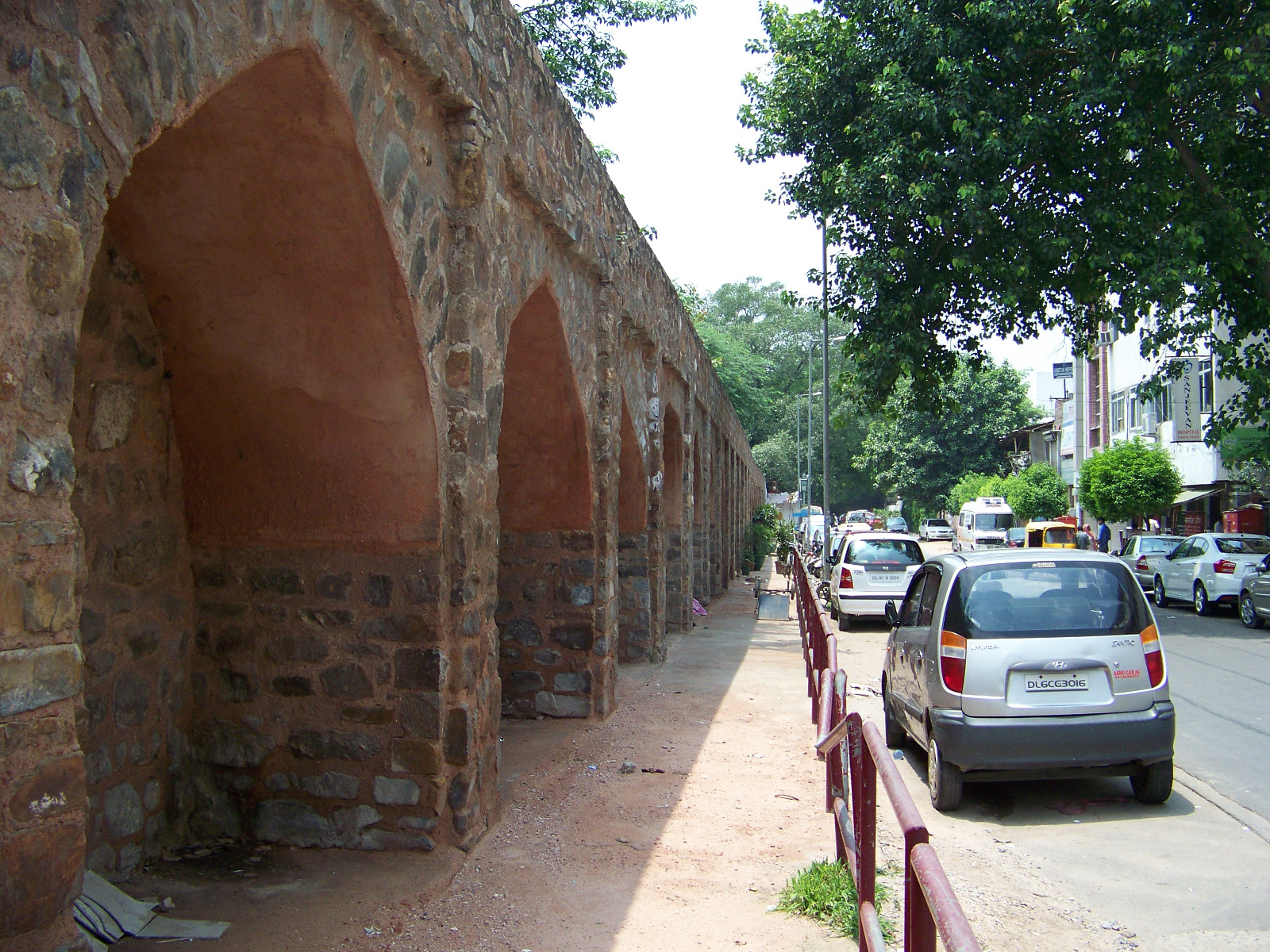
Stretching eastward from Delhi Gate are some sections of the old city wall. One stretch of the wall is preserved in a city park, Ekta Sthal (Place of Unity). Only the outer side of the wall is protected, though. The inner side backs up to an alley, and there are several encroachments and illegal constructions built on the historic wall.

Backside of preserved wall segment in Ekta Sthal.

Backside of preserved wall segment in Ekta Sthal.

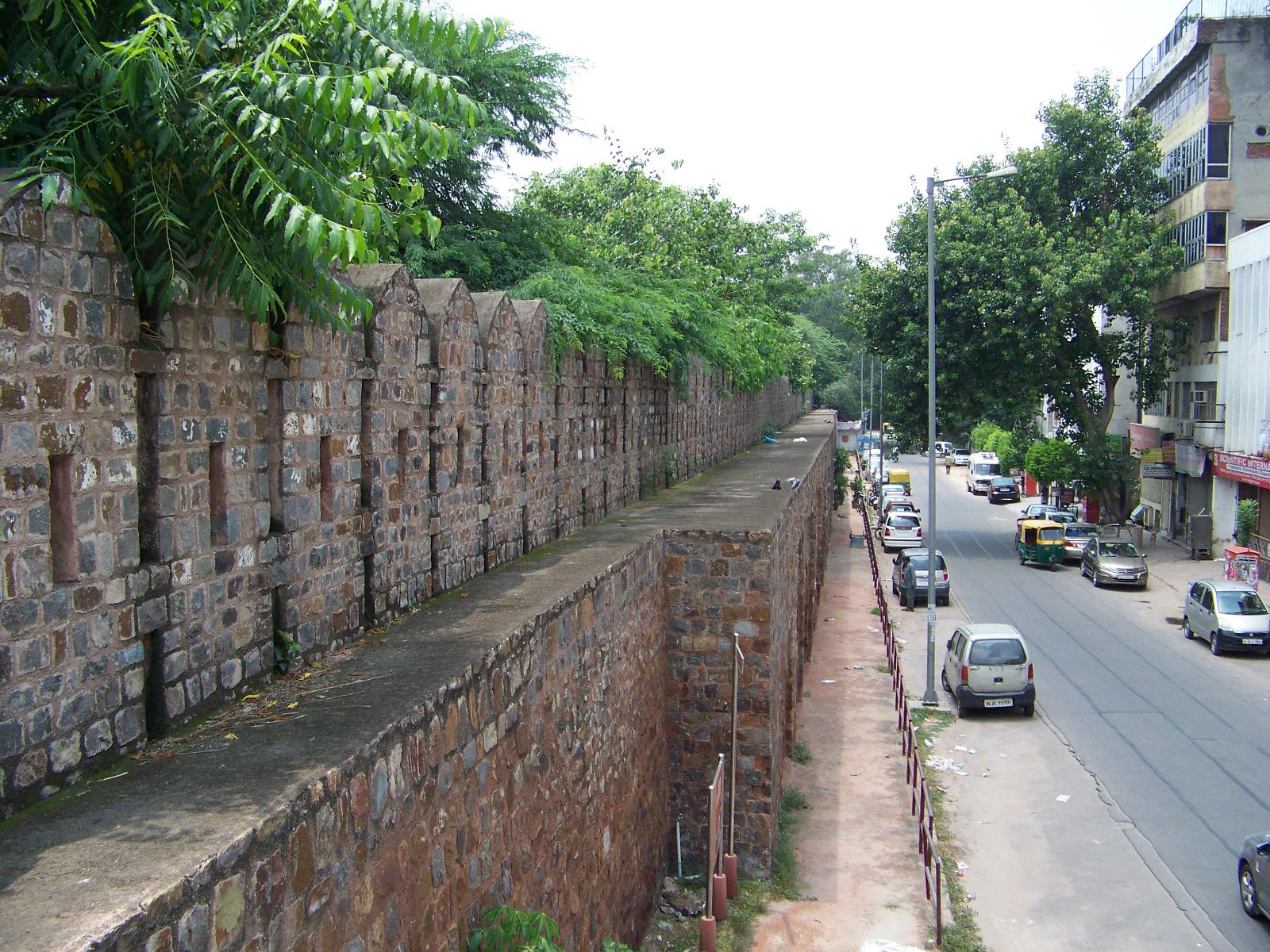
View from ramparts of Delhi's walls.

View from ramparts of Delhi’s walls.

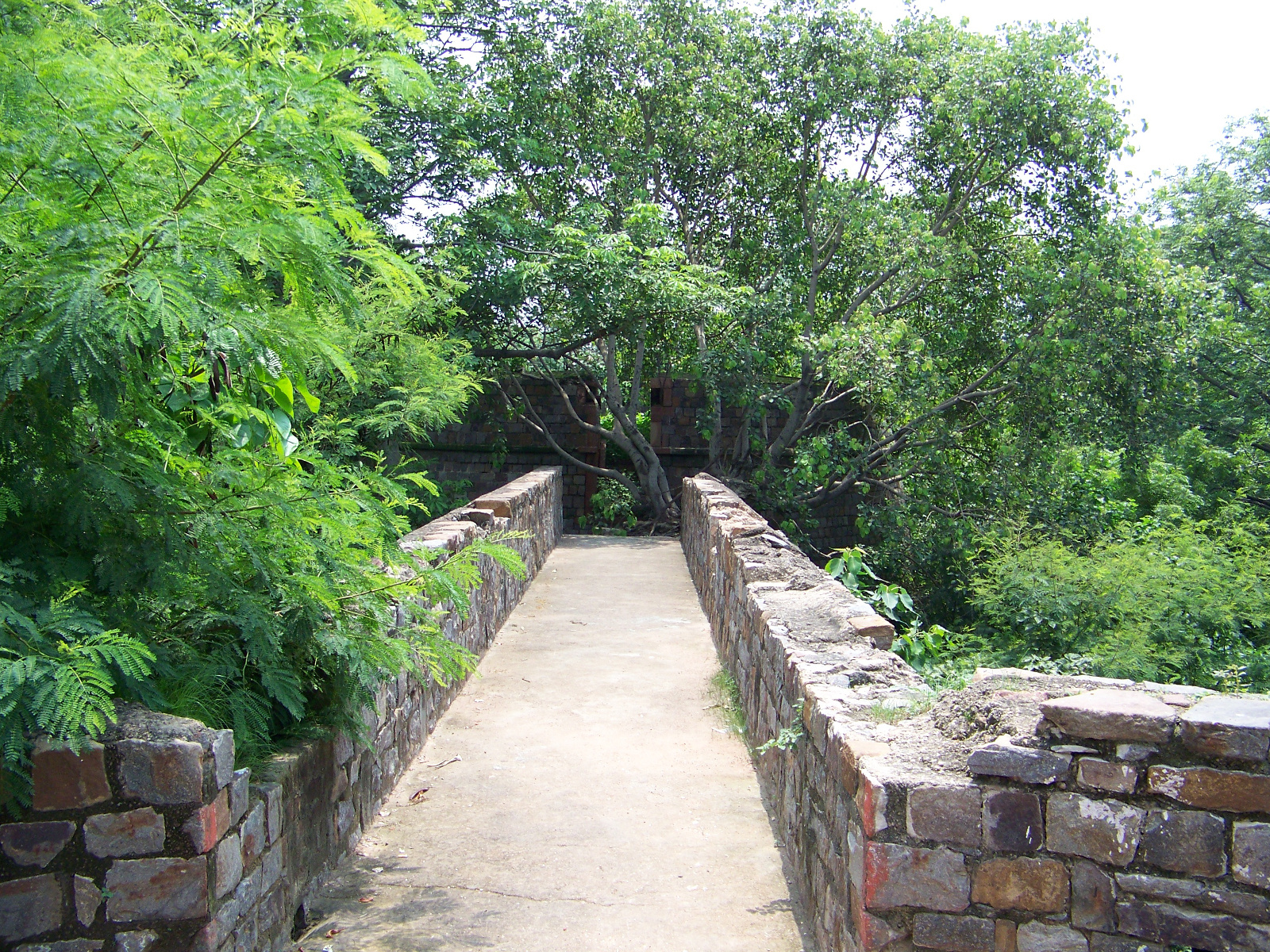
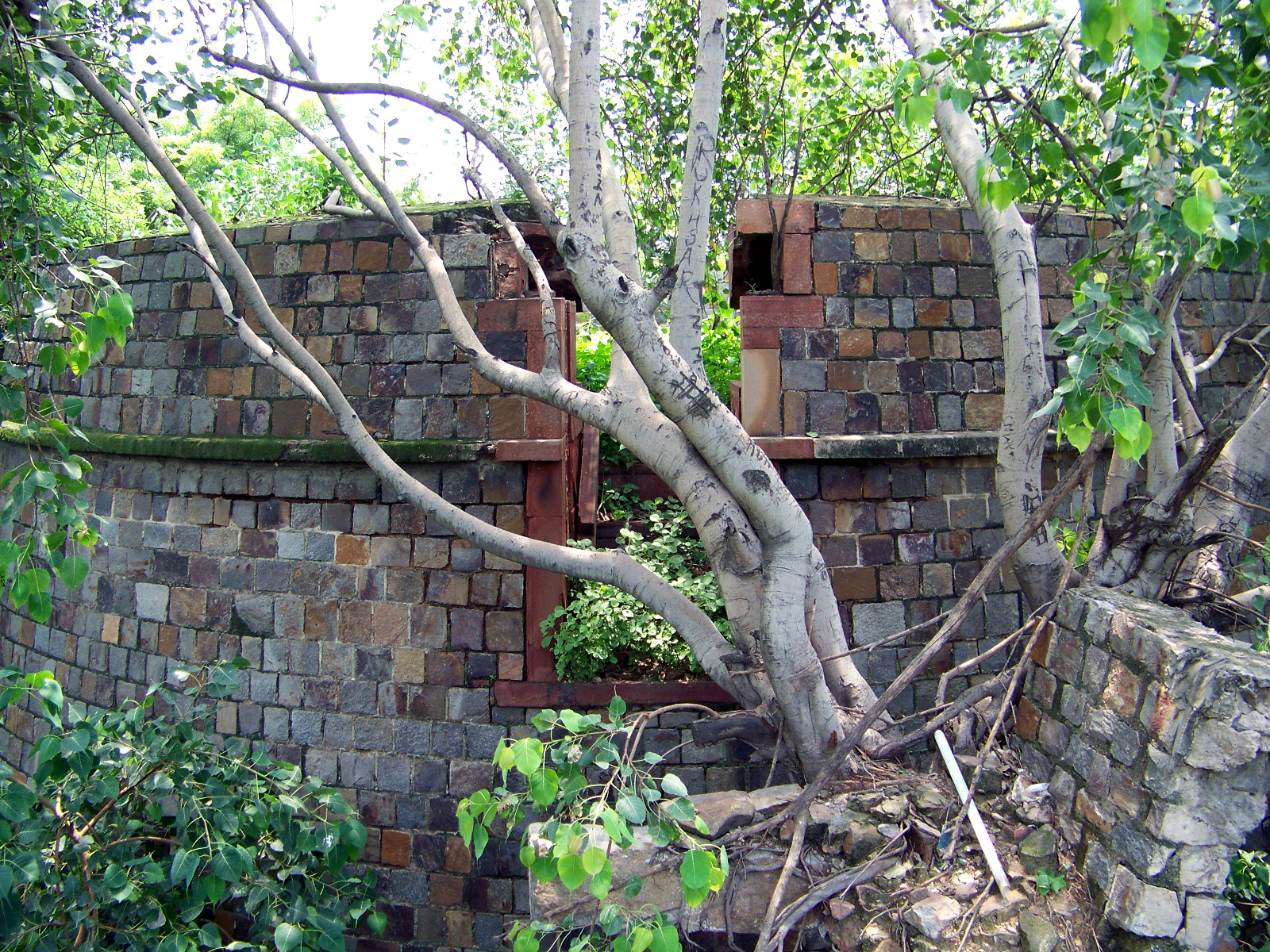
One ramp up to the battlements hasn’t been encroached upon yet, and you can climb up and have a look around. From here you can see a round tower built in front of the wall. The tower doesn’t seem to match the style of the rest of the wall – and it shouldn’t, because it was built by the British in the nineteenth century. It is a Martello tower, designed to hold cannons and serve as an outer defensive post. The British built Martello towers all over their world empire in the nineteenth century.

Walkway to Martello tower.

Walkway to Martello tower.

Martello tower ruins.

Martello tower ruins.

Northeast of Ekta Sthal and the Martello tower, sections of the city wall now serve as retaining walls beneath more modern construction.

Remaining city wall serving as a retaining wall.

Remaining city wall serving as a retaining wall.

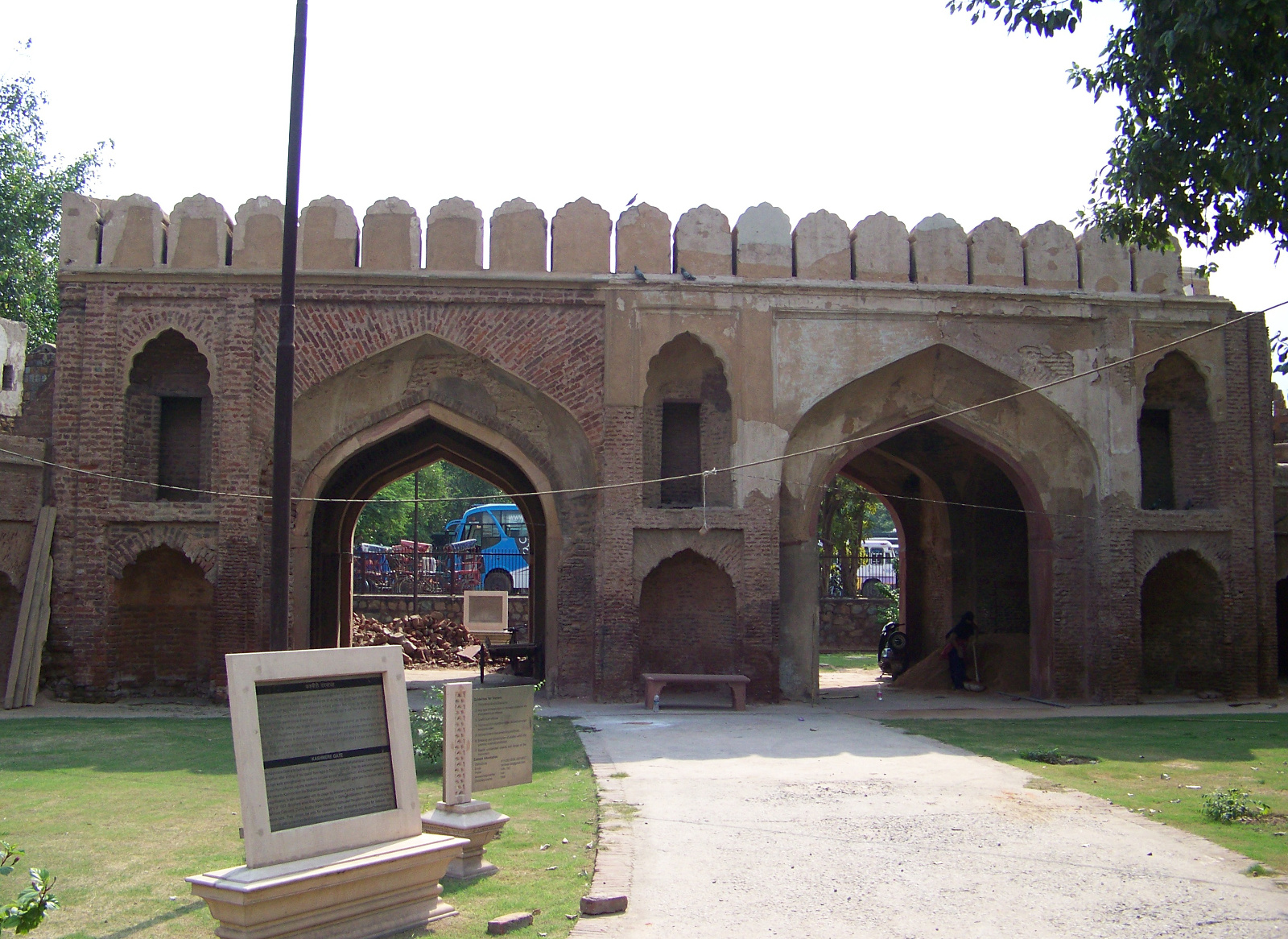
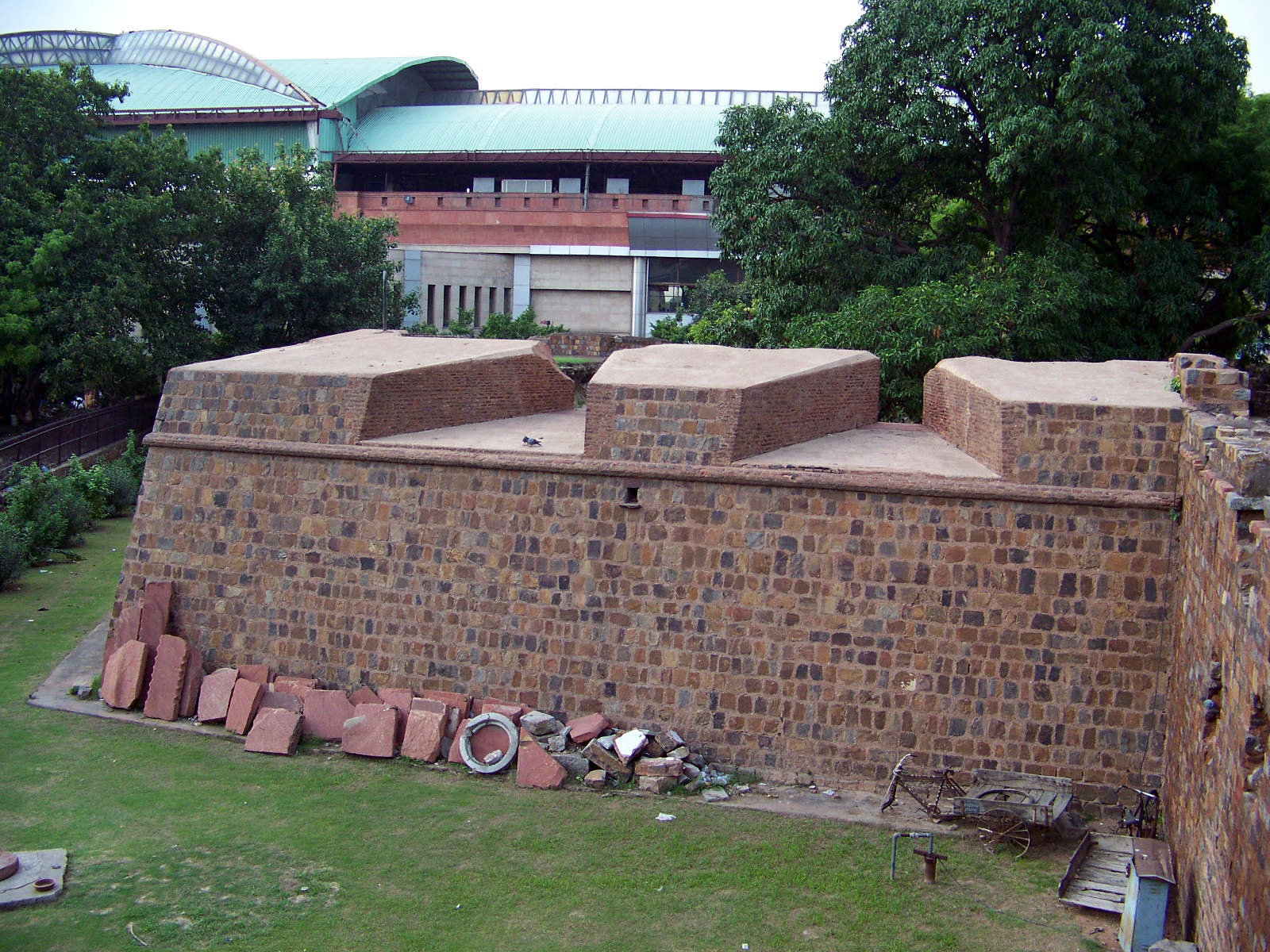
The longest stretches of surviving wall are on the north side of Shahjahanabad, around Kashmiri Gate. Parts of the city’s fortifications are still attached to Kashmiri Gate. Unlike Ajmeri, Turkman, and Delhi Gates, the surviving structure of Kashmiri Gate wasn’t built until the nineteenth century. The gate was constructed in 1835, and then in 1857 it was expanded to have two portals. A bastion next to the gate is built in angular star-fort style, a form of construction that was introduced to India by the British.

Kashmiri Gate, Delhi's only gate with two portals.

Kashmiri Gate, Delhi’s only gate with two portals.

A European-style bastion next to Kashmiri Gate.

A European-style bastion next to Kashmiri Gate.

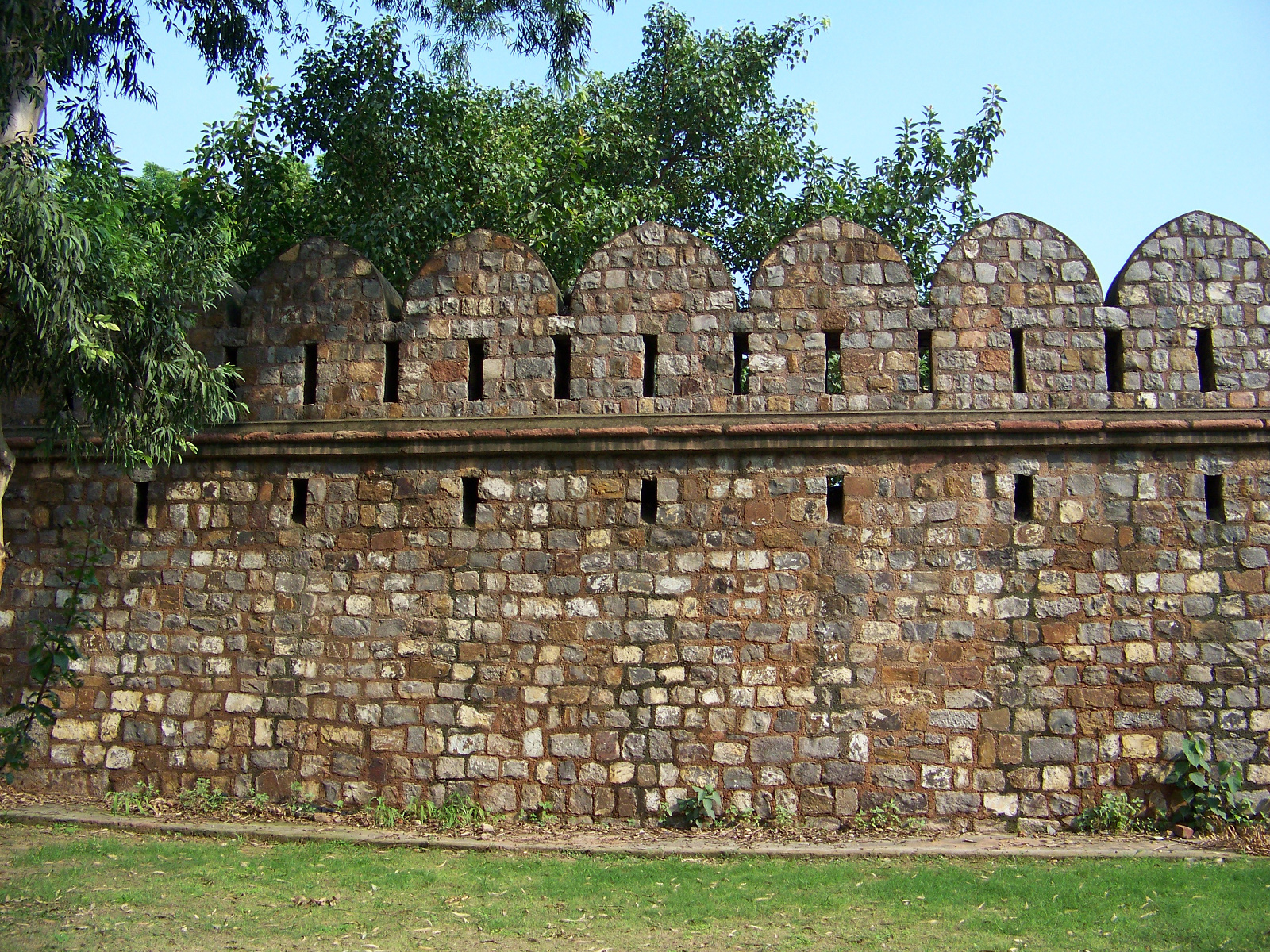
Sections of city wall still stand on both the east and west sides of Kashmiri Gate. The sections on the east side are protected from encroachment by a metal fence. The sections on the west are not protected at all. Holes have been punched in the walls here and there. The arches under the battlements are used for stabling livestock and storing hay and building materials. When I visited the unprotected section of wall, I didn’t feel comfortable playing tourist and snapping picture after picture. I felt the same way that I would feel taking pictures of a stranger’s house. The walls are historic landmarks, but they are also places where some Delhiities live and work.

One of the preserved sections of wall near Kashmiri Gate.

One of the preserved sections of wall near Kashmiri Gate.

Powered by WordPress & Theme by Anders Norén